Aviation Safety

January 5, 2010, Prospect Heights, Ill., Gates Learjet 35A

The airplane was destroyed when it impacted water and terrain at 1328 Central time while maneuvering to land at the end of the Part 91 positioning flight. The captain and first officer sustained fatal injuries. Visual conditions prevailed. Preliminary ATC and radar data revealed the flight was cleared for a visual approach to Runway 16, followed by a right traffic, circle-to-land approach to Runway 34.

Read More »

Top Four Fuel Exhaustion Excuses

Many pilots think running out of fuel is in the same category of a gear-up landing: It can never happen to them, until it does. While there may be several good reasons for landing with the gear still stowed, we can think of only two for running out of fuel. One of them involves fuel starvation-theres fuel aboard, but it cant get to the engine. In our view, the only time this excuse holds water is when it involves some kind of mechanical event-the fuel selector breaks off in the pilots hand between detents, for example, or a transfer pump fails. The only other legitimate excuse for running out of gas is when the weather caves and theres literally no place to land within our dwindling range. And thats rare enough we couldnt find any recent examples, although they may be out there.

Read More »

Put Down Your Checklist!

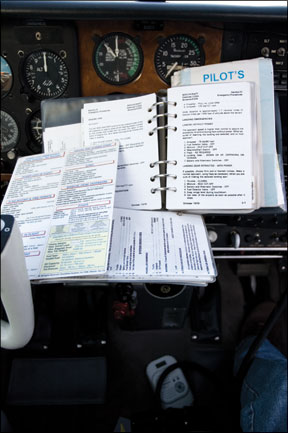
A wise old pilot once told me here are three distinct types of flying: simulator flying, checkride flying and typical everyday line flying. Although the context of this nugget was originally air carrier operations, there seems to be an innate understanding of this concept among all pilots. When administering flight reviews to experienced owner-pilots, I often get to see them on their “best behavior.” Of course, flight reviews arent checkrides, but many pilots view them as such, especially if its been a while since their last “real” pass/fail flight. While somewhat flattering to me, its usually obvious which aspects of their behavior are part of their normal operation and which are a show put on for my benefit. Often, Ill see them whip out a ratty old checklist, dust it off and try to use it sequentially as a do-list. Almost comically, the effort comes across almost as awkward as a middle school dance: The desire is there, but they just dont seem to know what to do with it.


Read More »

Playing Mental Defense Against Accidents

Most pilots know a majority of mishaps can be traced back to a chain of events that, if broken, would have prevented the accident from happening. No doubt some could have been prevented if the pilot had been able to press pause, or activate an airframe parachute, when the flight started going south. While most of us dont have that option, we can pull a mental ripcord of sorts and stop a progression of poor decision-making from becoming catastrophic. While most pilots are familiar with the chain-of-events explanation as to how accidents happen, little time is spent trying to figure out how to break the chain, particularly when it involves a form of distorted decision-making. That is, of course, easier said than done. If it were an easy task, we wouldnt spend as much time reading about perfect-performing airplanes operating in ordinary circumstances plowing into terrain with tragic results. One place to start is to look at the chain of mental events leading up to an accident, rather than just the aerodynamic aspects of the flight. Doing so can provide some helpful insights toward identifying the bad link before it gets added to the chain.

Read More »

Flying The Ball

A close friend e-mailed recently to inquire about what happens to the turn coordinator/turn and bank instruments ball in certain flight attitudes. After giving him what I thought was the answer he needed, several more e-mails ensued, each one raising my frustration level-admittedly not a difficult thing to do. Finally, I picked up the phone and called, and Im glad I did, since his real question had very little to do with the ball. But his questions-and little bit of research I did to verify my understandings before responding-highlighted one thing: There probably are a large number of pilots out there who have forgotten exactly what the little ball does and how it does it. Theres also another number of pilots who never were taught these things correctly. Lets try to fix both problems. First, though, lets refresh our understanding of why and how an airplane turns.

Read More »

Reading Radar Right

One of the most misunderstood pieces of equipment in the modern cockpit is airborne weather radar. For most of us, its a luxury we cant afford: either sferic devices (Stormscope/Strikefinder) and/or datalinked Nexrad images serve as a pilots third-best tool for avoiding thunderstorms. We say “third-best” because the best thing ever used for this purpose remains the Mk. I, Mod. I human eyeball. The trick, of course, is the eyeball only can be used in visual conditions. By happy coincidence, thats the best place to be when contemplating flight in an area of thunderstorms. But visual circumnavigation of convective activity isnt always possible. Instead-and if youve got the room in the nose or a wing-mounted radome-an airborne radar installation remains your second-best solution. Yes, Nexrad is widely available and much less expensive, but it doesnt do the same job as the airborne equipment.

Read More »

Dark Departure (Night Flying)

These pages often explore the differences between flying during the day and at night. Weve also been repeat offenders when it comes to emphasizing recent experience with a proposed operation and cautioning about allowing a four- or five-digit number of flight hours cloud our judgment. Despite our wishes to the contrary, its all too frequent when a single event highlights all three of these accident-causing factors. At night, of course, the eye can play various tricks on us. These include false depth perception and autokinesis, where a stationary light appears to move. But even more universal and insidious is our frequent inability to discern the natural horizon at night. Put another way, when flying over remote, unlighted areas, the lack of a natural horizon can make VFR flight problematic at best, and hazardous at worst.

Read More »

Hearing Is Believing

Although many learning experiences come from our own cockpits, we also can learn from listening to the pros. The howling snowstorm outside my house had forced me to cancel my plans to practice local instrument approaches. I still wanted to do something aviation-related, and this day that meant listening to the nearby approach control frequency.

Read More »

Blame The Pilots

The NTSB recently issued its finding of probable cause in the February 12, 2009, crash of a Colgan Air Inc., Bombardier Dash 8-Q400, operating as Continental Connection Flight 3407 while on approach to the Buffalo-Niagara International Airport in Buffalo, New York. All 49 aboard, plus one person on the ground, died when the regional turboprop entered a stall and the flight crew failed to recover. To a total lack of surprise among those following the aftermath of this tragedy, the Board found the accidents probable cause to include a litany of failures in the cockpit and Colgan Airs procedures involving airspeed control in icing conditions. The NTSBs report included 46 conclusions and resulted in 24 recommendations to the FAA.

Read More »

Cracks And Malfunctions

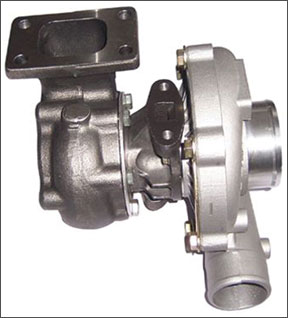
During an accident investigation, the top l/h engine cowling was found with evidence of fire damage. The l/h exhaust manifold pipe was loose and the l/h turbocharger clamp was lying in the bottom of the engine cowl. This aircraft was destroyed in fire, sustaining one fatality. Exhaust clamp p/n: MVT69183200LW1. The engine was a Lycoming TIO-540-J2B, presumably installed under an STC.

Read More »
Pilot in aircraft
Sign-up for newsletters & special offers!

Get the latest stories & special offers delivered directly to your inbox.

SUBSCRIBE