Aviation Safety

Subtle Risks

As pilots, we spend a lot of time focusing on obvious hazards to our flight operations: convective activity, icing, low ceilings and other conditions. Pilots who fail to manage such risks constitute a disproportionate share of fatal accidents. These flight conditions, however, are not the only potential hazards that we should consider for the purposes of managing risk. Tasks and procedures required on every flight are also potential hazard sources and should be viewed through the risk management lens. These include such routine and necessary tasks as takeoffs and landings, even under benign conditions, as well as operations under calm skies in VMC conditions when there is still other traffic to avoid.

Read More »

Pressure At Work

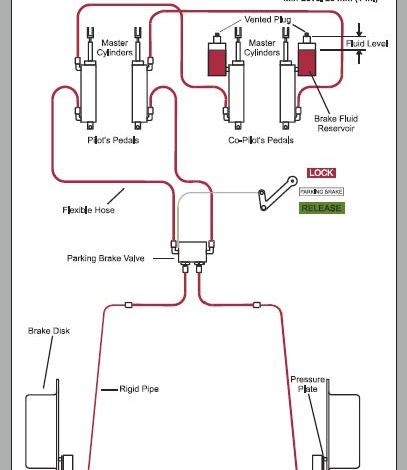
Flying behind air-cooled powerplants, free of radiators or coolant tanks, it’s easy to forget most aircraft still need liquids of some type to operate safely and reliably. When those fluids are put under pressure to actuate a mechanism, we’ve created a hydraulic system, sometimes defined as something “using pressurized fluid to drive machinery or move mechanical components.” It also can be defined as transferring “energy by pressurizing fluid to force movement of a slave to produce the action sought.”

Read More »

AoA For The Masses?

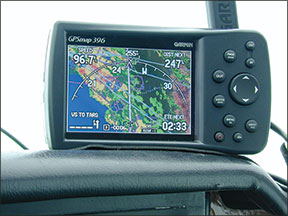
Several of our previous issues have included articles about the benefits of angle-of-attack (AoA) indicators, including discussions of how and why to install them, and how to fly with them. In recent years, reduced costs for many of their components—including processors and displays—has increased their popularity.Several of our previous issues have included articles about the benefits of angle-of-attack (AoA) indicators, including discussions of how and why to install them, and how to fly with them. In recent years, reduced costs for many of their components—including processors and displays—has increased their popularity.

Read More »

The Right Runway

I enjoyed reading “Wrong Airport, Wrong Runway” by Mike Hart in your January 2014 issue and appreciate his stressing the use of data to overcome errors and biases. One tool I find useful when approaching an airport with two runways pointing in similar directions is my direction indicator, HSI or not.

Read More »

No Way Out?

Only five percent of general aviation accidents during 2010 occurred in instrument meteorological conditions (IMC). But these accidents comprised 18 percent of all fatal crashes that year, and almost two-thirds of them proved fatal. According to the AOPA Air Safety Institute’s 2011 Nall Report, this is a familiar pattern.

Read More »

Doing It Yourself

Perhaps the most expensive aspect of aircraft ownership is maintenance. Owners of even relatively simple airplanes—fixed gear and a fixed-pitch prop, for example—can save real money by learning and performing basic work. The FARs allow pilots of aircraft used in non-commercial operations (and even some flying for hire) to perform specific tasks on their own, without the need for a certificated technician.

Read More »

The Real Deal

Back in the 1950s, social critic and philosopher Lenny Bruce said that no one is shocked anymore. He was probably correct, given our national tolerance for the excesses of those in the entertainment biz, and those seeking to join the weirdness. Yet, I find my level of amazement at flight schools that grind out new instrument pilots without insisting that they actually fly an airplane in the clouds remains at the near shock level.

Read More »

Ambiguous ATC

The ship has long since sailed, but labeling air traffic controllers as “controllers” has been something of a disservice to pilots everywhere. That simple convention has conferred on those responsible for separating traffic in the air and on the ground an authority over the outcome of a flight they really don’t have. Perhaps “coordinator” or “counselor” would have been better job titles.

Read More »

Short-And Soft-Field Landings

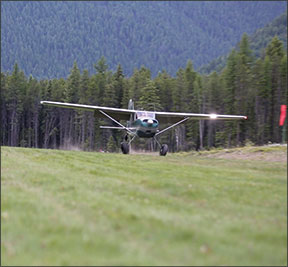
Obstructions, sand, mud, wandering animals and other surprises like the end of the runway rushing up to meet you…these are just some of the hazards common to short and soft fields. We all think we’re trained for them, but there’s a big difference between training and reality. I’m not knocking what CFIs teach or what’s required on the practical tests, but what you learned in your training may be insufficient to prepare you for the real thing.

Read More »
Pilot in aircraft
Sign-up for newsletters & special offers!

Get the latest stories & special offers delivered directly to your inbox.

SUBSCRIBE