Aviation Safety

Get What You Want From ATC

Let’s face it: If you can’t get what you want in life, why bother? That same adage holds when you interact with air traffic control (ATC). Whether you’re VFR or IFR, if you can’t get what you want from ATC, your trip will take longer, burn more fuel and generally annoy you to the point where you actually begin to believe the old adage, “If you have time to spare, go by air.” It doesn’t have to be that way. After all, you are the pilot-in-command (PIC) and that sweet voice on the other side of the radio frequency is there to help you, right?
Read More »

Dereg The Medical

Sport pilots don’t have to have an FAA medical certificate to serve as pilot in command (PIC) of a machine meeting the light sport aircraft (LSA) definition. Instead, they must only carry a valid driver’s license. Since the sport pilot and LSA rules went into effect in 2004—10 years ago—the affected aircraft have not been falling out of the sky because their operators aren’t physically fit. We call that a success.

Read More »

Difficult Departures

I just had to comment on Tom Turner’s recent article, “Departure Difficulties,” in December’s issue. It’s perhaps one of the best and thought-provoking articles I have ever read in your magazine.

Read More »

Risk Management In The Real World

In the first two parts of this series (Aviation Safety, September 2013 and November 2013), I related how I used practical risk management techniques to meet the challenges of using my Beech Bonanza on a typical (for me) multi-stop, multi-week business trip that took place in June 2013. Having been trained in an era before risk management was emphasized (which is still the case, although change is coming), I now recognize I was fortunate to have successfully addressed these hazards without incident. I’d like to say it was my superior piloting skill, but I’m afraid that chance also played a big role. I emphasize this background because, like much of the present general aviation community, I was trained in another era.

Read More »

Double Or Nothing?

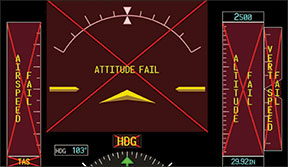
There can no longer be any debate: The advent of the attitude heading air-data reference system (ADHRS) and its incorporation into electronic flight information displays (EFIS has revolutionized the way pilots fly in instrument conditions. The ADHRS/EFIS combination have eliminated the brain-sopping task of repeatedly scanning in rapid succession six key analog instruments, some round power dials and annunciator lights while gleaning critical flight information. The pilot had to first process the information it received from the attitude indicator, altimeter, airspeed indicator, directional gyro/horizontal situation indicator, turn coordinator and vertical speed indicator through her vision, compare it with navigational information and develop, on her own, a three-dimensional picture of where the airplane was in space-time. By the time all that has been accomplished, the situation has changed, since the pilot and the craft are moving at a pretty good clip.

Read More »

Stop The Prop?

Engine out!” After climbing through 8400 feet msl, the engine’s hum became a sputter and I immediately set to work. I pulled back on the yoke until the sky filled the windscreen and danced on the rudder pedals to keep the wings level. The nose bobbed up and down as I fought for the highest […]

Read More »

Wrong Airport, Wrong Runway

You are on approach in busy airspace with an even busier cockpit…you are changing frequencies, receiving vectors, looking for traffic. You are well into the descent phase. As you flip through your kneeboard to get ready for the final phases of flight, you instinctively start looking for the runway. You see one in front of you just as ATC asks, “Do you have the airport in site?”

Read More »

Icing Stories

Ice isn’t nice. And this time of year, it’s much easier to find when airborne in most places throughout the Northern Hemisphere. Thankfully, forecasting and reporting technologies have improved over the years to the point where, at least in our experience, it’s rare to find ice where it wasn’t in a forecast. At the same time, even piston singles can be equipped for flight in known icing conditions, albeit briefly. All that is to say icing shouldn’t be the problem it used to be. Unless, of course, you’re off your plan, or the forecasters blow it.

Read More »

Takeoff Starvation

When considering various portions of routine flight operations, it’s safe to say that landings comprise a majority of the time spent in training and practice. But takeoffs also pose risks; perhaps most important among them is that the airplane isn’t ready to fly. The reasons could involve something simple like a pitch trim setting or a door that isn’t properly latched. Ensuring these kinds of problems are resolved before adding takeoff power is one reason before-takeoff checklists were invented.

Read More »
Pilot in aircraft
Sign-up for newsletters & special offers!

Get the latest stories & special offers delivered directly to your inbox.

SUBSCRIBE