Instrument Flying

Top Five IFR Mistakes

Whether we want to admit it or not, human flight by reference to instruments alone is an unnatural act. To determine up from down or left from right without a natural horizon, we need hours of training, and even more hours of regular practice. We also need a decently equipped airplane, stuffed with radios, colorful […]

Read More »

The Hidden Departure

It was snowing hard in Elko, Nevada, and getting dark, too. The temperature was about freezing, of course. The FBO put the airplane into a hangar, where the snow melted quickly, and some time with squeegees and towels and a large movable stair got the moisture off the airplane. Our policy is that a clean […]

Read More »

Keep Your Feet Happy

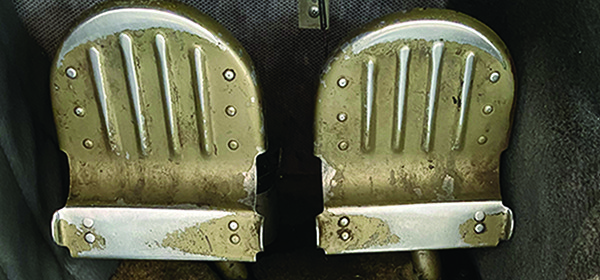
If there’s anything I wish I could do for aspiring pilots or those struggling through their basic training, it would be to teach them to fly an airplane before learning to drive a car. The two-dimensional thinking employed when operating a surface vehicle becomes dominant—probably because we spend more time in a car than in […]

Read More »

Departure Mistakes

Some recent fatal accidents have highlighted that general aviation pilots sometimes forget where they are and simply presume they have the performance and terrain clearance to motor off toward their destination after takeoff. That’s a result of complacency in the cockpit, aided and abetted by ATC giving us vectors when departing airports served by a […]

Read More »

Appropriate Automation

Cessna 12345, the tower is changing runways. Fly heading 040, direct TILLE to join the localizer for the ILS Runway 1R approach.” How many times have you heard something similar, if not for you then for another airplane on the frequency? If we or they are doing it right, the approach to the first runway […]

Read More »

Managing Climbs

It was a moonless night in the valley, with a strong wind behind us from the north. I usually fly single-pilot, but that night I had a new hire, an old friend, with me. He was getting to know a new-to-him airplane. We talked about the terrain and the wind and the runway length, and […]

Read More »

Night Marginal Visual Flight Rules

The takeoff and departure flight phase can be one of the more risky among instrument procedures, especially at night in IMC aviation. On one hand, the pilot is abruptly transitioning from a presumably well-lit runway and airport environment to flying on instruments near terrain. On another hand, the airplane may not be up to the […]

Read More »

Polishing Your Scan: Our Top Five Tips

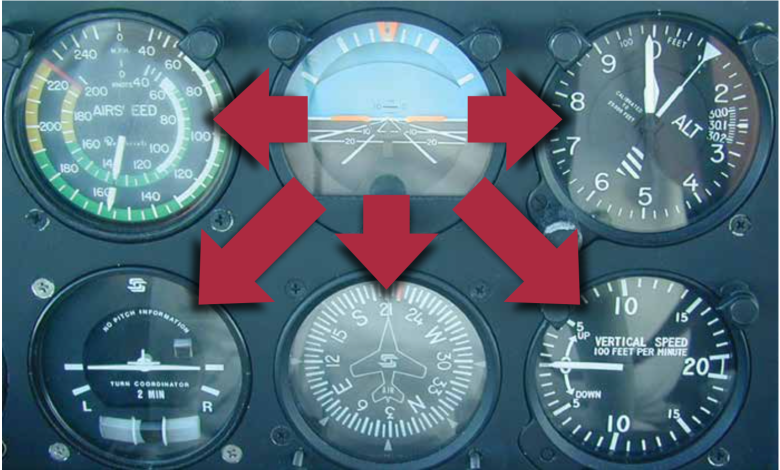
One of the first things an instrument student learns is to scan instruments in the panel, or their EFIS presentation, to determine the aircraft’s attitude. Focusing only on the attitude indication initially, we slowly learn to expand our scan to other instruments, however they’re represented, both for confirmation of what the AI is telling us […]

Read More »

VFR On An IFR Clearance

Instrument-rated pilots are familiar with visual approaches, which allow them to fly to and land at an airport in good weather without executing what might be a time- and fuel-consuming published procedure. Air traffic control also recognizes other visual clearances, which can allow pilots to shortcut one or another procedure that might otherwise increase risk […]

Read More »

Hard IFR?

Pull up a digital copy of the FAA’s regulations and search for “hard IFR.” Can’t find it anywhere in the FARs, can you? That’s because it’s one of those terms that everybody understands on one level but really can’t agree on a definition for. It’s a popular term though: you’ll hear it from instructors, hangar-flying […]

Read More »
Pilot in aircraft
Sign-up for newsletters & special offers!

Get the latest stories & special offers delivered directly to your inbox.

SUBSCRIBE