Instrument Flying

Visual Approach Risks

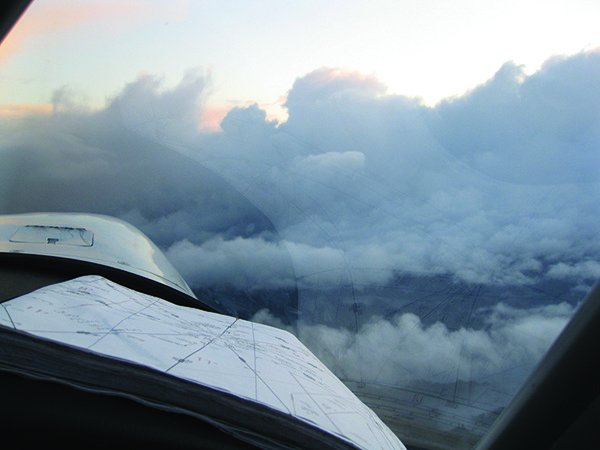
The visual approach is by far the most-used method for pilots of IFR aircraft to find their way to the destination. Compared to the typical published approach procedure, a visual approach can save several miles and several minutes, not to mention several pounds/gallons of fuel. When the weather allows, it’s the approach clearance of choice […]
Read More »

Non-Towered IFR

One of the benefits (and frequent challenges) of flying IFR is operating under positive ATC guidance and control. If you are operating only at towered airports, this is fairly simple. Clearance or ground control will issue your clearance, and when you land safely at your destination, they will make sure to close your flight plan. […]

Read More »

The Lost Art of Circling

With the rise in quality and quantity of GPS approaches, especially at smaller airports, the beloved circling approach is becoming an infrequently used maneuver. That’s a shame, since circling to a preferred runway after breaking out on an approach can help resolve many challenges in the IFR environment. Having the confidence to circle is one […]

Read More »

Approach Briefings

Something I discovered early in my career is that one of the easiest ways to combat complacency and maintain proficiency is to join the training department of wherever I am lucky enough to be flying. I know this is not always easy or even logistically possible, but if the opportunity arises, I will take it […]

Read More »

Non-Published Approaches

When an instrument-rated pilot thinks of an approach, he or she likely pictures a so-called standard instrument approach procedure, or SIAP, the published approaches we all have come to know and “love.” A SIAP is described in FAR Part 97 and in published charting data available from the FAA and Jeppesen, for example. Standard approach […]

Read More »

Pg 20 bottom

According to the FAA’s Instrument Flying Handbook, common ways pilots get their airplane into an unusual attitude include: 1. Failure to keep the airplane properly trimmed. A flight deck interruption when holding  [control] pressures can easily lead to inadvertent entry into unusual attitudes. 2 Disorganized flight deck. Hunting for charts, logs, computers, etc., can seriously […]

Read More »

What About The AI?

According to the IFH, in moderate unusual attitudes, the pilot can normally reorient by establishing a level flight indication on the attitude indicator. The IFH cautions, however that “the pilot should not depend on [it] if the attitude indicator is the spillable type, because its upset limits may have been exceeded or it may have […]

Read More »

Practicing Approaches

One of the instrument rating’s dirty little secrets that no one tells you about until it’s too late is the amount of recurrent training you need to legally fly IFR after the checkride. The details—along with options and potential loopholes—are in FAR 61.57, Recent flight experience: Pilot in command, portions of which we all know […]

Read More »

Non-Precision Stability

I presented a webinar recently about techniques for flying stabilized approaches. During the question-and-answer period, one of the viewers asked me for a technique for flying a traditional non-precision approach profile, that is, a steep descent from the final approach fix (FAF) to leveling off at the minimum descent altitude (MDA) and flying level until […]

Read More »

Departing And Arriving

When I earned my instrument rating many years ago, it was common to add the notation “No SIDS, No STARs” in the comments block of an IFR flight plan. This was primarily because these procedures were published in a separate book from instrument approaches at the time, and it wasn’t common for private operators to […]

Read More »
Pilot in aircraft
Sign-up for newsletters & special offers!

Get the latest stories & special offers delivered directly to your inbox.

SUBSCRIBE