Instrument Flying

Seven IFR Prep Tips

Approach, could you read back the arrival waypoints…we can’t seem to find that arrival….” The request got my attention because it came from the aircraft somewhere ahead of me in the soup of a thick overcast, headed to the same airport. The controller had just warned of a pending change to my arrival plans by changing those of the flight ahead of me. Taking that change as a cue, it was easy to turn to the last plastic-protector page in my little IFR folder—where I’d already inserted the appropriate page. It was less luck than experience, which had tutored me on the likelihood of a traffic conflict with another airport’s arrivals.


Read More »

No-Return Takeoffs

If you’re accustomed to flying “real” weather, you’ll eventually be confronted with the question of whether to make a takeoff in zero-zero conditions. When you can’t see the other end of the runway, you probably can’t get back in if something happens. And even if you can see it, the overcast might still be too low to allow a successful approach. The natural reaction might be to stretch out in the FBO’s lounge until the fog burns off, or not even bother going to the airport in the first place. And those are good choices. The zero-zero takeoff isn’t something to approach lightly, but the risk it presents can be managed. Here’s how.

Read More »

The Day The Waypoints Died

Imagine you’re cruising high above an undercast, in smooth, clear skies. The GPS in your panel shows you making good time, with about an hour remaining to your destination. The Center frequency has been fairly quiet; you know there are a lot of other IFR airplanes out there, but everyone is settled into cruise so all you hear are the handoffs to the next sector or approach facility, or the occasional clearance for an approach into a rural airport. Then, without warning, your GPS advises it’s lost a usable signal. The magenta line by which you’ve been navigating direct to your destination airport disappears and you have no more groundspeed or position information. Everything else seems normal—it’s not an electrical failure, at least not to the airplane’s entire system—but you no longer have GPS navigation.

Read More »

Climb, Talk, Live

We pilots have been known to do foolish things when under stress. Especially when we find ourselves in a situation for which we have not received any training. The problem is, of course, there are many things for which we haven’t been trained. Not surprisingly, we are likely to worry about the wrong things as we evaluate the hazard we face and then reach the wrong conclusion as to what we should do. It’s natural. We are also the products of a flight training system that has never been willing to educate up and coming pilots on how to avoid the biggest risk we face as aviators—pressing on VFR into crummy weather. We all know it’s the biggest killer annually, but how many of us were taught how to fly by visual references under a 600-foot ceiling an one-mile visibility, or what to do if we find ourselves in such a predicament?

Read More »

Getting Disoriented

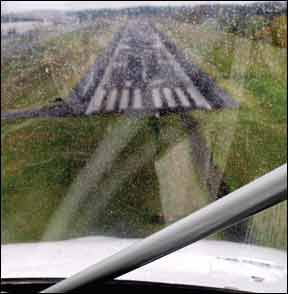
You just broke out of the clag on final, late in the day, with the weather at minimums, when illusion strikes. Are you low on the approach? High? Not sure? At the last moment you realize you’re high and long; time to go missed. Maybe it worked the other way around; you’re on approach and as you get to where you expect the threshold marks to pass below you realize you’re low, short and about to touch down—short of the runway. At its worst, these vision deceptions can contribute to spatial disorientation in VMC that’s more confusing than the dizziness of becoming disoriented inside the eggshell of IMC.

Read More »

IFR Emergencies

There you are, droning along in the clag, watching the autopilot watch things for you, monitoring the frequency and marveling at how the IFR system’s various parts mesh together. But you haven’t been paying attention to the ammeter, which is showing a steep discharge. Suddenly, your autopilot’s control panel goes dark, along with your older number two nav/comm, and the stable airplane you’ve been monitoring—not flying—for the last hour and half wants to pitch up and bank right. Congratulations: You’re about 15 minutes from completely draining the ship’s battery and total electrical failure in IMC. You’re also about 20 minutes from the nearest suitable airport, one with services like a maintenance shop. Did we mention it’s well past sundown?

Read More »

Safety Pilot Concerns

Staying current for IFR—with six approaches, some holding and course interceptions within the preceding six months—isn’t that hard for the active instrument pilot. When you enter engine replacements in your logbook instead of hours, you probably don’t need much in the way of practice. But the guy or gal who’s lucky to get their wings wet in some actual once or twice a year has a different challenge. Somewhere in the middle between the two extremes is where most instrument-rated pilots find themselves, of course. Regardless, even the ace of the base needs to go out occasionally and practice a few things, if for no other reason than to get through the next check ride.

Read More »

When Glass Goes Dark

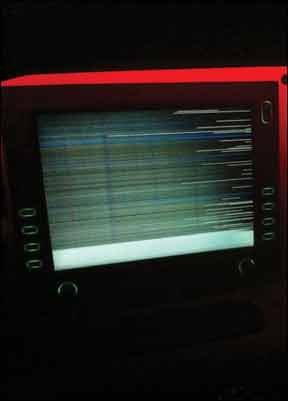
Among the first things pilots learn is what to do if something goes wrong. Instrument pilots get to learn what to do when instruments or the systems powering them fail and how to get back on the ground with what’s left. Back in the days when each instrument was a separate, physical thing instead of a software construct presenting symbols or alphanumeric data, their presentation was relatively well known and predictable. These days, however, those same instruments often have been replaced with what is essentially a computer screen. What happens when it fails?

Read More »

Non-Towered IFR Arrivals

Congratulations. You just spent the last three hours in the clag, smoothly and calmly managing ATC, your GPS navigator and the autopilot while successfully piloting yourself and your passengers from Big City International to Non-Towered Regional for your business meeting. Breaking out on the GPS final, you cancel IFR and switch over to the CTAF to announce your straight-in approach, only to look up to see a Skyhawk-filled windshield. After the few moments of stark terror it takes to dodge the traffic, you slam the mains onto the runway and taxi in, still shaking, wondering what the heck just happened. Where did that guy come from, anyway?

Read More »

Whats Your Vector, Victor?

November 12345, turn right, heading 140, vector around traffic.” So begins yet another excursion off our planned course, courtesy of ATC: a vector. In their primary role-helping prevent us from swapping paint with each other-controllers use vectors to maintain spacing or establish sequencing for a runway. Other reasons for a vector include helping keep us out of weather or airspace, or because we request it. In fact, ATC always is supposed to tell us why were being vectored, something well get to in a moment. The reality in todays go-direct-everywhere ATC system usually means a heading to fly is not something we want or appreciate, since its usually an off-course delay, lengthening our trip and wasting time and fuel. But there are times-in terminal airspace especially, or when circumnavigating special-use airspace while en route-when vectors are good things and can help us cut various corners.

Read More »
Pilot in aircraft
Sign-up for newsletters & special offers!

Get the latest stories & special offers delivered directly to your inbox.

SUBSCRIBE