Instrument Flying

Prepping For Your IPC

Maintaining your IFR currency isn’t that hard. Just fly and log in actual or simulated conditions six instrument approaches, “holding procedures and tasks” and “intercepting and tracking” electronic courses within the preceding six months, and you’re golden. Even if you find yourself slightly out of currency in the 11th month, you can go out with a safety pilot and fly the requisite approaches/holds/intercepts, regaining your ability to legally file and fly IFR. But after 12 full months of being out of IFR currency, you’ll need an instrument proficiency check, or IPC. There was a time, before the most recent revisions to FAR 61, when an IPC—previously known as an instrument competency check—wasn’t structured. That’s no longer the case.

Read More »

IFR Weather Planning

It’s been said—and confirmed, in a conference I attended at the FAA’s Oklahoma City complex a couple of years ago—that you can miss every weather-related question on every FAA Knowledge Test (“written”), from Sport Pilot all the way through and including the ATP, and still pass each test…and ultimately, pass every checkride. Our instructors and aviation periodicals implore us to become students of aviation weather, but only on rare occasions are we actually given the tools we need to make weather-related go/no-go decisions. Certainly one of the most common requests I get from my recurrent flight students is for help in understanding weather well enough to make informed choices that protect their families when they fly. So how can we quickly and methodically sift through page after Internet page of aviation weather data to make informed decisions?

Read More »

Navigating The Sim Thicket

I’ve been teaching people how to fly airplanes for 28 years now, and at this point people tell me I’m pretty good at it. One of the things I learned early on is that the cockpit environment is a horrible classroom in which to teach the basics of flight. It’s noisy, full of distractions, occasionally unpredictable and constantly moving. It should not be a secret to even the newest flight instructor that all of this is a challenge to a typical primary student’s senses. Frankly, any sane human being is scared of it, at first, though few would admit to it.

Read More »

From TOD, To MAP And Beyond

Your instrument training was all about the physical tasks of flying approaches, missed approaches and holds. Your CFII didn’t spend a lot of time on en route descents, or an efficient way to get prepared for those close-in, “slam-dunk” procedures…you’d pick up all that with experience flying “in the system” after passing your instrument check ride. At least that was the unspoken understanding. Trouble is, you’ve been flying IFR for a while, even completing a couple of instrument proficiency checks since passing the practical test, but those quick IPCs focused on the same terminal procedures you’ve been flying since your instrument training began, and you’re starting to wonder if there’s an easier, more efficient, better way to get from cruise altitude to the ground.

Read More »

Icing Complications

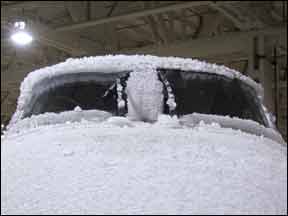
The only time ice on the airframe is a good thing is when it’s tied down and you really didn’t want to go flying today, anyway. Otherwise, it’s always something to be avoided. As we all should have been taught, ice adhering to the wings, tail and other components tends to add weight and drag. If it forms on an airfoil, the surface’s lift characteristics can be dramatically different, in addition to the weight and drag. Bad karma all around. But ice can affect other systems, too. The pitot/static system is problematic, as is the electrical system, as more current is demanded to keep things warm. Depending on the aircraft, ice also can extend the landing gear, fail an engine or cause critical electrical failures. The NASA Aviation Safety Reporting System (ASRS) recently updated one of its database report sets, the one covering icing incidents among commuter and general aviation aircraft. The incident descriptions have several lessons for us and highlight airframe icing’s complications, even if having the stuff on the airfoils turns out not to be a factor.

Read More »

Know Where To Go

My father was a mechanic for a major airline. One day he was a passenger on one of the company’s Boeing 767s on a flight from Chicago to Los Angeles. As the heavy Boeing lifted off into a low overcast at O’Hare, the right engine failed. My father later told me he could hear the change in noise and feel the deck angle, but said the crew artfully handled the failure and engine shutdown, and most passengers probably didn’t notice anything unusual had happened.

Read More »

Surviving The Missed

As a student of NTSB reports and an active instrument flight instructor, I have come to the conclusion we do not stress preparedness for the missed approach procedure enough, either in initial instrument training or in instrument proficiency checks. In addition to collisions with obstacles because of an improperly flown missed, the General Aviation Joint Steering Committee, an FAA/industry working group charged with identifying and mitigating the causes of fatal general aviation accidents, has identified loss of control during a missed approach as one of its focus scenarios. This suggests that—even when the pilot attempts to fly the missed approach procedure properly—the workload of doing so may be greater than the pilot is prepared to handle. So how can we make certain we are properly briefed for the missed approach, so we know how to fly it correctly? What can we do to reduce pilot workload while flying the missed?

Read More »

Seven IFR Exercises

If you’re like many pilots, you’ve plotted some vacation time and plan to use the family flying flivver for a summer-sunshine, blue-sky getaway. Good idea—that helps keep the skills as sharp as possible—but there’s probably not much IMC you want to fly in during the summer and most of your flights will be in daytime. Remember, though, that as sure as summer follows spring, fall and winter will arrive, bringing with them fewer blue skies and shorter days. That translates into more IMC with a better chance some part of your flight will occur in nighttime conditions. What better time than summer to sharpen those least-used skills—instrument and night flying?

Read More »

Where’s It Say That?

There I was, a cocky preppy with an airplane, trying to get home after a week at the beach. I’d flown a borrowed Skyhawk about 3.5 hours since full tanks, leaving me about 1.5 to dry ones. It was Sunday and the weather sucked. I could get out fine with an IFR clearance, but the beach-side airport where I landed had no fuel.Remember how the IFR alternate rules work when filing a flight plan? If the destination airport TAF or area forecast, within an hour either side of your ETA, advertises less than a 2000-foot ceiling and three statute miles, you need to file an alternate airport in your flight plan. In turn, that alternate airport has to have a forecast of 600/2 for precision approaches or 800/2 for non-precision. No problem. My destination was advertising something like 1500/5. I could get there VFR, but I had to file an alternate.

Read More »

Where’s It Say That?

There I was, a cocky preppy with an airplane, trying to get home after a week at the beach. I’d flown a borrowed Skyhawk about 3.5 hours since full tanks, leaving me about 1.5 to dry ones. It was Sunday and the weather sucked. I could get out fine with an IFR clearance, but the beach-side airport where I landed had no fuel.Remember how the IFR alternate rules work when filing a flight plan? If the destination airport TAF or area forecast, within an hour either side of your ETA, advertises less than a 2000-foot ceiling and three statute miles, you need to file an alternate airport in your flight plan. In turn, that alternate airport has to have a forecast of 600/2 for precision approaches or 800/2 for non-precision. No problem. My destination was advertising something like 1500/5. I could get there VFR, but I had to file an alternate.

Read More »
Pilot in aircraft
Sign-up for newsletters & special offers!

Get the latest stories & special offers delivered directly to your inbox.

SUBSCRIBE