











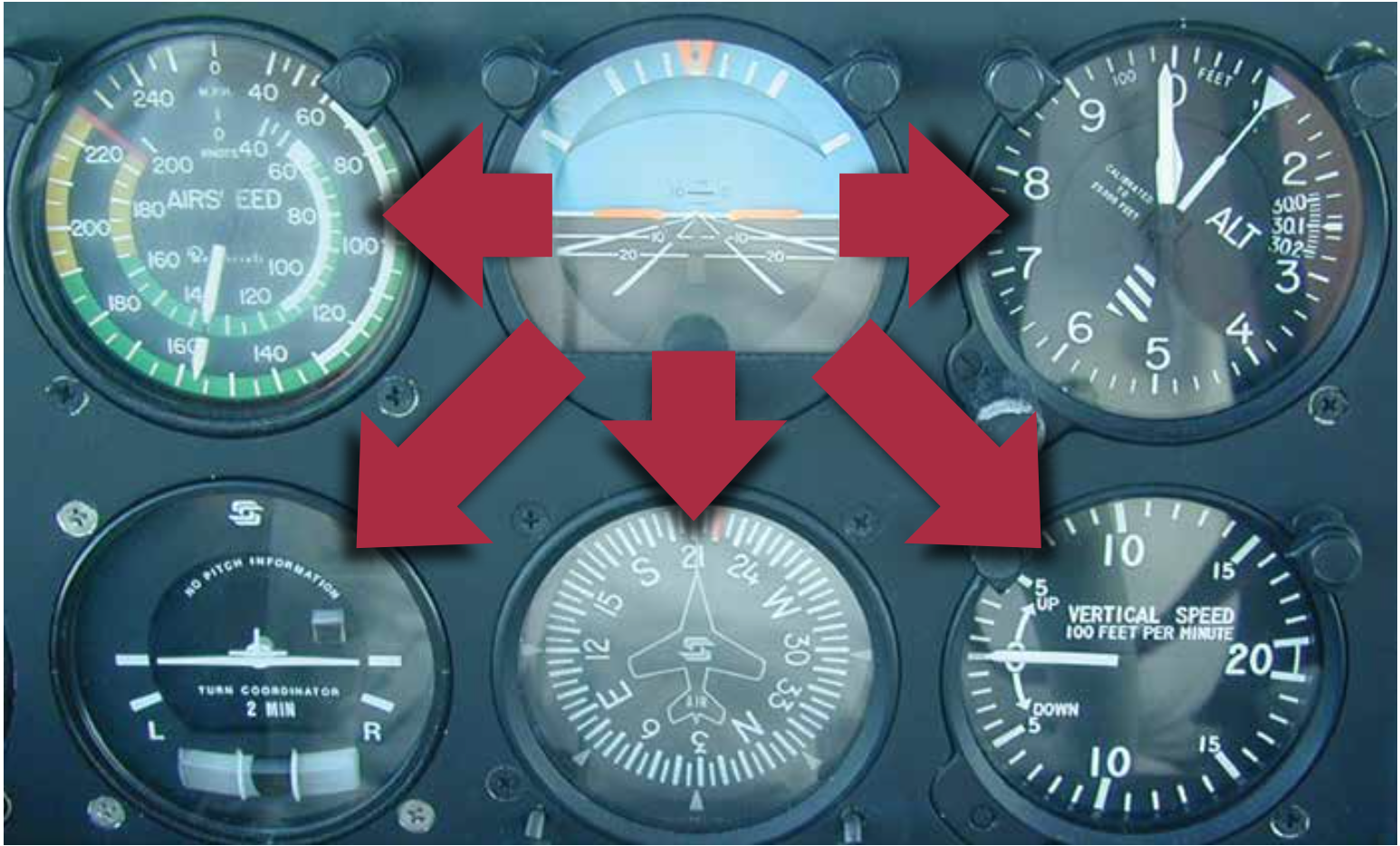


One of the first things an instrument student learns is to scan instruments in the panel, or their EFIS presentation, to determine the aircraft’s attitude. Focusing only on the attitude indication initially, we slowly learn to expand our scan to other instruments, however they’re represented, both for confirmation of what the AI is telling us and to understand the magnitude of our control inputs. Later, as skill and confidence is attained, our scan expands to routinely encompass the other flight instruments for verification.
But that’s only part of the instrument scanning skills instrument pilots learn. As we gain even more experience, we also have to expand our scan to other portions of the instrument panel, like the power instruments, plus engine and systems gauges, and the compass. After all, there comes a time when our double-I isn’t going to be there to keep an eye on the oil pressure. Eventually, we learn to keep scanning all these indications while we manage the avionics, configure the airplane and talk to ATC.

