Instrument Flying

Finding Alternates With An EFB App – Is This Really So Hard?

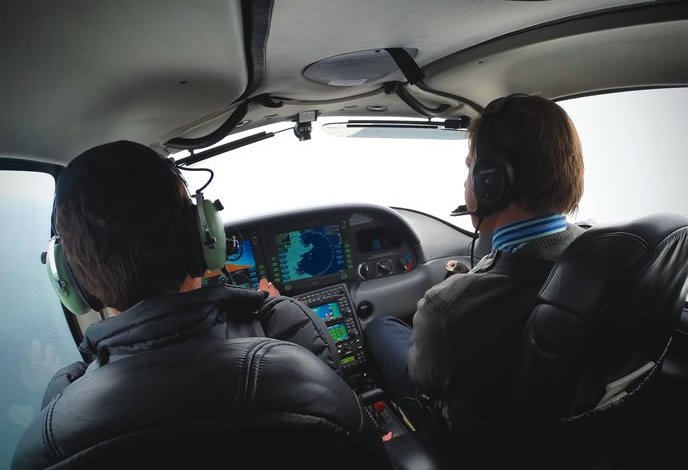
Electronic flight bag (EFB) apps running on a tablet computer, as depicted above, have greatly increased the typical pilots SA (situational awareness). As this articles main text relates, some pilots havent figured out how to use their EFBs to answer the many questions necessary to legally and safely pick alternate airports. They supposedly prefer paper charts and a plotter. (Really. Have you guys seen the size and number of books of Aeronav charts required for 48-state coverage lately? The proliferation of LPV, LNAV and similar approaches has swollen them in size, weight and number.)
Read More »

IFR Training In IMC?

Ive never felt it appropriate that a pilot could obtain an instrument rating without flying in clouds. From a safety standpoint, it seems ludicrous. I received instrument dual in IMC and have done my best to make sure my instrument students get experience in the clag before taking their checkride. Nevertheless, I recognize that there are flight schools and instructors who will not give dual in IMC for various reasons. Over the years, Ive spoken with a number of them about the issue.

Read More »

You Want That With Ice?

While were discussing the various precision approach scenarios, lets think about whats going to happen once weve acquired some airframe ice. The POH probably makes it clear flaps are a big no-no when landing with ice on the airframe. Weve seen the NASA videos on tailplane stalls, so we know, intellectually, that adding any flap deflection at all, or slowing down, could very well jam us into the planet. We fly the ILS flaps-up, at the power setting that nailed the glideslope, until we roll the wheels on the runway.

Read More »

How Fast?

two and three rectangular bars symmetrically arranged in pairs about the runway centerline.” (Runways with touchdown zone markings on both ends omit them when they’d be within 900 feet (270m) of the midpoint between the thresholds.)”

Read More »

The Last 400 Feet

In many conversations with instrument instructors, Ive noted a common concern about the way many pilots conclude practice precision approaches (ILS or GPS LPV) under the hood: They do a great job of keeping the needles near the center as decision altitude nears; airspeed, descent rate and heading all would be appropriate. But when the hood came off at DA and the pilot spotted the runway, it was Katie bar the door. What happened next can be summarized as a whirlwind of activity in the left seat as the power was yanked back, flap deflection increased and a dive for the runway threshold commenced. It was as if there were some sort of prize for landing short.

Read More »

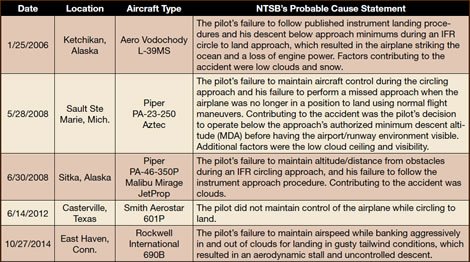
NTSB’s Probable Cause Statement

We looked at details of the five accidents summarized above for this article. There are others we could have chosen, with different lessons. One thing that jumped out at us: Simple singles werent well-represented. Is that because a simple single, say, a Cessna 172, is more maneuverable and better suited to completing a circling approach than an Aerostar? Possibly. But its also possible pilots dont fly simple singles into conditions low enough to require circling as often as they do other airplanes.

Read More »

Remember The Miss

One of the ways a circling approach can go awry is when pilots get in over their heads and lose track of how to fly the missed approach procedure to get out of their situation. Even though the airport environment is in sight, it doesnt mean we always can reach the runway out of a circling-to-land maneuver. When its time to admit defeat and go around for another try, reorienting ones thinking to find the approach procedures final approach course and then follow the missed approach can be daunting.

Read More »

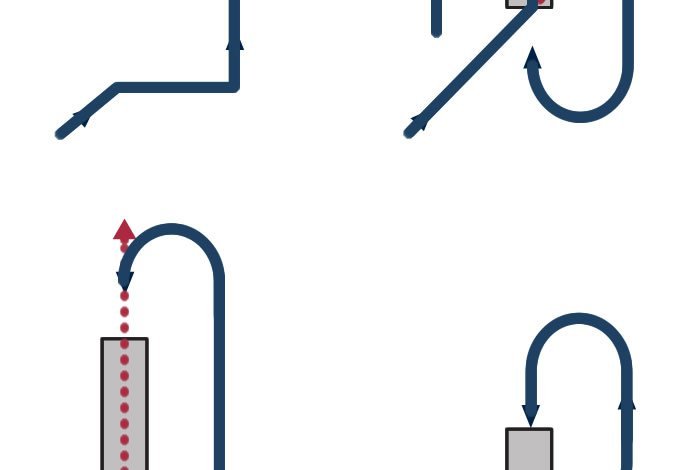
Incomplete Circles

Not all approach procedures are aligned with the runway on which we want to land. Once we have it in sight, to get from the procedures missed approach point (MAP) to the desired runway, we may need to maneuver well within 1000 feet agl in low visibility, and do it at a relatively low airspeed to remain within airspace protected from obstacles. Its called circling to land, and is one of IFRs red-headed stepchildren: a visual maneuver, with IFR constraints.Sadly, a few of us each year prang airplanes while circling to a runway after an approach. To learn more about how and why, we looked at a collection of recent accidents during circling maneuvers. They all seem to have a few things in common, like banking too steeply in turns and letting the airplane descend too early.

Read More »

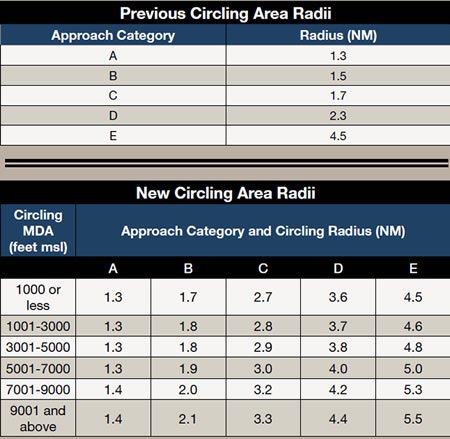
Protected Airspace For Circling Approaches

As noted in this articles main text, the FAA recently revised its criteria describing how much airspace is required to perform the circling maneuver. The new criteria consider the altitude at which the aircraft is circling. The higher the altitude, the greater the true airspeed when circling at the same indicated airspeed, and thus the greater the turn radius, which makes expanding the protected airspace desirable. The downside? Many minimum descent altitudes for circling approaches will be going up. The two tables below compare the previous criteria to the new.

Read More »

Is Stability All That Important For Instrument Work?

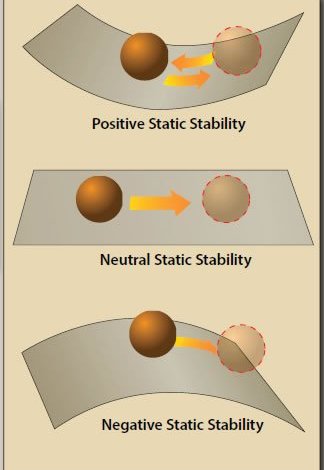
When considering an airplanes stability, we need to distinguish between static and dynamic stability. The FAAs Pilots Handbook of Aeronautical Knowledge, FAA-H-8083-25A, says the static version relates to the aircrafts initial response when disturbed from a given AoA, slip, or bank. It comes in three flavors, each of which are depicted at right:

Read More »
Pilot in aircraft
Sign-up for newsletters & special offers!

Get the latest stories & special offers delivered directly to your inbox.

SUBSCRIBE