Instrument Check

Winter Weather Tools

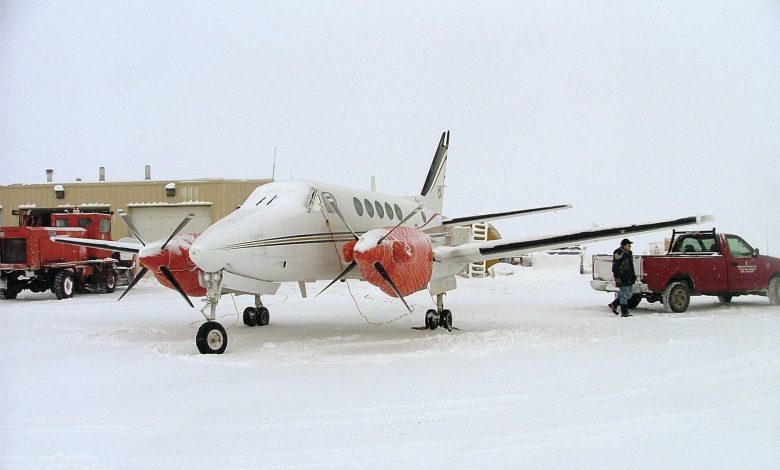
Like it or not, winter weather is upon us here in North America. After a few brief weeks of not as much thunderstorm activity, were headed squarely into a a couple of months featuring widespread near-freezing temperatures and precipitation. From storing our airplane, to preflighting it, picking a route and ensuring our destination doesnt have any slippery surprises, winter weather will have an impact on our operations, likely even if we stay in the pattern at a Southern California airport.


Read More »

Filing Direct?

Since Eric is a working controller, I respect his advice. I was a little surprised when he stated that filing direct grinds controllers gears. With GPS capability, filing direct has saved me a lot of time and money. It was never realized that doing so was creating a problem for anyone. It was not done as a sign of laziness or to engage in a bad practice, but to get in and out of the ATC system as quickly and efficiently as possible.

Read More »

Our Airplanes Are Aging

The event perhaps most demonstrative of what can happen as an aircraft ages occurred on April 28, 1988, over Hawaii. Thats when an Aloha Airlines Boeing 737-200 operating in scheduled passenger service as Flight 243 between Hilo and Honolulu lost part of its cabin roof while in cruise at FL240. The crew successfully landed the airplane after diverting to Maui. Of the 89 passengers and six crewmembers aboard, there was one fatality-a flight attendant who was swept overboard during the decompression event.

Read More »

Engine-Out Energy Management

Moreover, the FAAs Airman Certification Standards (ACS) for private and commercial certificates specify that pilots are to have knowledge of EM concepts for many maneuvers. They include emergency approach and landing, soft-field/rough-field landing, normal approach and landing, short-field landing, various types of water landings, power-off 180-degree accuracy approach and landing and go-around/rejected landing. The word knowledge implies pilots should have, at least, a basic understanding of EM concepts and be able to apply these concepts to tasks in the FAAs ACS.

Read More »

Ill Be Missing You

We all know how to fly a missed approach. We probably did a handful of them on our instrument checkrides, and when were out practicing approaches, even in a sim, we most often go missed. We may not be flying a full missed approach procedure as published, but we still have to reconfigure the airplane and climb away. When were practicing, we know how the approach will terminate: by going around at the missed approach point. Its what we expect when practicing.

Read More »

Airborne Hot Spots

The FAA defines a hot spot as a location on an airport movement area that demands heightened attention by pilots and vehicle operators due to the history of potential collision or runway incursion. Knowing where any hot spots are at the airports you intend to use arms you with useful risk management information. Meanwhile, the FAA has gone sort of nuts with the airport hot spot concept. Dont believe me? Check out the airport diagram for Addison Airport (KADS) in Dallas, Texas, below. Every taxiway intersection east of the runway is a hot spot.

Read More »

IFR Route Changes

Sitting around and talking with pilot friends, you hear nonstop talk about aircraft and equipment. Eventually, someone always brings up ATC in conversation. Pilots argue among themselves more intensely than Socrates debating Plato. One question that new and even veteran pilots bring up is why, when they file an IFR flight plan, that their clearance is usually never as filed but includes a route change of some sort.

Read More »

Rusty Pilots

The weight of the engine is only significant in that it is part of the center of gravity of the aircraft, which naturally lies aft of the main gear in a taildragger. Therein lies the problem, especially while landing. That center of gravity, without interference, will travel in a straight line when in motion, according to Newtons First law, which is often called inertia. It is imperative that we keep the airplane (longitudinal axis) tracking and aligned with that same straight line.

Read More »

Diesel Additive Again Contaminates Jet Fuel

After noting that five incidents of aircraft uncommanded roll events with the ATLAS activated have been reported to EASA and the FAA, the U.S. agency on May 24 issued an airworthiness directive (AD) grounding Cessna CitationJet 525, 525A and 525B models equipped with Tamarack active load alleviation system (ATLAS) winglets. The action is related to an EASA AD and is mandatory continuing airworthiness information (MCAI) issued by the aviation authority of another country to identify and correct an unsafe condition on an aviation product.

Read More »

Behind The Curve

The only time Ive performed what I consider to have been a for-real high-altitude takeoff, it went fine. I was at Albuquerque, N.M.s Double Eagle II airport, elevation some 5800 feet. It wasnt the middle of summer, but it was a warm, sunny fall afternoon. I dont recall which runway I used, but it offered more than enough length for my Debonair, which carried only me, some gear and full fuel. As Id been trained, I leaned the engine before the takeoff and let the airplane fly itself off the runway. I handled it gently until gaining enough airspeed to establish a proper climb and I had some altitude.

Read More »
Pilot in aircraft
Sign-up for newsletters & special offers!

Get the latest stories & special offers delivered directly to your inbox.

SUBSCRIBE