Instrument Check

Approach Configuration Management

The concept was new to me when I first started teaching in high-performance aircraft: There are pre-chosen settings for aircraft power and configuration, i.e., flap and landing gear position, that result in predictable performance. Set the power, establish the configuration, and the airplane will perform as expected. Manage the drag (with gear and flaps) and power (manifold pressure and propeller, turbine speed or pressure) and the airplane will attain the proper airspeed and vertical speed for an approach or a missed approach.

Read More »

Using Your Engine Monitor

I remember the first time an EIS (engine information system, commonly known as an engine monitor) saved my bacon. I was in a Cessna 210 I’d flown for many years by that time and we were high over Varadero, Cuba. I looked over at the JPI engine monitor, a retrofit on this L-model, and noticed the LED bar representing the exhaust gas temperature (EGT) for the number two cylinder was bouncing around.

Read More »

Let Yourself Down

As an instrument instructor I’ve learned one of the most common topics of confusion among pilots is, “When is it safe—and expected—to descend in the process of an instrument arrival?” Confusion isn’t limited to non-professionals. One of the most frequent topics for quizzes and reviews in professional pilot journals involves determining the correct altitude to fly at various points on a charted terminal procedure.

Read More »

When Rabbit Won’t Run

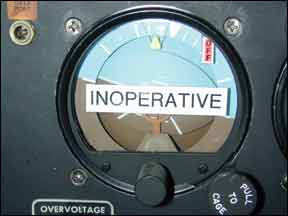
The inoperative table doesn’t cover every possible system failure. Plus, you also need to consider facility outages and equipment failures at your alternate.

Read More »

Ineffective Practical Test Standards

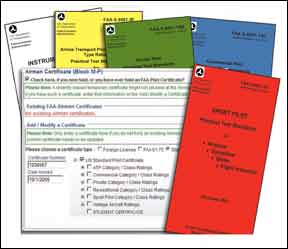
The FAA-prescribed practical test is the final hurdle every pilot must pass to earn a new certificate or rating, and the practical test standards (PTS) are where the requirements for success are spelled out. The PTS is what both aspiring pilots and examiners use to determine what’s to be done on a practical test and how. It’s supposed to be the final assessment of whether a pilot can conduct safe flight operations.

Read More »

Seven IFR Prep Tips

Approach, could you read back the arrival waypoints…we can’t seem to find that arrival….” The request got my attention because it came from the aircraft somewhere ahead of me in the soup of a thick overcast, headed to the same airport. The controller had just warned of a pending change to my arrival plans by changing those of the flight ahead of me. Taking that change as a cue, it was easy to turn to the last plastic-protector page in my little IFR folder—where I’d already inserted the appropriate page. It was less luck than experience, which had tutored me on the likelihood of a traffic conflict with another airport’s arrivals.

Read More »

The Day The Waypoints Died

Imagine you’re cruising high above an undercast, in smooth, clear skies. The GPS in your panel shows you making good time, with about an hour remaining to your destination. The Center frequency has been fairly quiet; you know there are a lot of other IFR airplanes out there, but everyone is settled into cruise so all you hear are the handoffs to the next sector or approach facility, or the occasional clearance for an approach into a rural airport. Then, without warning, your GPS advises it’s lost a usable signal. The magenta line by which you’ve been navigating direct to your destination airport disappears and you have no more groundspeed or position information. Everything else seems normal—it’s not an electrical failure, at least not to the airplane’s entire system—but you no longer have GPS navigation.

Read More »

Is It Airworthy?

With a few exceptions, the typical personal aircraft is relatively reliable. Modern, solid-state avionics rarely break, we long ago figured out how to build and maintain mechanical flight instruments and, presuming the airframe is both flown and maintained regularly, dispatch reliability of personal aircraft often can be compared to the modern automobile. But, stuff does break every now and then, usually right before were prepping to launch for a family vacation or an important business trip. Some failures automatically mean going via human mailing tube; others often can be resolved after a couple of hours in the shop. In between those two extremes are equipment failures which may reduce the aircrafts capabilities, but dont materially affect either its airworthiness, ability to fly or safety.

Read More »

Prepping For The IPC

November 12345, cross 20 southeast of the Nashville VOR at 4000….” “Maintain best speed to the outer marker….” “Hold as published, expect further clearance at one-five past the hour….” “Radar contact lost, intercept Victor 509, report crossing NXTFX intersection….” “November 12345, an amendment to your direct clearance; fly heading 220 degrees to intercept the OKC 355 radial, then cleared to the OKC 30 DME fix, thence inbound on the Pioneer VOR 195 direct Pioneer, Victor 77 Wichita, direct….”

Read More »
Pilot in aircraft
Sign-up for newsletters & special offers!

Get the latest stories & special offers delivered directly to your inbox.

SUBSCRIBE