Instrument Check

Approach Treachery

Aspen, Telluride, Hayden, Jackson, Sun Valley, Missoula, Ketchikan, Juneau.

These beautiful locations have some of the most treacherous instrument approaches found anywhere in the United States for one simple reason: big mountains. It will be many months before the NTSB issues its final report on the fatal accident of the Gulfstream that crashed during its final approach into Aspen on March 29, and the preliminary report it issued shortly after the crash contained less information than the local newspaper.

To state that the instrument approaches into these locations are tricky is an understatement. As a former EMS and fire-fighting pilot operating into all of these airports, I can te…

Read More »

Parallel, Teardrop, Direct, huh?

Just for fun, ask an instrument student to describe the single most confusing part of learning to fly instruments. Then ask a veteran instrument pilot to describe the single most confusing maneuver involved with instrument flight. Odds are youll get the same answer: holding pattern entries.

Holding patterns just dont get any respect, which isnt surprising considering theyre a last-ditch effort to salvage a route thats in jeopardy because of traffic or weather. Controllers dont like stacking up airplanes, and pilots certainly dont like droning around in circles for $100 an hour.

Sometimes holding is a necessary evil, but many instrument pilots secretly quake at the thought of t…

Read More »

Nailing the Needles

[IMGCAP(1)]The first time a pilot on an ILS approach sneaks under the glide-slope is almost always a situation where he is on an ILS final, approaching minimums. Hes close to decision height and suddenly there are patches of ground appearing intermittently below. An instant later, the strobes are visible. He drops below the glide path and the runway is straight ahead. The pilot later realizes that remaining on glide slope at decision height would have meant executing a missed approach and possibly a trip to the alternate airport.

On the next gamble, he descends a little bit more below the glideslope path – and it works again. In fact it may work a number of times. The best estimates i…

Read More »

Round and Round

The circling approach should be the easiest maneuver in an instrument-rated pilots repertoire of skills.

Its really just an IFR descent to get beneath the clouds and then a visual approach to the landing runway – in essence a VFR pattern, but at roughly half the usual pattern altitude. Yet NTSB data shows that circling approaches account for about 30 accidents per year, most of them fatal. Since 1983 there have been 577 accidents due to circling instrument approaches. A review of the record shows that three major causes stand out: circling below minimums, steep turns to stay within the runway environment, and beginning the final descent before acquiring the proper glide path.

Recal…

Read More »

Gimme Gyros

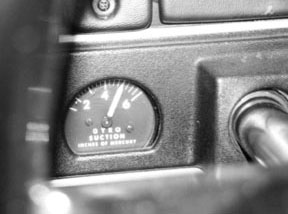
Partial panel isnt a death sentence, but backups – from simple manifold suction to complete panel redesign – turn it into a nonevent.

Read More »

No Radar? No Problem

[IMGCAP(1)]Listening to ATC is a favorite diversion for my wife as we approach our destination, particularly when the weather is ugly. The chatter between pilots and controllers can be comforting, giving an eavesdropping passenger the impression that were all professionals quietly going about our routine missions.

But whats truly routine to a pilot can startle a passenger unfamiliar with the finer points of IFR flying. I recall the look of horror on my wifes face the first time she heard the phrase radar contact lost when I was cleared for an approach while we were bouncing around inside some turbulent gray clouds.

Like many, she had the impression that we couldnt land without…

Read More »

IFR Planning: Tactics vs Strategy

[IMGCAP(1)]A friend of ours likes to say that flight training is supposed to be difficult and unpleasant, otherwise everyone could learn to fly. We have to wonder if his grim humor forms more of the underpinning of the flight training edifice than were willing to admit.

Perhaps thats one way to explain the illogical way pilots learn the basics of flight planning generally and IFR planning specifically. The IFR written still contains a series of impenetrable questions that require pin point use of a whiz wheel to calculate time en route and fuel burns to a resolution of a couple of minutes – this despite the fact that no one does that in the real world and probably hasnt since the 1950…

Read More »
Pilot in aircraft
Sign-up for newsletters & special offers!

Get the latest stories & special offers delivered directly to your inbox.

SUBSCRIBE