Features

Filing an Alternate is Required…Unless…

When filing an IFR flight plan, the language of FAR 91.169 makes listing an alternate airport the default: You have to name one unless the circumstances of the flight are such that it falls under both of the two listed exceptions: First, the airport must have a published instrument approach procedure. Second, the forecast weather meets the 1-2-3 rule: For an hour before to an hour after the ETA at your destination, the weather is forecast to be equal to or better than a 2000-foot ceiling with three statute miles visibility.
Read More »

Departure Alternates

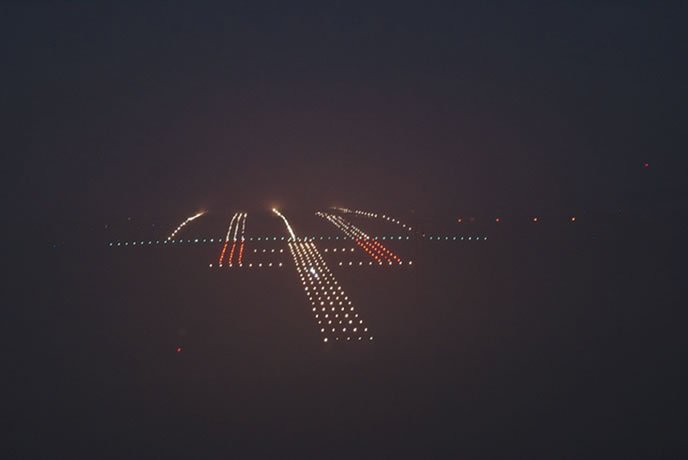
Aviation Safety recently ran two articles, in the December 2014, and January 2015 issues) on the various considerations involving low-weather IFR departures. Under FAR 91, if we can find the runway in the fog, its legal to launch. Somewhat Darwinian, but legal.

Read More »

Finding Alternates With An EFB App – Is This Really So Hard?

Electronic flight bag (EFB) apps running on a tablet computer, as depicted above, have greatly increased the typical pilots SA (situational awareness). As this articles main text relates, some pilots havent figured out how to use their EFBs to answer the many questions necessary to legally and safely pick alternate airports. They supposedly prefer paper charts and a plotter. (Really. Have you guys seen the size and number of books of Aeronav charts required for 48-state coverage lately? The proliferation of LPV, LNAV and similar approaches has swollen them in size, weight and number.)

Read More »

Which Way Will It Go?

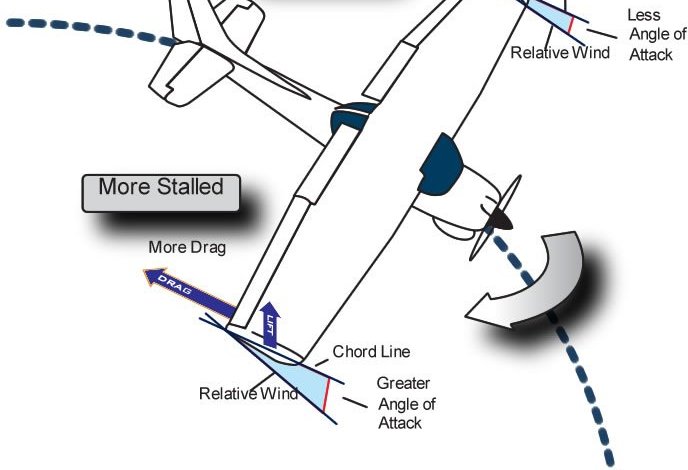
For many, predicting the direction in which an airplane will spin is a Fools Errand-any spins should be avoided in the first place. But understanding how a spin develops and how control deflections help determine the spin direction also can help us avoid them.

Read More »

Time To Bite The Bullet?

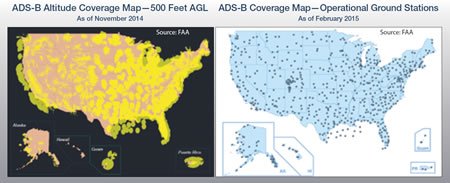
Unless youve been living under a rock, youve probably heard of ADS-B, or Automatic Dependent Surveillance-Broadcast. As of January 1, 2020, youll need this equipment to routinely fly in U.S. airspace where the FARs now require a working Mode C transponder. The FAA rule mandating ADS-B in 2020 went into effect in 2010, so theres little argument that operators havent had enough warning about it, and its not likely the FAA will change the deadline. There are two flavors of ADS-B, the in and out kinds. For now, only ADS-B Out is required in 2020; ADS-B In is optional. Both flavors are operational today, as the two coverage maps below demonstrate.

Read More »

Losing It

Spatial orientation is the bodys natural ability to maintain orientation and/or posture in relation to the surrounding physical environment, both at rest and in motion. Its a highly evolved ability, which uses visual and vestibular (inner ear) sensory inputs, as well as our sometimes unconscious ability to understand positioning of our body and its various parts. Together, these senses tell our brain what our body is doing and what is happening to it.

Read More »

Flying The Flare

The ideal flare results from one continuous motion, beginning with raising the airplanes slight nose-down attitude to arrest the descent, all the way through touchdown on the mains in a nose-high attitude. Few of us are that good-or that lucky-so we fall back to doing it in stages: pitch slightly up to slow the descent rate and begin decelerating, wait for the effect to be known, then add more nose-up. Rinse, repeat. The timing and rapidity with which we pitch up the second time depends on everything thats happened before on this approach: How high are you? How fast? How much power are you carrying into the flare? How heavy (or light) is the airplane? How stiff is the headwind youre flying into, if any? Based on the answers to these questions, well either add more nose-up input or hold what weve got. Then we do it again until establishing the desired nose-up pitch attitude, right above the runway at stall speed.

Read More »

Top Five Landing Tips

If youre doing it right, and everything works as advertised, that takeoff you just made eventually must be followed by a landing. While takeoffs pose their own challenges, landings can be problematic for many pilots. You might have a problem with airspeed, or with when and how to flare. You might have a problem with picking an aiming point, or what to do when pointing the airplane at it becomes elusive. But thousands of pilots make thousands of successful, we-can-use-the-airplane-again landings each day, and none of them are super-pilots. You can, too.

Read More »

IFR Training In IMC?

Ive never felt it appropriate that a pilot could obtain an instrument rating without flying in clouds. From a safety standpoint, it seems ludicrous. I received instrument dual in IMC and have done my best to make sure my instrument students get experience in the clag before taking their checkride. Nevertheless, I recognize that there are flight schools and instructors who will not give dual in IMC for various reasons. Over the years, Ive spoken with a number of them about the issue.

Read More »
Pilot in aircraft
Sign-up for newsletters & special offers!

Get the latest stories & special offers delivered directly to your inbox.

SUBSCRIBE