Commentary

ICON A5 Feedback

First my condolences and prayers go out to the entire Halladay family; his was a tragic loss.I commend Mr. Wright on his emphasizing risk management awareness, not only regarding the A5 but similar general aviation safety issues. Unlike many light sport aircraft that I am familiar with, the A5s inherent engineering design and safety features are second to none.

Read More »

A Big Win, For Now

Long-time readers will recall my several scribblings in opposition to proposals to privatize the U.S. air traffic control (ATC) system, and my encouragement to those same readers to communicate their views to their federal elected officials. Im happy to report our opposition to this solution in search of a problem has been successful: On February 27, U.S. Rep. Bill Shuster (R-Penn.), the proposals architect and chairman of the House of Representatives Committee on Transportation and Infrastructure, announced he would remove it from pending FAA legislation.

Read More »

Fuel Tank Frustrations

Right fuel tank cracked at top seam. Tank was replaced. Operator noticed a very loud oil canning sound from right wing after shutdown following a one-hour flight. Investigation revealed a partial blockage of the fuel tank vent, causing oil canning of fuel tank due to vacuum in fuel tank. Vent line was cleared and vented cap was replaced with new.

Read More »

Good IFR Platform?

Thanks for Bob Wrights article in the September 2017 issue, Single-Pilot Challenges. I wanted to comment on a sidebar accompanying the article: What Makes A Good IFR Platform. I agree with the authors take that range, speed and installed equipment all combine to make an airplane enjoyable to fly in the IFR environment. Those lacking similar capabilities obviously can be flown on IFR cross-countries, but come with various shortcomings that may need to be addressed depending…

Read More »

Single-Pilot Jets

While most of us probably feel fortunate to be able to fly any kind of general aviation aircraft, most of us also have fantasies about owning and flying more expensive machines, including jets. A small number of us achieve that goal and obtain certification to operate small jets single-pilot. But the safety record of these operations is mixed. Some recent accidents point to gaps in the training and checking associated with single-pilot type ratings.

Read More »

NTSB Highlights Gas Fuel-Related Accidents

The NTSB in August released the latest in a series of what it calls Safety Alerts, which focused on preventable accidents stemming from fuel starvation or fuel exhaustion. According to the Safety Alert (SA-067, Flying On Empty, August 2017), an average of more than 50 accidents each year in the five years from 2011 to 2015 occurred due to fuel management issues.

Read More »

Entry-Level Machines

We own and fly a Diamondstar DA40 from our home in Michigan to destinations all over the country. Generally my wife and I plan a two-week trip each fall and spring, often to the coasts. However, the word plan is figurative as we expect weather deviations and our routing may change at any time. We literally wake up in the morning, look at the current weather and decide our destination for the day. Typically, we will fly no more than 500 miles and land at a suitable GA airport. While I button down the airplane, my wife books a hotel, rents a car and finds out what to see and do in town from the always-friendly and helpful FBO staff.

Read More »

Maintaining Performance

Airplane performance and good maintenance are closely related. The figures published by the manufacturer are frequently viewed as optimistic once an airplane is put into service-and suffers prop nicks, bugs on the leading edge and a couple of bad landings-but book numbers can be achieved even years later. When actual performance differs from the published numbers, its often because the airplanes condition has diminished over the years and hours of use. The level of maintenance an airplane has received over the years will have a significant impact on its overall performance.

Read More »

Graphical Area Forecast

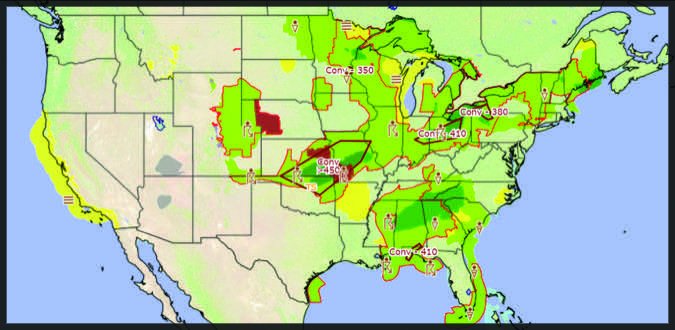
Beginning in our December 2015 issue, we shared with readers and explored ongoing efforts at the FAA and the National Weather Service (NWS) to replace the old, familiar text-based area forecast (FA) with a graphics-based product. A follow-up article in our April 2016 issue discussed some of the proposed changes and presented screenshots of the graphical replacement. Now, beginning about the time this issue is in your mailbox, a three-month transition period will begin, ending in October, at which time the text-based FA covering the Continental U.S. (Conus) will be no more.

Read More »
Pilot in aircraft
Sign-up for newsletters & special offers!

Get the latest stories & special offers delivered directly to your inbox.

SUBSCRIBE