Commentary

Water, Water Everywhere

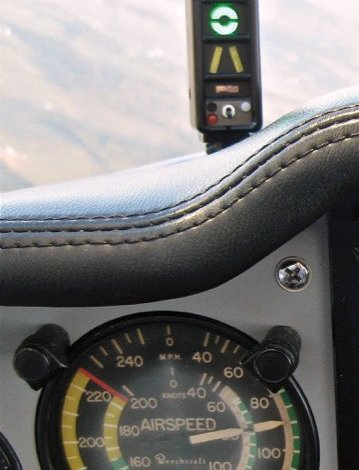
While retrieving the airplanes paperwork and keys, I was told its airspeed indicator (ASI) was acting up. It was reading low, according to the FBO, and the airplane was due for some shop time later that day. The shop hadnt opened yet that morning, though, and I had plans later in the day, making a delay problematic. I asked if the airplane was grounded. No, was the response.
Read More »

Risk And Benefit

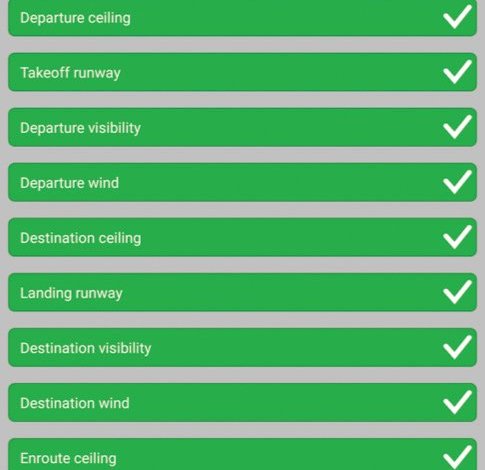
I much appreciated Robert Wright’s May 2018 article, Risk Assessment Tools. We use a version of a flight risk assessment tool in our flying club, and while I agree that numerical values should not be the sole criteria for the go, no-go decision, the process does provide a checklist of sorts for decision-making. The most valuable risk assessment tool I use is not found on any web site or aviation app, but is the application of a simple philosophy: If I have to analyze a go, no-go decision for more than a few seconds, it is a sure sign that the risk requires serious mitigation or a willingness to stay safely on the ground.

Read More »

Flight Review: Nuisance Or Opportunity?

Most pilots who fly single-engine piston airplanes in non-commercial operations do not undertake formal training at annual or other intervals. Instead, they are only required to complete a flight review from a certified flight instructor (CFI) every other year to fly as pilot-in-command. For most pilots, this is an exercise to be completed with as little effort as possible. Some pilots resent the requirement while a few even dread it. This doesnt have to be the case, however.

Read More »

Remember Your Training

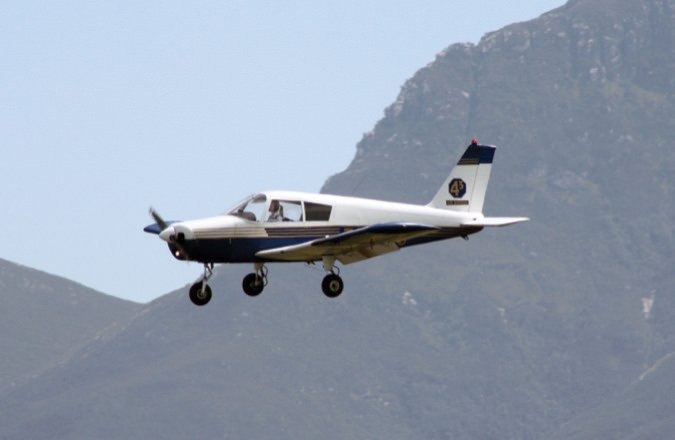
I was still a student pilot, with maybe 20 hours, most of it dual instruction, somewhere between my first solo and the checkride. My primary mount was a Cessna 150 but I had recently been checked out in the FBOs Cherokee 140. One day, rather than take the 150 for a local flight, I opted for the Piper.The airplane actually was a bit intimidating: A more powerful engine. Only one door. A low-mounted wing, like a jet fighter. A fuel system demanding that the pilot energize the auxiliary pump for takeoffs and landings (and change tanks every now and then), both of which were features the 150 didnt have. Rear seats! It was definitely a step up from the 150, at least in complexity, and I was itching to solo it.

Read More »

Mind The Gaps

NY NEXRAD. There is a large wind farm nearby with turbines oriented from due north through southeast of the radar. The turbines are close enough (within 18 km) to cause spurious multipath scattering that extends well beyond the wind farm and contaminates data at multiple scanning elevation angles.ӟOur modern Nexrad (Next-Generation Weather Radar) system is still based on radar

Read More »

The Air Is A Fluid

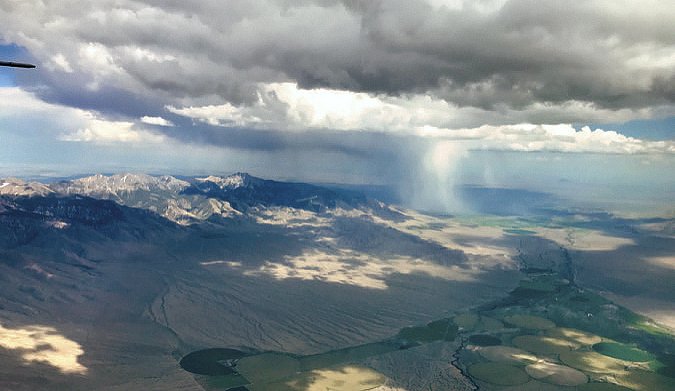
Iwish I had read, or at least learned the material, in Mike Harts April 2018 article (Seeing The Invisible) before my husband and I departed on a flight from Santa Monica to Lone Pine, Calif., back in 1998. My excuse is that I had not yet earned my certificate. At the time, I blithely believed the plane simply went where you pointed it.

Read More »

Why Do We Stall?

Fixed-wing pilots start learning stall recognition and avoidance during pre-solo training. The private and sport pilot checkrides require recovering from developed stalls with minimal loss of altitude, and stall and spin awareness are (or at least should be) refreshed during flight reviews for the duration of ones flying career. But unintended stalls still put dozens of airplanes into the ground every year. Is it possible that stall training as currently practiced isnt as effective as it might be?

Read More »

Normalizing ADS-B

A favorite pastime is surfing the online used airplane ads. I check the market value of what I already own, Im interested in whats available if I wanted to trade up and Im curious about obvious trends in used airplanes. Its a non-scientific exercise, but one from which I can draw some conclusions.

Read More »

Low-Viz Takeoffs

Last December 24th, a Cessna 340 crashed at Bartow, Fla., during an attempted predawn, IMC departure. All five aboard the airplane died. We dont know yet what factors, if any, beside the weather may have contributed to this Christmas Eve tragedy. Regardless, the circumstances should remind us of the extra planning and skill needed for a departure into low IMC, day or night-even if everything is going right.

Read More »

NTSB Reports

At about 1725 Eastern time, the airplane sustained substantial damage following a landing gear separation during landing. The flight instructor in the right seat and the pilot receiving instruction in the left seat sustained no injuries. Visual conditions were present.

Read More »
Pilot in aircraft
Sign-up for newsletters & special offers!

Get the latest stories & special offers delivered directly to your inbox.

SUBSCRIBE