Airmanship

Extreme-Altitude Hazards

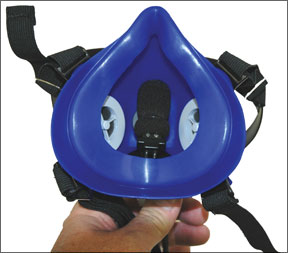
Most of my flying career was spent with an oxygen mask either five seconds away, or with it on and breathing 100-percent oxygen. After many sessions of lectures, altitude chambers and flight missions, oxygen education became a kind of gray thing. While the essentials stayed in the back of my mind, the details faded. That is, until my best friend died at the hands of the hypoxia monster. I learned and re-learned a lot during those next few weeks. One of the things I learned (or re-learned) is just how hostile is the high-altitude environment when were not prepared for it. Often, unfortunately, even if we are prepared, it can still rear up and bite us. Of course, the big problem with high-altitude flight operations is it can be a long way down to a safer level, where the air is denser. As well discover, an inability to breathe without some kind of assistance is just one of the problems.

Read More »

Understanding Wing Flaps

They seem to come in as many varieties as hotdogs-and with about as many interesting names. You know what I mean: Chicago Style, New York Style, Half-Smoke, Coneys, Hot Links and so forth. Ordering without confessing unfamiliarity with variations in flavors, spices and condiments can prove painful. Its the same with flaps, though the consequences of inadequate knowledge are different. For example, you need to know what kind of flaps youre flying and how theyre used. This knowledge, in turn, enables their management for takeoffs, landings and other operations. Knowledge of your flaps and their peculiarities can be particularly powerful should you find yourself in unusual circumstances, and need to maximize their benefits. Lets take a look.

Read More »

Put Down Your Checklist!

A wise old pilot once told me here are three distinct types of flying: simulator flying, checkride flying and typical everyday line flying. Although the context of this nugget was originally air carrier operations, there seems to be an innate understanding of this concept among all pilots. When administering flight reviews to experienced owner-pilots, I often get to see them on their “best behavior.” Of course, flight reviews arent checkrides, but many pilots view them as such, especially if its been a while since their last “real” pass/fail flight. While somewhat flattering to me, its usually obvious which aspects of their behavior are part of their normal operation and which are a show put on for my benefit. Often, Ill see them whip out a ratty old checklist, dust it off and try to use it sequentially as a do-list. Almost comically, the effort comes across almost as awkward as a middle school dance: The desire is there, but they just dont seem to know what to do with it.

Read More »

The Mountain Pass And Ridgeline Venturi Effect

Mountain flying is one of the more challenging but rewarding types of aviation available to most pilots. The scenery is magnificent, landing on remote strips affords access to some of the least-trammeled locations on Earth and its rare to find much of a crowd. Whole books-and careers-have been based on the skills and knowledge needed to fly mountainous terrain safely. Indeed, the hazards of mountain flying in personal aircraft go far beyond what is normally taught to “flatlander” pilots in ground school. Most mountain flying caveats dwell on the vagaries of leeward hazards such as downdrafts, waves, rotors and resulting turbulence. The effects of temperature and altitude on aircraft performance also are part of this equation, as is the reduced power available when a normally aspirated engine is taken up to around 10,000 feet msl and the pilot forgets proper leaning. This is not one of those articles.

Read More »

Night Flying Lessons

Night flying can be just as safe as flying in the daytime-but it isnt. Although accidents are more likely to occur during the daytime, according to the AOPA Air Safety Foundations 2007 Nall Report, accidents at night (and in IMC, for that matter) are more likely to be fatal. “Only 19.2 percent of daytime accidents resulted in fatalities, but over one-third (34.6 percent) of all night accidents were fatal.” Meanwhile, the same report states, “At night, nearly half of the accidents in VMC conditions were fatal (45.0 percent), compared to nearly three-fourths of night IMC accidents (74.1 percent). Night-flying accidents are generally thought of as being caused by inexperience-by students, or low-time pilots-but nighttime offers an equal opportunity for embarrassment, or worse. Experienced airmen are involved, too.

Read More »

The Forgotten Maneuver

Go-arounds (sometimes called rejected landings) are something of a “forgotten maneuver” for most pilots. I think this is because the go-around is something were taught as a way to fly away from a botched landing. As we gain more experience and get better at landing, we find ourselves needing this escape route less frequently. The psychology of pilots is such that we try to “recover” from our mistakes, so we also tend to try to turn bad landings into good ones with a nudge of the throttle, a tap on the rudder pedal, or a twist of the controls instead of powering up and climbing away for another try. Instructors can fall into the same trap. Failing to see a reason for a go-around in their experienced students landings, they might not require demonstration of a go-around during a flight review or other recurrent training. If the pilot receiving instruction is instrument-rated, the CFI may consider flying a missed approach to be adequate to demonstrate go-around technique. I must admit for a time I was in that camp as well. When was the last time you practiced a go-around? With experience, ego and unenlightened instruction, it may have been a very long time. So what happens on the day something completely outside the span of your expert aircraft control requires you to call off the landing from a point very near (or even on) the ground?

Read More »

Flight Following

For some flights, filing and flying in the IFR system is the way to go. For others, its appropriate to turn off the radios and revel in being one with the machine, without external distractions. Somewhere between these two extremes exists VFR flight following, a neither-fish-nor-fowl compromise of obtaining ATC services on a workload-permitting basis but without as many rules. For many cross-country flights, its the right solution to the question, “Shouldnt you be talking to somebody?” Like so many other things in aviation, theres a right way and a wrong way to go about it. For example, using the mouth to ask for flight following before engaging the brain to efficiently make the request can guarantee a terse “unable.” And once you get your magic squawk code and radar contact is advised, you can relax-a little-satisfied ATC will keep most of the big stuff away from you. But flight following isnt a final solution to your navigation or see-and-avoid procedures.

Read More »

Unfamiliar Airports

Hanging out for some hangar flying with some fellow pilots recently, the lies swapped were covering the spectrum, from weather dodging and electrical-system failures in IMC to cautionary tales circulated about other aviators flights with questionable fuel. But one of our little gang spent most of the session distracted from these obviously important proceedings, preparing for a flight the following morning. A relatively seasoned pilot, he largely zoned out of the session, looking at en route charts, collating his paperwork and notes, and closing out his preparations with a phone call to the destination airport-one hed never before visited. A fairly new pilot of about the same chronological age, but with a far-thinner logbook, offhandedly and inadvertently revealed an approach to planning that drew snorts of disbelief from the veterans, a tough room filled mostly with pilots who flew professionally. “You called the airport?” our middle-aged newbie taunted after the phone call ended. “Airport directories are online; Internet sites are available, along with those new sites with video-and you call?!?” Then came the big mistake. He produced his latest play-pretty, offering it up as the solution to the old pilots needs. “Heck, my handheld GPS has the entire airport directory…whaddaya want to know?”

Read More »

First Flight Home

Insurance companies have pilot checkout provisions for a reason-the first hours in a new aircraft are higher-risk than routine operations. The week I made an offer on my very first airplane, a pilot crashed and died on his way home in his newly purchased Piper Comanche. I obviously wanted a different outcome for my trip to pick up a new plane. The next week, my co-owner Roger and I would be bringing our newly purchased 1960 Cessna 182-N225M-home to Idaho Falls, Idaho. Unfortunately, our new plane was located in Glenwood Springs, Colo. Picking it up would require a long VFR cross-country flight across the Continental Divide in the middle of winter. We also wanted to make the trip on a weekend, preferably in a single day at a time of year when the days are notoriously short and the weather consistently bad. Our plan was beginning to sound like the opening narrative of an NTSB accident report. Flying a newly purchased plane on a long cross-country trip is a non-routine, high-risk mission. Why? There are numerous factors that can line up the wrong way to complete the chain of events that lead to an accident.

Read More »

Understanding the Difference Between a Headwind and a Tailwind

I have a 100-knot airplane. Oh, sure; the airspeed indicator usually reads much higher than that. But when it comes down to what really counts-rate of movement over the ground-my shiny, expensive, 160-knot airplane is frequently relegated to speeds closer to those of an 18-wheeler on the Interstate below me. The reason? Headwinds. Eastbound, westbound-any direction-its not a matter of whether Ill have a headwind, but how strong it will be. If I plan a trip for Tuesday, on Monday the chosen route will afford a nice little nudge. On Tuesday, the fickle fates will deal a howling 40 knots on the nose. After an unplanned fuel stop, Ill drag into my destination about two hours late, landing only after being forced to shoot an ILS to near-minimums and well after the FBO has closed. The only food available will be a warm Pepsi and a package of cheese crackers. On Wednesday, that same route will once again have a nice little tailwind. Such is my life. Of course, there are good, logical reasons for headwinds. Lets explore them.

Read More »
Pilot in aircraft
Sign-up for newsletters & special offers!

Get the latest stories & special offers delivered directly to your inbox.

SUBSCRIBE