Airmanship

Your Next BFR

Aviation engages us in various checks and balances, all in the name of safety-ours as well as those on the ground. Consider the checks faced by aircraft owners and pilots. We have annual inspections and 100-hour checks for aircraft commercially engaged. The goal, of course, is assuring the airworthiness and safe operating condition of the aircraft, spinner to tailcone. Humans also face an “airworthiness” check, the medical exam. The intervals vary, too. Beyond our own “airframe” inspection, our favorite aviation agency also requires a periodic demonstration of our competence every two years called the flight review.
Read More »

Accuracy Landings

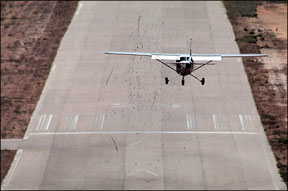
One of the rewards from operating personal aircraft involves meeting and overcoming challenges, particularly those self-induced by targeting an outcome and nailing it. Many pilots feel an understandable sense of accomplishment with spot-on flight planning. “Got it within two minutes!” one close friend exclaimed a few weeks back about an ETA. Others get seriously into predicting their fuel consumption, then comparing their flight-plan numbers to those on the fuel truck. My aviation upbringing valued many factors, but my mentors were a little like drill sergeants over accurate landings. That meant nosewheel (or tailwheel) on the centerline, inside the touchdown zone, ideally within an airplane length of the threshold paint.

Read More »

Unknown Icing

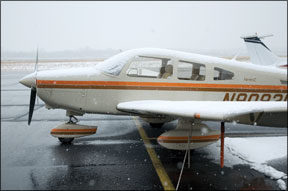
This time of year in the Northern Hemisphere, airframe icing takes on much greater importance for most of us flying personal airplanes than it does at other times. There are good reasons for that, and anyone trying to conduct regular winter operations should closely monitor weather trends and plan accordingly. But the seasons wet and cold can create an icing-accident situation even on a severe-clear day with dry air. All it takes is some water and cold temperatures. The fact is, you need not encounter textbook icing conditions for the slick stuff to pose a threat when the ice hides inside the airframe, out of sight, probably out of mind but most definitively not out of the picture.

Read More »

Five Diversion Details

Some days are like trying to nail Jell-O to the wall: Youve planned well, the airplane is ready and fueled, youre fit to fly the trip…only the trip isnt ready for you. Best-laid plans and all that, but along the way something changed. You have to divert. You need a new plan. Maybe its because Mother Nature threw up a wall with swirling black clouds spelling out, “Go away!” or spread soft-but-deadly IFR scud on the flight path of the VFR pilot. Maybe someone landing at your destination forgot to put down the gear before flaring above the airports only runway. The Fates can deal up a common ground loop or any one of a dozen other ways to effectively mark a big white “X” on your destinations runway.

Read More »

Playing Defense On Takeoff

A recent spate of high-profile runway excursions involving airline operations got me thinking: Runway overruns are not a topic on which the average GA pilot receives much comprehensive instruction during flight training. The pros have operational policies providing the parameters and protocols by which takeoffs and landings must be done each and every time. But for the rest of us not flying the big iron in conformity to op specs, theres no similar, systematic defense strategy utilized against running into the ditch. In fact, the varied nature of GA flying itself-sporadic flights, from local VFR practice to an IFR cross-country-actually presents a greater challenge than that done by the pros flying the same bus route day in and day out.

Read More »

Density Altitude: Five Things To Remember

Weve all been through enough ground school to know and understand that high ambient outside temperatures adversely impact aircraft performance. The relationship between temperature and altitude, of course, is termed density altitude, which describes a locations pressure altitude adjusted for temperature. To put it another way, density altitude is your elevation when measured in terms of the density of the air rather than height above sea level. It can be higher or lower than your actual altitude above sea level.

Read More »

Going Soft

My first time landing on something other than pavement was with an instructor in a Piper Arrow. I had yet to earn my private certificate, and we were out doing a combination of familiarizing me with a complex/high-performance airplane and transporting some items for the FBO. The most memorable occasion also involved an instructor: We were returning from a spin-training session to a grass strip just soaked by a passing shower. He landed long, locked the 152s brakes in standing water and we sluiced our way to within 30 feet of the fence at the far end. More than anything, that was a demonstration of how not to do it.

Read More »

Finessing Fuel

Few in-flight emotions evoke more sweat and discomfort than when youre unexpectedly low on go-juice and arent sure your remaining fuel is enough to keep the engine spinning until touchdown. If ever youve experienced the accompanying emotional swing, you already know that they stay with you. First comes disbelief-“I cant be that short….” Next comes the quiet surge of adrenaline-juiced anxiety between asking yourself the useless rhetorical question-“How did this happen?”-and when you turn to a useful one: “What do I do to survive this?” For the lucky, the final wave of emotions comes after the airplane is on the ground intact, on a real runway with the engine running…if, that is, youre really living well.

Read More »

Lighten Up Your Landings

I once counted as many as 10 pitch pumps between a jet transport arriving at 50 feet above the runway and touchdown. As the power came to idle (a bit further down the runway than necessary), the copilot planked it down with a predictable, rather heavy kerplunk. All survived. And they could use the airplane again. But theres got to be a better way. Its the last couple hundred feet where many pilots lose the finesse, presuming they had any to begin with. Its the case whether operating VFR or IFR, since most operations this close to a runway are visual.

Read More »

Saving The Approach

Its all but settled wisdom that a good landing is always preceded by a good approach. But define good? Does “good” mean you had the numbers nailed from the point you turned into the downwind? Or can you call an approach good if you sailed over the numbers on speed and kissed the pavement to make the first turnoff, even though you started too high and too fast and got behind on flap and gear extension? The second answer is the best one, in our view, because it implies two things: airmanship and judgment. The airmanship part means you have the skill to coax the airplane toward the right speed and attitude to land safely if not prettily. Judgment means you know when youre too far outside the envelope to even try to salvage an approach.

Read More »
Pilot in aircraft
Sign-up for newsletters & special offers!

Get the latest stories & special offers delivered directly to your inbox.

SUBSCRIBE