Aircraft Analysis

EFIS Evaluated

Electronic flight displays-glass cockpits in the modern vernacular-were a novelty just six years ago. Then all at once, it seems, they were everywhere. Every new airplane is delivered equipped with some kind of glass and older airframes are seeing retrofits. Steam gauges are still in the majority, but theres enough glass out there to pose this question: Is it really better? More important, is glass actually more reliable and safer? Lacking a detailed blind study, a take-it-to-the-bank answer isnt possible and would, in any case, be subject to debate. So we did the next best thing. We joined with our sister publication, Aviation Consumer, and surveyed more than 300 owners and operators of various types of EFIS displays. Via an online survey published by our news service, www.avweb.com, we asked owners to evaluate the very idea of electronic displays compared to conventional iron gyros and analog pitot-static instruments. Is the glass easier to use? Do owners like the displays? Whats the maintenance like? And above all, do these sophisticated but relatively untried systems inspire the confidence necessary to charge off into the gray innards of hard IMC? Both of our magazines have received e-mails complaining about system failures, and more than one of these has claimed reliability is worse than the industry claims. If this were true, we reasoned, our survey would turn up a substantial number of complaints. It didnt. While owners did report glass failures and several pilots reported more than one failure, there was no widespread pattern related to poor reliability.

Read More »

Managing Stability

The balancing act aircraft designers must achieve amazes me. Examples include trading useful load for a strong airframe, cabin volume for reduced drag and high cruise speeds for low-speed handling. And whenever handling stands out as an issue, its generally balanced against whether the airplane also shines in its stability-how, for example, it stays in the attitude we establish and resists any temptation of responding to gusts. Or, when we purposely upset a trimmed attitude, how it naturally tries to return to that attitude. Sure, its likely to “hunt” its way back to trim, but hopefully for just a couple of cycles. The designers mastery always makes an airplanes nimbleness seem that much more impressive-especially if it goes where, how and when you ask, and seeks to stay put in between. Stability counts. But it counts differently for different machine types. Some, like the NASA X-29 research vehicle pictured above, are naturally unstable, and able to sustain controlled flight only through computer processing. In the now-retired X-29s case, computers continually adjusted the control surfaces up to 40 times each second. Others, like a jet transport, are optimized to resist any disturbance and can easily be flown with just two fingers. But any airplane can be made unstable, especially when we load it carelessly, or fly it beyond the regimes its designer intended. Where the average pilot should be concerned is in the many ways we can contribute to its loss of stability.

Read More »

Oxygen Options

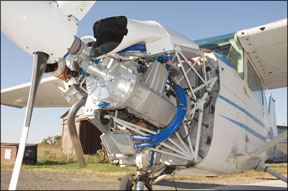
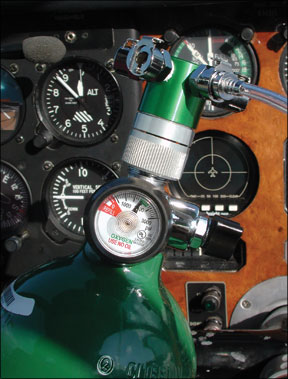
Not so long ago, when using oxygen in the cockpit graduated from the nice-idea to the must-have phase, the equipment took a quantum leap forward. In case you havent looked recently, state-of-the-art oxygen gear is better than ever, so good in fact that it may be time to toss that converted medical junk and upgrade. But what to buy? If your portable system dates back to the days when Loran was the hot choice for navigation, theres no need to spring for a complete new system to benefit from the latest stuff-a cylinder is a cylinder. Instead, upgrading some basic components will make using oxygen easier and cheaper. Sister publication Aviation Consumer recently took a close look at some of the latest products from the top oxygen suppliers in general aviation. What they found was more choices in regulators, flowmeters, cannulas, masks, conservers and monitoring devices, all at competitive prices. In fact, the industry has almost reinvented itself over the last 10 or so years, due in part to advances in the medical market. Just as improvements in consumer electronics have resulted in better, more-capable avionics, those medical advances mean higher-quality and easier-to-use oxygen systems are more accessible than ever.

Read More »

Tire Tech

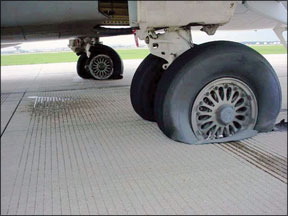
Few pilots pay much attention to their tires. They kick them a couple of times before lighting the fire, or put air in them when they look really low, but thats about it. Thats a little cavalier to us, considering those three (or more, if youre lucky) small, round, rubber donuts not only support the airplanes weight, but also supply the friction necessary to follow the yellow brick road and stop when you get to its end. As part of a project for sister publication Aviation Consumer, we recently had the opportunity to speak with industry executives about tires and tire failures, as well as a myriad of other related topics, while researching why aircraft tires fail. We found that, short of suffering a puncture, paying close attention to the airframe manufacturers recommended inflation pressure is your best bet to prevent tire failures. We also found that, to understand why proper inflation is key, we need to understand how these tires are made. The basic light-plane tire isnt that much different from the ones your grandparents used on their Model T. The current standards for aircraft tires are embodied in the FAAs Technical Standard Order (TSO) C62e, last revised in 2006 (that TSO only addresses tires; inner tube standards are set by the Society of Automotive Engineers). Instead of the radial-ply tires common on modern automobiles, your light airplanes tires likely are a bias-ply design, where the internal fabric cords are sandwiched between two layers of rubber and laid diagonally-at 30- and 60-degree angles to the tires centerline-and extend from bead to bead. Additional plies are laid opposite to each other. This contrasts with a radial-ply tire, a technology widely used by larger, faster aircraft. Its based on plies laid from bead to bead but at right angles to the tread.

Read More »

Preflighting Your Prop

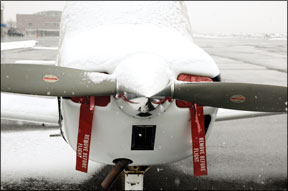
Unless youre among the small number of personal aircraft owners lucky enough to own a jet, your airplane has at least one propeller. It might be a fixed-pitch, metal or wooden affair, a multi-composite blade reversible spun by a turbine engine or one of the more ubiquitous constant-speed offerings from Hartzell or McCauley. And you might have more than one of them. No matter: Even a basic fixed-pitch model is a fairly expensive component, spinning away for hours on end, its tips approaching-in some cases exceeding-the speed of sound. If you have a constant-speed or full-feathering version, you also have a small collection of very expensive and specialized parts regularly subjected to massive forces. Contrast all that with what many pilots seem to think: A prop is a poorly designed handle with which to help move the airplane back in its hangar. In fact, according to the pros, treating your propeller like the critical component it is and lending it a little TLC every now and then can go a long way toward preventing costly maintenance. Or worse. The average propellers main enemy? Its not the wet-behind-the-ears private pilot who insists on using it to muscle the airplane in and out of the hangar. Its not even the guy who taxis over runway lights and into potholes while talking on a cell phone-more about him in a moment. Instead, prop shop managers and manufacturers reps tell us its aviations oldest bugaboo: corrosion. Look at just about any metal prop out on the tiedown line. Youll probably find its leading edge is rough, with small pits and-if it hasnt been painted recently-some whitish discoloration. Thats corrosion, and its slowly eating away at the prop.

Read More »

What Makes One Airplane Different From Another?

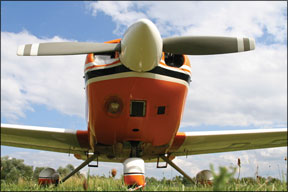
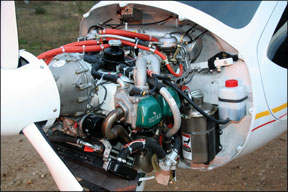
The trickle-down effect of installation of glass cockpits in increasingly modest airplanes has changed the type of checkout a pilot gets when seeking to rent a machine from the local FBO. Because presentation of attitude, altitude and speed of the airplane, along with health of its various systems, has changed so dramatically from round-gauge airplanes, there has to be a fair amount of time spent with an instructor on the ins and outs of the video screens. This is a very good thing, if for no other reason than getting a firm introduction to the avionics of an airplane before launching into the blue unknown may prevent a few pilots from killing themselves. One hopes the days of “Hey, its an airplane, lead me to it and Ill fly it” soon will fade into aviation legend, along with their associated accidents. The good news is that the newer, more technically advanced airplanes tend to have fewer secret corners in either their systems or their handling as certification rules have become more sophisticated. While some bemoan the increasingly “vanilla” flavor of handling and systems in newly certified airplanes, its hard not to appreciate that they tend to have fewer little secrets that will kill the uneducated. However, the reality is that most pilots are still flying airplanes acquiring senior citizen status-the airplanes, I mean-and failure to spend time learning the details of a particular type prior to flying it can prove embarrassing at the very least.

Read More »

Maximizing Aircraft Efficiency

Are you getting the most performance from your airplane? The fact is a considerable amount of unused performance gets overlooked by the average owner/operator. Both performance and range can be improved through common operational techniques, performing regular maintenance procedures and careful planning. Most of this “hidden performance” can be gained back from wasted fuel and increases in the airplanes useful range. In turn, you can reduce the annual operating costs. And with average aviation fuel prices nudging $6 a gallon in the U.S., who wouldnt want to enhance their airplanes efficiency? Thankfully, its not as complicated as it may seem. You just need to make the machinery work the way it was designed to work. One method is to ensure the airplane is as mechanically sound as it can be. Then, well look at improving its basic aerodynamics, followed by some smarter flight planning. Finally, well look at ways to save fuel while airborne.

Read More »

The Right Airplane?

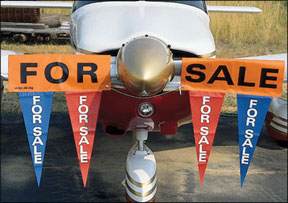
Two wings. Check. Horsepower up front (or maybe in the back). Check. Liquid money in the tanks. Check. Somewhere to go? Hell, yeah! Hang on a minute. As absurdly simple as it sounds, it is a fact that different aircraft serve different roles. Sometimes, the plane, pilot and mission dont match up any more. We know how it goes. You go through primary flight training in a tame little trainer, perhaps a short-legged Cessna 152 or 172, or maybe a Piper Warrior. Youve become accustomed to the frequent fuel stops and finite loading capabilities, and know every avgas-fueled diner within 100 miles. But maybe youve started a family, gained a baby or just want to get out of your own backyard without stopping for fuel quite as often. Maybe something faster, more comfortable, something that will get you over the terrain and out of that miserable chop. And if you need to cover half the country in a day, youll definitely need a faster ride. Or not. If youve passed the point in your flying or professional career where you no longer need that go-fast airplane, youre a good candidate for a lower fuel burn and lower cockpit workload. Too, if your medical renewal isnt much of a gimme any more, perhaps the Sport Pilot and LSA world can open new doors to you as others close.

Read More »

Maintaining Light Sport Aircraft

The light sport aircraft (LSA) community holds strong promise to attract a new population of pilots for a variety of reasons, many of them overlapping. For some, the lower prices for a new airplane-some starting at around $40,000, compared to a base price of $175,000 for an FAA-certified Diamond DA20 Katana, as one example-holds appeal. For others, the draw is the reduced cost of learning to fly: A sport pilot certificate will set back a student between one-third to one-half the cost to obtain a private ticket. And, for some newcomers and a growing number of long-time pilots, the absence of a formal medical examination holds sway. Combined, these forces propelled the delivery of about 2500 factory-new LSAs in the three-plus years since the rules went into effect. Meanwhile, about 2200 have earned their sport pilot certificates and an as-yet unknown-and perhaps unknowable-number of existing pilots received formal transition training required to legally fly LSA-category aircraft.

Read More »

Aircraft Awakenings

Now that winter snows have passed and the foliage is turning green, its time to get out and go flying. If you havent committed aviation since the seasons first snowfall, its going to take some effort to get both you and your craft ready to go. You might presume when pilots go out to resume flying in the spring after a winter hiatus theres an increase of certain kinds of accidents. An examination of the accident records for 1996 and 1997 and again for 2003 just didnt show any patterns. Runway loss of control (RLOC) accidents account for a significant portion of general aviation accidents throughout the year but theres no particular spike during the months many of us are out trying to knock off the rust. If there is an increase of RLOC accidents in the spring, its lost in the noise of the overall increase in flying.

Read More »
Pilot in aircraft
Sign-up for newsletters & special offers!

Get the latest stories & special offers delivered directly to your inbox.

SUBSCRIBE