Register

Accident Probes

As The Pro Flies?

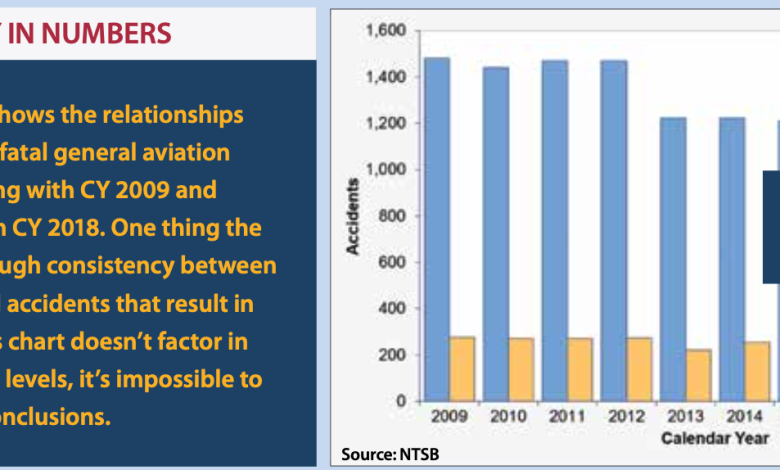
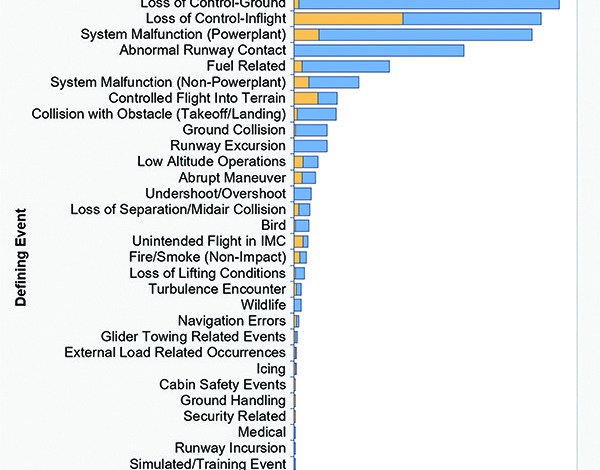
Commercial air travel is by far the safest mode of modern transportation. General aviation, however, is not as safe. Many factors have improved both categories’ safety records over the years, but procedures and policies established by regulators/industry and implemented by commercial operators have been wildly succesful. These policies and procedures have been introduced over the […]
Read More »

NTSB Accident Reports

September 2, 2021, Enterprise, Ore. Cessna 172E Skyhawk At about 1130 Pacific time, the airplane was substantially damaged when its nose wheel assembly failed and it departed the runway before nosing over onto its back. The pilot and passenger were not injured. Visual conditions prevailed. Just prior to lifting off from a grass strip, the […]

Read More »

Night Marginal Visual Flight Rules

The takeoff and departure flight phase can be one of the more risky among instrument procedures, especially at night in IMC aviation. On one hand, the pilot is abruptly transitioning from a presumably well-lit runway and airport environment to flying on instruments near terrain. On another hand, the airplane may not be up to the […]

Read More »

AOPA ASI Releases Latest Nall Report

The AOPA Air Safety Institute (AOPA/ASI) recently released the latest in its continuing series of Joseph T. Nall Reports, the 31st. As with last year’s release of two years’ worth of data, AOPA/ASI is publishing the latest report on its web site, which allows it to provide monthly updates as new numbers flow in. As […]

Read More »

Here Be Dragons

I’m going to go out on a fairly stout limb with this statement: No pilot ever plans to become an accident statistic. Instead, we all approach every flight in the firm belief it will be successful or we don’t fly. Too often, of course, events conspire against us—or we screw up—and the flight’s outcome isn’t […]

Read More »

Preventing Takeoff Emergencies

One of my fondest memories in aviation was the first flight I took in a Skyhawk. Even though my parents kept a kindergarten assignment where I said my goal in life was to be a pilot (after my career as an astronaut and a monster truck driver), I did not pursue aviation until after my […]

Read More »

FAA’s Alaska Aviation Safety Initiative

Due to Alaska’s wide-ranging geography and limited road system, residents are heavily dependent upon air travel. In October, the FAA released the final report of its Alaska Aviation Safety Initiative (FAASI), which provides an up-to-date look at the continued problems plaguing the state’s aviation infrastructure. Completed in response to a 2020 recommendation from the NTSB, […]

Read More »

NTSB Reports: November 2021

August 2, 2021, Amado, Ariz. Piper PA-28-140 Cherokee 140 At about 0925 Mountain time, the airplane was substantially damaged during a forced landing following engine failure. The pilot and pilot-rated passenger were not injured. Visual conditions prevailed. While in cruise, the airplane engine developed a sudden and severe vibration, then quit altogether. The pilot initiated […]

Read More »

Pilot Incapacitation

The typical personal airplane lacks many creature comforts we’ve come to expect in private transportation. Perhaps foremost among them is air conditioning, but the cabin heat systems also can leave a lot to be desired, especially among piston singles. The primary reason is that the vast majority of these airplanes employ air-cooled engines, unlike the […]

Read More »

How High Will It Go?

I’m a firm believer in using supplemental oxygen; there’s a portable O2 tank in my airplane right now. For a variety of reasons, I usually go on oxygen when I’m going to be at 10,000 feet or higher for any length of time. I typically fly long legs, and when I use oxygen, I’m not […]

Read More »
Pilot in aircraft
Sign-up for newsletters & special offers!

Get the latest stories & special offers delivered directly to your inbox.

SUBSCRIBE