













Register

Here Be Dragons

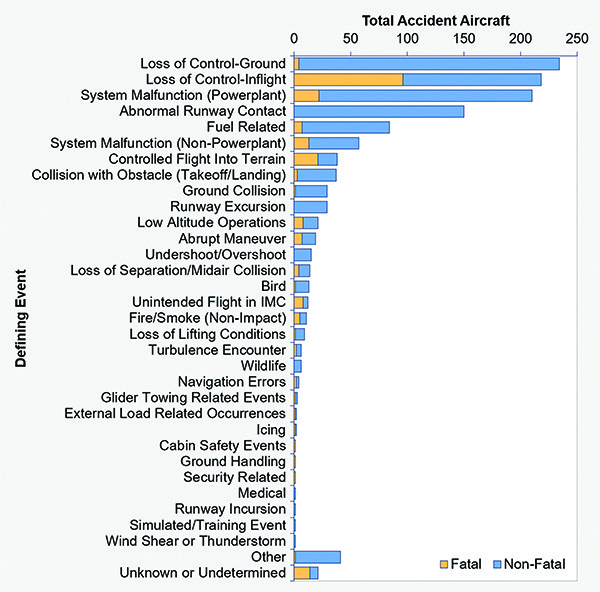
As its heading implies, this chart compares the frequency and lethality of all U.S. general aviation accident causes (defining event) during 2018, as compiled by the NTSB. Some of these categories are unique to specific operations—gliders and helicopters, for example—but the vast majority apply to fixed-wing personal aircraft. Some also demand greater detail, like “abnormal runway contact,” “cabin safety events” or “navigation errors.” Nitpicking aside, the chart is as good a set of guidelines we’re likely to find on our path toward understanding how our fellow pilots get into trouble and how we can avoid becoming a new statistic.
Gemini Sparkle

Key Takeaways:

  • Loss of control is the leading cause of aviation accidents, often stemming from pilot skill deficiencies or human factors, emphasizing the need for continuous training and situational awareness.
  • Many engine failures and fuel-related accidents are attributable to pilot-related issues like improper operation, fuel mismanagement, or inadequate maintenance, highlighting the importance of strict maintenance and thorough flight planning.
  • Controlled flight into terrain (CFIT) is highly preventable, with mitigation strategies including applying IFR-like planning for VFR flights, reviewing terrain data, and utilizing available technology and ATC services.
See a mistake? Contact us.

I’m going to go out on a fairly stout limb with this statement: No pilot ever plans to become an accident statistic. Instead, we all approach every flight in the firm belief it will be successful or we don’t fly. Too often, of course, events conspire against us—or we screw up—and the flight’s outcome isn’t as we planned. So…what are some of those events? What can we do to minimize the risk of becoming a statistic? One answer lies in the NTSB’s voluminous accident investigation reports and its own statistics, which help highlight how and why accidents occur.

The chart below is much more than a simple infographic. Instead, it can and should be used as a road map (flight plan?), as guidance on how most accidents occur and what we can do to avoid being involved in one. Of course, we already know most of this, thanks to our training. But it can help to discuss some of these “greatest hits” with an eye toward emphasizing what we can do to avoid creating a new entry in the NTSB’s records. While the number of categories in the chart preclude us tackling from each of them, we can take on a few of the most prevalent and avoidable defining events leading to a fatal accident.


Ready to Sell Your Aircraft?

List your airplane on AircraftForSale.com and reach qualified buyers.

List Your Aircraft
AircraftForSale Logo | FLYING Logo
Pilot in aircraft
Sign-up for newsletters & special offers!

Get the latest stories & special offers delivered directly to your inbox.

SUBSCRIBE