Register

Accident Probes

Approach Fuel

Ensuring there is fuel aboard the airplane adequate for the planned flight is a basic, primary responsibility for any pilot. Unfortunately, the accident record tells us it’s one responsibility not all pilots fulfill. In our experience, fuel exhaustion, starvation or simple mismanagement accounts for a healthy proportion of engine-failure mishaps. This is true despite the […]

Read More »

NTSB Reports

December 2, 2021, Cleveland, Texas Beechcraft A36 Bonanza At about 1415 Central time, the airplane was substantially damaged during an emergency landing to a highway after powerplant failure. There were no injuries. Visual conditions prevailed under an overcast. While en route at 6000 feet msl on an IFR flight plan, the engine suddenly lost power. […]

Read More »

VFR Into IMC, Part n+1

We’ve long maintained that weather poses the greatest risk on any given day to a proficient pilot flying a well-maintained aircraft. Presuming there’s adequate fuel aboard and the pilot knows how to ensure that it gets to the engine(s), it’s more likely than not that the flight will be completed pretty much as planned. Everything […]

Read More »

Marginal Decisions

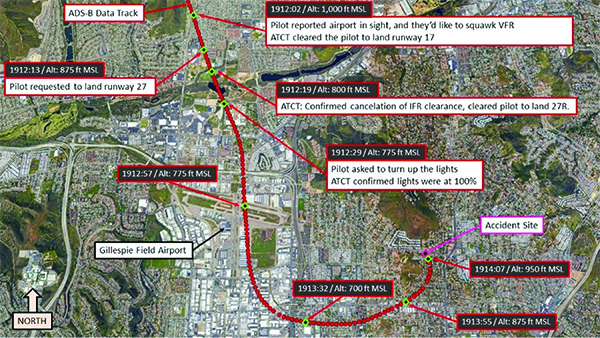
In late December 2021, I was giving upset recovery training to a student. We were done with our work in the practice area and were returning to base at Montgomery-Gibbs Executive Airport in San Diego. Weather included unlimited visibility and scattered clouds. We picked up the ATIS and were heading toward the airport. A few […]

Read More »

NTSB Reports

November 4, 2021, Decatur, Ga. Cessna 172A At about 0947 Eastern time, the airplane was substantially damaged when it was landed off-airport following engine failure. The solo student pilot sustained minor injuries. Visual conditions prevailed. Shortly after takeoff and while flying at 1500 feet msl, the student noted the engine began running rough, followed by […]

Read More »

Practicing For CFIT

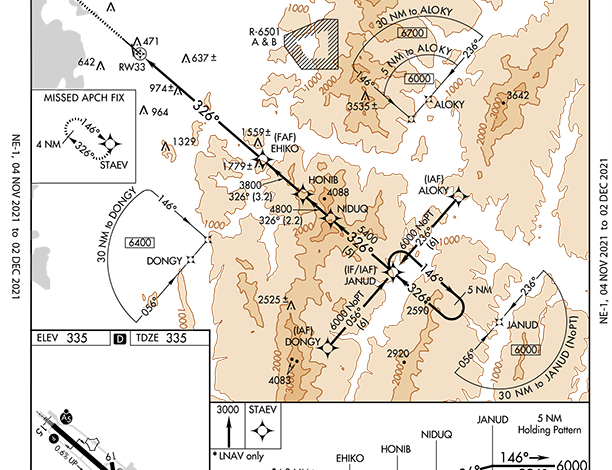
The circle-to-land maneuver at the conclusion of an instrument approach has earned a reputation over the years as one of the riskier things we can do in an airplane, to the extent many major carriers don’t allow their pilots to perform it—they want stabilized, “straight-in” or nothing. The good news is that’s not necessarily a […]

Read More »

NTSB Reports

October 1, 2021, Chandler, Ariz. Robinson R22/Piper PA-28-181 At about 0740 Mountain time, the Piper airplane and Robinson helicopter collided in midair. The airplane sustained minor damage; the flight instructor and student aboard it were not injured. The helicopter was destroyed; its flight instructor and student were fatally injured. Visual conditions prevailed. Both aircraft were […]

Read More »

Doing The Wave

A close friend of mine, also a pilot, revels in flying low enough to view various features on the ground, to the extent a long cross-country flight in IMC not only bores him but seemingly can elevate any anxieties. I get it, and always enjoy that vista when I’m able. But I also subscribe to the […]

Read More »

Preventing Gear-Up Landings

I have been around the airport water cooler for two different gear-up landings. The first was either a classic excuse or truly unfortunate set of circumstances. After touching the belly of the aircraft to the pavement without a nice, cushy set of wheels between the two, he hopped out of the airplane and declared that […]

Read More »

As The Pro Flies?

Commercial air travel is by far the safest mode of modern transportation. General aviation, however, is not as safe. Many factors have improved both categories’ safety records over the years, but procedures and policies established by regulators/industry and implemented by commercial operators have been wildly succesful. These policies and procedures have been introduced over the […]

Read More »
Pilot in aircraft
Sign-up for newsletters & special offers!

Get the latest stories & special offers delivered directly to your inbox.

SUBSCRIBE