
A Pilot Gets Caught Between Procedure and Instinct
Mistakes breed in the shadowy land between the systematic and the instinctive.
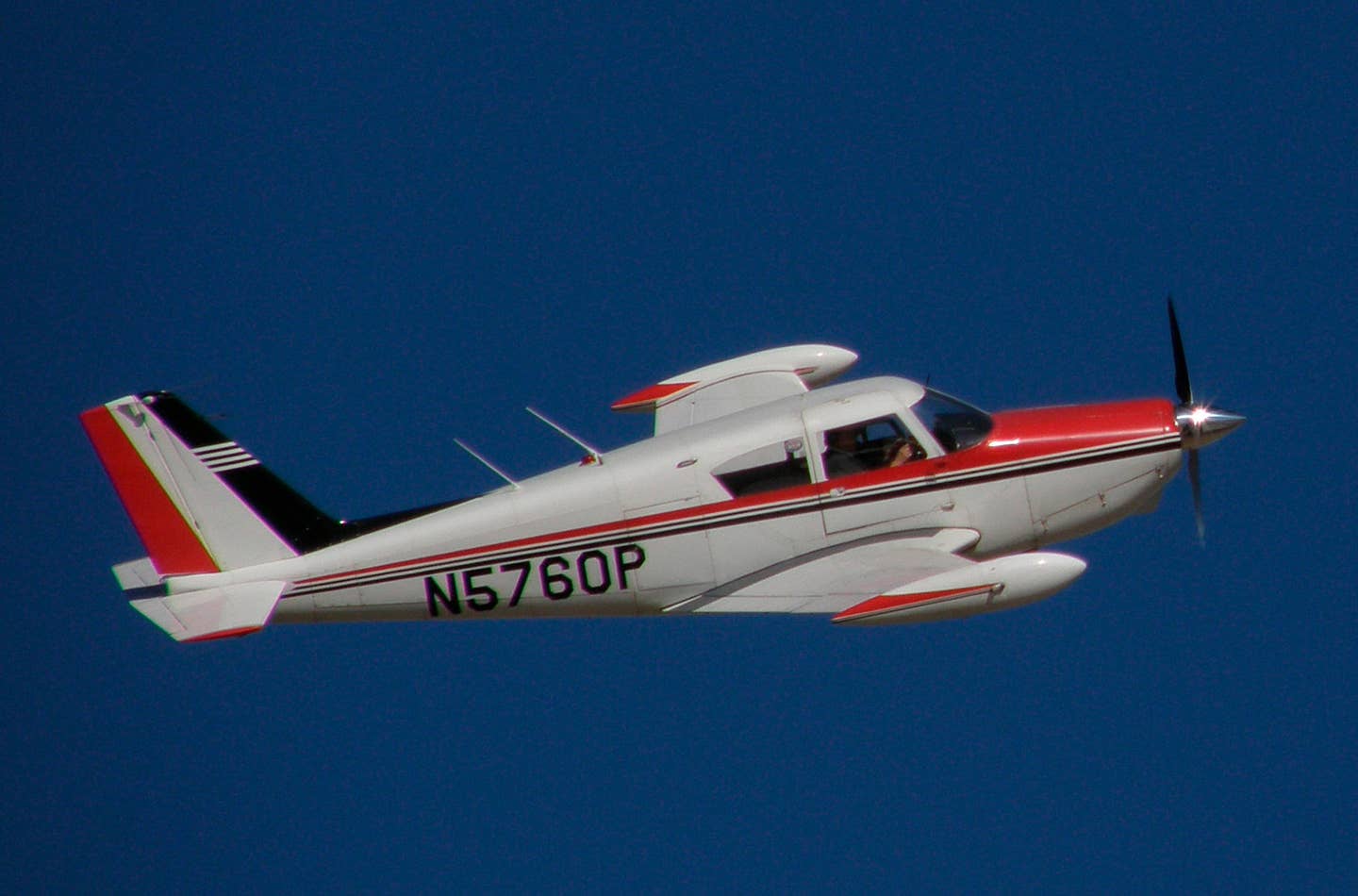
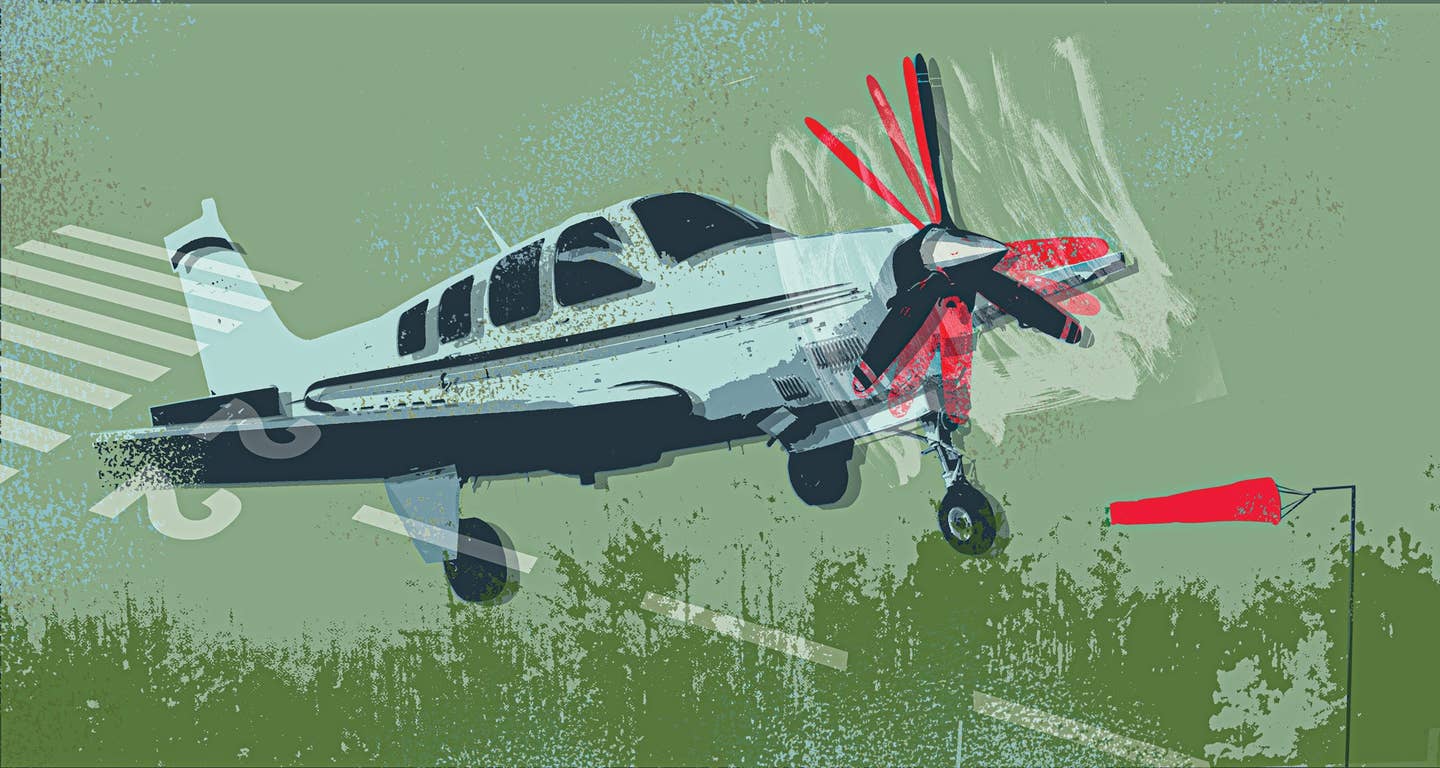
Checklists are only good when used at the right time. But how do you know when that is, and who checks the checklist checker? [FLYING Magazine Archive]
Familiarity in flying has several components. There is the foundational element of general familiarity with airplanes and how to fly them. There is familiarity with systems; this may be of a general kind (knowing how to lean the mixture or adjust a constant-speed propeller, for instance) or specific to a particular airplane or type (such as knowing to use the left main tank of an old Beech Bonanza for takeoff when both mains are full because all return fuel from the injection pump goes to the left tank).
There is familiarity with handling characteristics: whether, for example, a certain type pitches up or down with flap deflection. There is muscle memory, knowing how much effort will be required to pitch or roll, and where to reach to lower the gear or switch fuel tanks. There is knowledge of cruising performance, clean and dirty descent rates, quality of stall warning, and post-stall behavior.
Although FAA regulations set quite precise requirements for familiarity and currency—becoming more rigorous for more complex and higher-performance airplanes—it is really hard to tell how much familiarity is enough and, for that matter, whether there is such a thing as too much familiarity. A pilot may know an airplane very well but usually fly a different type. Habits acquired from the more recently flown, or more familiar, airplane might be unconsciously applied to the other. The key word is “unconscious.” Familiarity is the thing that allows you to act without thinking. “Without thinking” is commonly a reproach, but instinctive, unconscious flying is also the hallmark of a natural and skilled pilot. There is a middle ground to be found between too much thought and too little.
How to make the first flight in a homebuilt airplane is a subject of ongoing debate, with one school arguing for short runway hops, reasoning that a few feet is not very far to fall, and another for immediate up-and-away flight, in order to get far from the rocks and hard places as quickly as possible. The impatient purchaser of a Lancair 235 tried to have it both ways.
What Happened
The pilot, 81 years old, had not flown in six months. He had about 450 hours total time. He had no experience whatsoever in the Lancair, which was turned over to him by a broker who asked him not to fly it until he had found someone with experience in the type to fly with him. The pilot promised he would not; however, he wanted to taxi-test the airplane. On his second taxi run down the runway, as the surprised broker looked on, the airplane took off and flew away.
Most likely, the pilot did not intend to break his promise to the broker, who was his friend. The airplane probably became airborne unexpectedly, and he thought it best to get familiar with it before attempting a landing.
He was gone for an hour. When he finally returned, the pilot made two landing approaches, each time going around. A witness observed that the pilot was having trouble with pitch control: “Nose up, nose down...nose up, nose down.” On the third approach, he landed long, bounced twice, climbed to 100 or 150 feet, stalled, and spun.
The National Transportation Safety Board identified the pilot’s lack of familiarity with the airplane as a contributing factor, the cause of the fatal accident being simple failure to maintain flying speed. It’s possible, however, that the pilot was not only unfamiliar with the Lancair 235 in particular but also with airplanes in general that are flown with fingertips rather than a fist. An extremely sensitive airplane is difficult for an inexperienced pilot to cope with because anxiety makes you more ham-handed and likely to overcontrol.
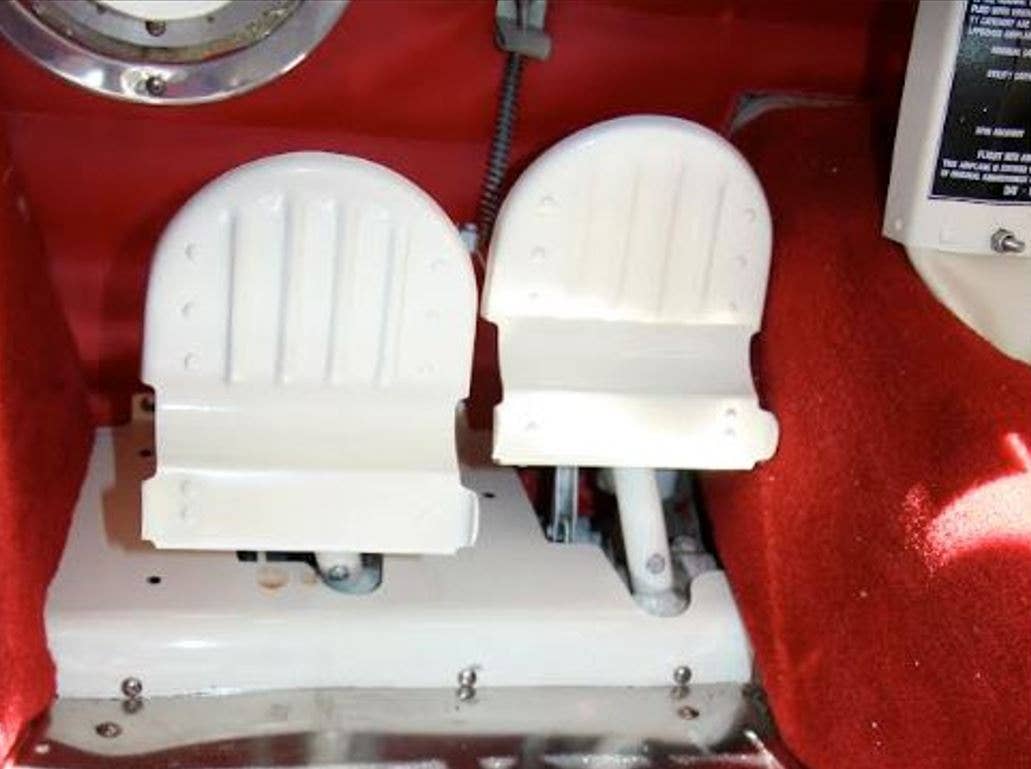
Some airplanes have design quirks that set them apart from others. One is the Piper Comanche, whose manual pitch trim—like that of the Ford Trimotor—consists of a crank handle in the ceiling. Early Comanches did not have electric trim, the operation of which is intuitive: forward button means nose down/go faster. Vertical trim wheels are similarly natural. The overhead crank, however, has built-in unfamiliarity.
The 3,000-hour pilot of a Comanche 250 was observed adjusting the overhead trim control as he taxied out to depart. During the takeoff roll, the propeller struck the runway surface. After breaking ground, the airplane pitched up, stalled and crashed vertically, killing all three aboard.
In principle, it should be impossible to strike a prop even with a flat nosewheel tire and a fully compressed nose strut. However, the nose-strut drag links and torque link were fractured “as if the nose gear had been forced rearward while extended.” Whether this damage arose from the crash or preceded it could not be determined; what was determined, though, was that the pitch trim was set in the full nose-down position, which would have the effect of lifting the tail as the airplane gained speed.
Another Comanche crashed somewhat similarly, although the fragmentation of the wreckage was such that the trim setting could not be determined. It was the 700-hour pilot’s second solo flight in the airplane, which he had bought two weeks earlier. He had taken the precaution of getting 15 hours of dual in it in the meantime. A witness reported the pilot appeared to intend to perform a short-field takeoff: He ran up to full power before releasing the brakes. The airplane seemed to rotate prematurely, and the witness, who was an experienced pilot, judged that it looked slow. Rather than level out to gain speed, however, it kept climbing “steeper and steeper” until it stalled and spiraled to the ground.
Although this was an early Comanche, manufactured in 1959, it was equipped with electric trim. The overhead trim is faster-acting, however. The inexorable increase in pitch angle is suggestive of an airplane that was either mistrimmed in the first place or whose pilot is inadvertently applying trim in the wrong direction while trying to get the nose down.
Fuel systems, especially ones in low-wing airplanes, which do not have a “both” position, can be a source of trouble. There are many instances of pilots using an empty tank for takeoff when there was fuel in another. Opportunities for confusion multiply as tanks become more numerous.
A 1,300-hour commercial pilot, flying a single equipped with aftermarket tip tanks, crashed while trying to return to land immediately after taking off. The pilot, who had only a few hours in the airplane, had taken off with the fuel selector on a tip tank, although use of the tip tanks was limited to whatever is meant by “level flight.” The NTSB’s report on the fatal accident does not provide information about the pilot’s previous experience, but the fact that he took off with a tip tank selected suggests he probably landed on his preceding flight with that same tank selected—also forbidden—and his previous experience may have been in airplanes, such as high-wing Cessnas, that do not require so much attention to tank selection.
Mistakes breed in the shadowy land between the systematic and the instinctive. Only by forcing our actions up into the realm of conscious procedure—for instance, by methodical use of checklists and each crewmember’s critical attention to the actions of the other—can we reduce our reliance on instinct and the unconscious errors that come with it.
This story originally published in the December 2019 issue of Flying Magazine


Subscribe to Our Newsletter
Get the latest FLYING stories delivered directly to your inbox