













Register

FAA Urges Best Practices For Turbocharger Exhaust

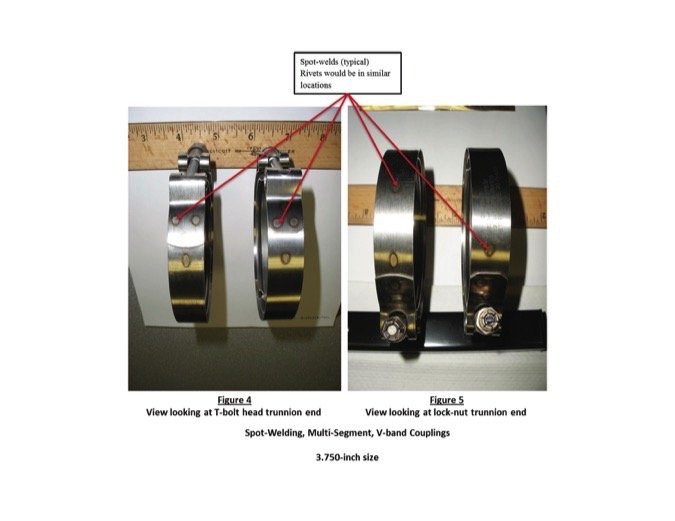
As part of its charter to help minimize GA accidents, the General Aviation Joint Steering Committee (GAJSC; see the article beginning on page 4 for background) earlier this year published a Best Practices Guide designed to ensure airplanes equipped with turbocharged reciprocating engines fitted with turbocharger to tailpipe V-band coupling/clamps, remain in their original type design configuration. It will also help to effectively manage the risk associated with the use of V-band coupling/clamps in this application.

Gemini Sparkle

Key Takeaways:

  • V-band clamps on turbocharged aircraft exhaust systems are a significant safety concern, having been implicated in numerous accidents due to failures causing in-flight fires.
  • The General Aviation Joint Steering Committee (GAJSC) published a "Best Practices Guide" to address this, providing detailed inspection, installation advisories, and strict life-limit recommendations (e.g., 500-2000 total hours in service) for various clamp types.
  • The FAA issued a Special Airworthiness Bulletin (SAIB) warning operators of potential misleading heading and attitude displays on electronic flight displays (PFDs) due to electromagnetic interference from high-current electrical equipment.
  • San Francisco's Class B airspace underwent a redesign, changing its configuration from the traditional "inverted wedding cake" to polygons with new VFR waypoints to facilitate navigation underneath the airspace.
See a mistake? Contact us.

The V-band clamps used to assemble exhaust systems on turbocharged piston-powered airplanes have long been a source of concern to operators, maintainers and regulators alike. Clamp failures resulting from lengthy service and improper installation can allow extremely hot and high-pressure exhaust gases to be directed onto other engine-compartment components and risk an in-flight fire.

The clamps have been implicated in numerous accidents dating from the 1970s, many of which involved fatalities. The problem potentially affects some 18,000 turbocharged aircraft in the U.S. fleet from various manufacturers, including some still in production, as well as normally aspirated aircraft modified with a turbocharger installation under a supplemental type certificate (STC).


Ready to Sell Your Aircraft?

List your airplane on AircraftForSale.com and reach qualified buyers.

List Your Aircraft
AircraftForSale Logo | FLYING Logo
Pilot in aircraft
Sign-up for newsletters & special offers!

Get the latest stories & special offers delivered directly to your inbox.

SUBSCRIBE