













By Roger Long
Youre making your preflight inspection of the airplane and almost casually run your hand along the leading edge of the propeller blade. A finger catches. Closer inspection reveals a small nick in the prop. Its no big deal. Or is it?
Its a hard thing to do, grounding the airplane on a beautiful weekend for just one little nick in the prop. It is less than 1 percent of the blade sectional area so, if strain is proportional to the area it is distributed over, there should be only an insignificant decrease in strength. Why not go flying?
The simple reason is that nothing bears weight or strain without bending or stretching. When a fly lands on the Golden Gate Bridge, it sags, a little. It is this stretching in response to strain that results in small nicks magnifying the stresses in a propeller far out of proportion to their size.

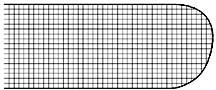
Imagine a prop blade at rest. Now paint lines in both directions that form a square grid on the props surface. Here is what you get.
Now start the engine up and advance the power to maximum takeoff power. The centrifugal force of the turning prop subjects it to loads that can be more than 10 times the weight of the aircraft. Whether made of aluminum, wood or high-tech composites, the prop stretches in response.

