
If you started flying before the iPad was introduced in 2010 or, even longer ago, before the early 2000s, when aviation-specific portable-flight-bag tablets first entered the market, you remember the days when you got a workout each time you went flying from carrying a hefty bag filled with paper charts, plotters, instrument approach plates and more. Fortunately, the introduction of smartphones and tablets, and subsequently electronic flight bag apps, such as ForeFlight, Garmin Pilot, WingX Pro and FlyQ EFB, quickly eliminated the heavy lifting and the hours spent planning for cross-country flights, studying charts or making calculations to figure out the headwind component and flight time to ensure you had sufficient fuel for a flight. And who misses the days of removing outdated instrument charts from thick Jeppesen binders and replacing them with new pages?
6 Practical Aviation Apps

Key Takeaways:
- A range of specialized mobile applications now complement traditional Electronic Flight Bag (EFB) software, significantly enhancing various aspects of a pilot's flying experience, proficiency, and safety.
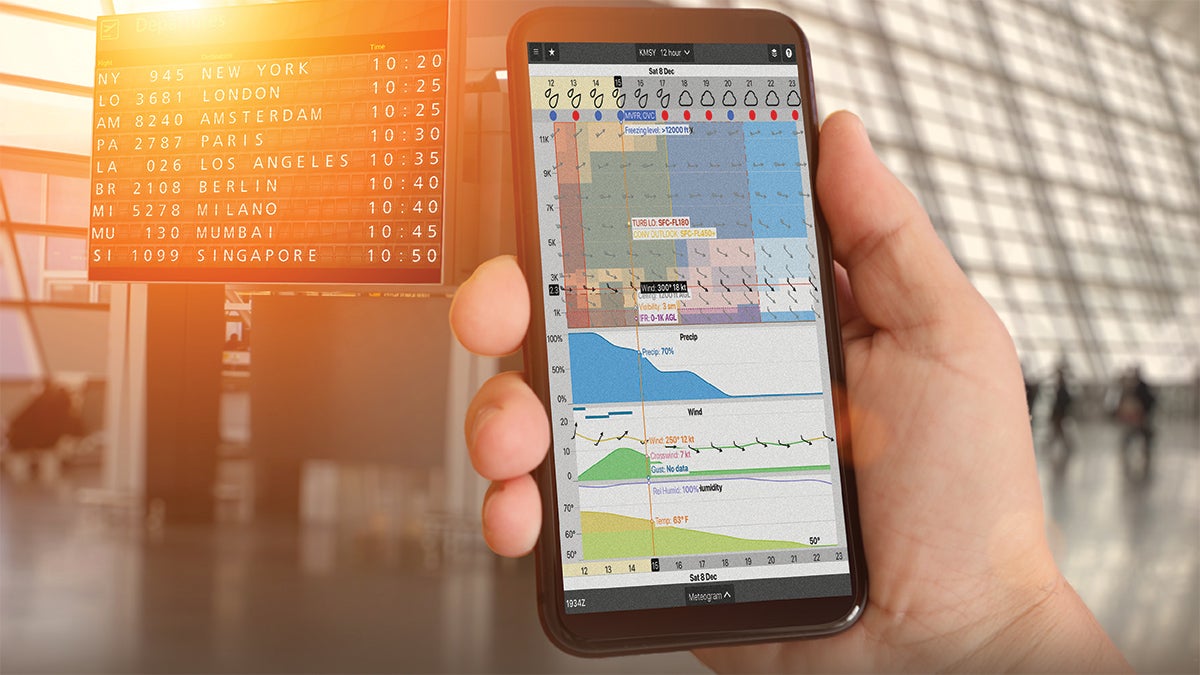
- These apps provide diverse functionalities, including detailed post-flight analysis and debriefing (e.g., CloudAhoy), tools for improving communication skills (e.g., LiveATC), comprehensive weather information (e.g., WeatherSpork), and flight risk assessment (e.g., FRAT).
- By offering advanced tools for performance evaluation, weather interpretation, risk management, and augmented reality navigation, these applications contribute to better decision-making and a more enriched training experience for pilots.
Key takeaways sponsored by Aviator Pro | Start Your Training ->
See a mistake? Contact us.