













Register

Technicalities: Rules to Fly By

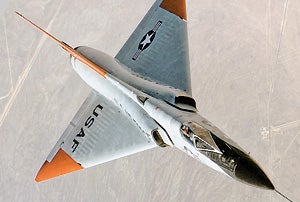
Convair QF-106 NASA
Gemini Sparkle

Key Takeaways:

  • Aerodynamicist Richard Whitcomb significantly contributed to modern aircraft design, developing the winglet, supercritical airfoil, and popularizing the transonic area rule.
  • The transonic area rule, originally conceived in Germany, posits that an airplane's high-speed wave drag is determined by its overall volume distribution, allowing for drag reduction by shaping the fuselage (e.g., "Coke bottle" shape) to smooth this distribution.
  • This rule proved crucial for achieving supersonic flight in the 1950s (e.g., F-102 fighter) and remains fundamental to jet design today, influencing features like wing-fuselage fairings.
  • In contrast, the "poor man's area rule" addresses subsonic interference drag by optimizing the staggering and shaping of individual components to prevent undesirable flow acceleration and separation.
See a mistake? Contact us.

Aerodynamicists seldom earn long obits in the New York Times, but Richard Whitcomb, who died last Oct. 13 at 88, did. He left a conspicuous imprint on the design of modern airplanes. He was responsible for the winglet, the supercritical airfoil — which he designed not on a computer, as would be done today, but by laboriously reshaping a wind tunnel model with auto body filler — and the transonic area rule.

The story of the transonic area rule involves one of those “eureka moments” that we have learned to admire in all great tales of invention and discovery. It happened at the Langley, Virginia, headquarters of the National Advisory Committee for Aeronautics, which would become NASA a few years later. Whitcomb had been ruminating about the rapid increase in drag that airplanes experienced as they approached the speed of sound. He possessed uncommon insight into the behavior of air, a gift that must have been in part a happy congenital mixture of spatial visualization and kinesthetic empathy and in part acquired, as can people who, like Leonardo da Vinci, for some reason or other find rivers and streams, blowing leaves, smoke and clouds worthy of special attention. But a good instinct for subsonic aerodynamics does not serve at supersonic speeds. The supersonic domain, in the phrase a British novelist used about the past, “is a foreign country; they do things differently there.”
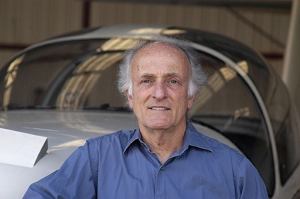

Peter Garrison

Peter Garrison taught himself to use a slide rule and tin snips, built an airplane in his backyard, and flew it to Japan. He began contributing to FLYING in 1968, and he continues to share his columns, ""Technicalities"" and ""Aftermath,"" with FLYING readers.

Ready to Sell Your Aircraft?

List your airplane on AircraftForSale.com and reach qualified buyers.

List Your Aircraft
AircraftForSale Logo | FLYING Logo
Pilot in aircraft
Sign-up for newsletters & special offers!

Get the latest stories & special offers delivered directly to your inbox.

SUBSCRIBE
