
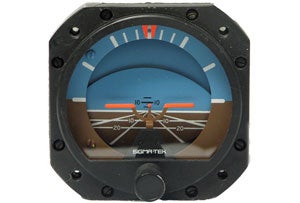


During our early training days the instructor drilled it into our heads that, absent any visual reference to the outside world, our inner ear would soon fool our minds into believing that the airplane was pointed one way when in truth something entirely different was occurring. In these instances, left could become right and up could become upside down. How to overcome the dangers of spatial disorientation when flying in clouds or on a dark night? Trust the flight instruments, we were told.
That’s excellent advice – almost all of the time. On takeoff at night in an airplane equipped with a gyro-based attitude indicator, a quirk of physics similar to the one that makes the magnetic compass tell lies (known as acceleration error) will also cause the AI to show a higher attitude than actual. As a consequence, some pilots have lowered the nose to a “normal” attitude on takeoff at night only to settle back to terra firma, sometimes with disastrous consequences.