Register

Calculating Cruise Climb Speed

Gemini Sparkle

Key Takeaways:

  • Pilots of high-performance piston singles should generally prioritize a cruise climb speed (Vcc) over Vx or Vy for departures, unless conditions specifically demand a steeper climb.
  • Climbing at Vcc provides a greater safety margin above stall speed, allowing more reaction time during an engine emergency right after takeoff, as well as better visibility and passenger comfort.
  • If Vcc is not listed in the aircraft's POH, it can be approximated using the rule of thumb: Vy + (Vy - Vx), which offers a practical safety margin.
See a mistake? Contact us.

When taking off from your home airport, what’s your preferred departure technique? Do you choose to climb at Vx (best angle-of-climb airspeed), Vy (best rate-of-climb airspeed) or perhaps some other speed?

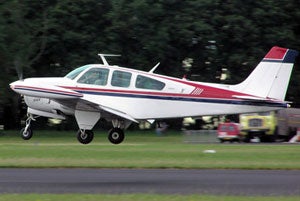
In high-performance piston singles especially, max performance takeoffs at Vx or Vy may not be the smartest idea. Sure, you’ll gain extra altitude climbing at a slower Vx or Vy airspeed, but your margin above a stall if the engine quits will also be much narrower.

In general you should consider climbing at a speed closer to Vcc (cruise climb speed) anytime the conditions don’t specifically warrant a steeper, slower departure. Not only will a cruise climb departure keep your deck angle lower for better visibility, it’s more comfortable for passengers. Most importantly, it gives you extra airspeed to account for your reaction time to an engine emergency right after departure. After all, those extra feet of altitude aren’t going to be of much help if you let your airspeed decay toward an imminent stall because you were so slow to begin with.

But what if your POH doesn’t list a cruise climb airspeed? In this case, there’s a rule of thumb you can use to calculate an approximate value for Vcc. It’s easy too.

Simply subtract Vx from Vy and add the difference back to Vy, i.e. Vy + (Vy – Vx). For example, if Vx is 64 knots and Vy is 76 knots, the calculation would be 76 – 64 = 12 followed by 76 + 12 = 88. So in this example, Vcc would be 88 knots.

It’s not a precise number but it will get you in the ballpark to provide a welcome safety margin above stall speed should your engine suddenly lose power on departure.

Get exclusive online content like this delivered straight to your inbox by signing up for our free enewsletter.

Ready to Sell Your Aircraft?

List your airplane on AircraftForSale.com and reach qualified buyers.

List Your Aircraft
AircraftForSale Logo | FLYING Logo
Pilot in aircraft
Sign-up for newsletters & special offers!

Get the latest stories & special offers delivered directly to your inbox.

SUBSCRIBE