Register

Search Results for: maintaining your airplane

Accident Probes

Separation Anxiety

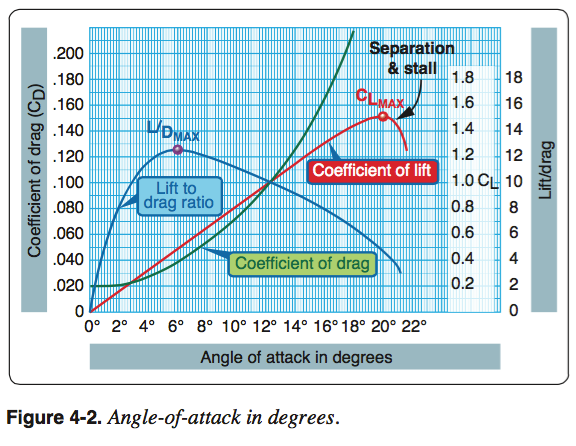
If there were some way I could make a series of trips back in time to change things, one of the stops on my itinerary would be to somehow infiltrate the small cadre of early pilots and airplane designers to convince them to use a word other than stall to describe what happens when a wing exceeds its critical angle of attack. The word obviously has numerous other applications, and using it for this purpose has confounded student pilots and television news anchors ever since. That said, Im not sure what should replace it, and remain open to suggestions.

Read More »
Accident Probes

Diversionary Tactics

True, it wont tell you how far youll have to go to find good barbecue, or even whether theres a courtesy car. It will, however, give you the hours at which someone should be there, the kinds of fuel available and whether theres 24-hour self-service, phone numbers for the airport manager or to request after-hours services (if available), the dimensions and pattern orientations of all runways…plus latitude and longitude, bearings and distances to the nearest navaids, frequencies for approach control, weather, and the CTAF or tower and descriptions of possible conflicts such as banner tows or skydiving. It even details what repair services are available, though you might have to look up the codes. (S4 means major airframe and powerplant.) Thats a lot of information for seven bucks-and the batteries never run down.

Read More »
Avionics and Gear

Readback: October 2018

Many pilots want to fly IFR more often but dont quite remember how. If you addressed more of the basics and less of the quirky and obscure perhaps more pilots would actually benefit. One example would be to have a product published for particular regions or states of the country and present examples each month of airports and approaches for that particular area. This would give the local pilot community more opportunity to fly their local approaches and visit our local airports more often.

Read More »
Accident Probes

Maneuvers

But if you struggled to get the knack of flight maneuver exercises that often seemed far removed from the realities of coaxing an aircraft between Points A and B, you have our sympathy. Training for the private and commercial certificates in particular requires learning to master maneuvers whose relation to practical aviation is, to put it charitably, not obvious. (If you can envision a situation in which your life depends on being able to fly lazy eights to airman certification standards, by all means write in to describe it, as we cant.) This raises the question: Having once done them well enough to persuade an examiner to issue a certificate, is there any reason to go on spending flight time and the money it represents maintaining those elusive skills?

Read More »
Pilot Proficiency

Fly Like Someone is Watching

Last summer, I traveled to Scotland on vacation for a week to attend a wedding on the Isle of Skye. I’d hardly consider the first few hours of the trip relaxing. I picked up my rental car in the center of downtown Edinburgh and was instantly tasked with operating a manual transmission from the right […]

Read More »
Avionics and Gear

Master and Commander

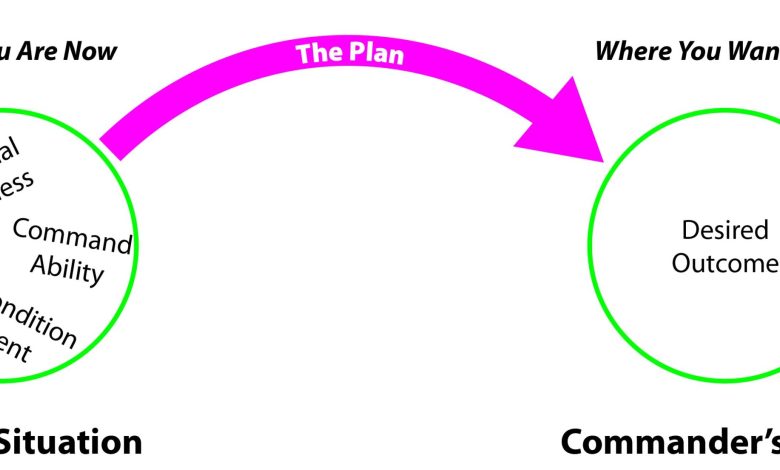
An approach to safety of dont have an accident and always effectively weight risks doesnt work because we dont take actions we think will cause accidents. Tom Turner recently presented a Wings seminar, Stop Teaching About Safety, covering this. Safetys an integral outcome, not a separate goal. Instead, he suggested approaching flying as its master and commander: The result will be safety. While being master and commander will work for all pilots, the instrument environment presents unique challenges to achieving that goal.

Read More »
Pilot Proficiency

Don’t Let Personal Pride Interfere with Currency Training

Pilot pride comes with the certificates and ratings achieved through successful checkrides. But like flying itself, maintaining one’s pilot pride properly is a never-ending effort. Human nature is an ever-present foe. Complacency replaces striving to be better on every flight, and boastful delusions take the place of yesterday’s abilities. Proper pilot pride abhors such delusions, […]

Read More »
Pilot Proficiency

Preventing Loss of Control with Training, Technology

Loss of aircraft control remains the No. 1 killer of general aviation pilots, according to the National Transportation Safety Board (NTSB). At an industry roundtable hosted by the NTSB at its Washington, D.C., headquarters in April, the hot topic was how better training and technology can help pilots do a better job of flying their […]

Read More »
Avionics and Gear

Flying on Business

Much of general aviation activity in piston-powered airplanes is for recreation-the proverbial $100 hamburger ($1000?) on nice sunny weekends. Still, there are many general aviation pilots who fly-using the technical phrase-for the furtherance of business. Were not talking banner tows, flight instruction, skydiving, or true commercial endeavors. Furtherance of business denotes those operations that are only incidental to that business or employment. (14 CFR 61.113)

Read More »
Pilot Proficiency

Learn to Fly Formation like the Pros

To those unfamiliar with formation flying, flight within a wingspan’s distance of another airplane looks eerily similar to an imminent collision. And collisions in airplanes generally don’t end well. But, in some cases, formation flying actually presents a lower risk than flying alone. And besides that, it is some of the most fun and rewarding […]

Read More »
Pilot in aircraft
Sign-up for newsletters & special offers!

Get the latest stories & special offers delivered directly to your inbox.

SUBSCRIBE