Register

Search Results for: general aviation inc

Features

On a Mission: Managing Ice

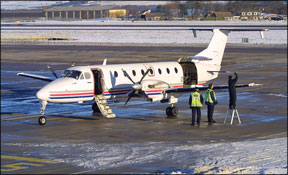
Aircraft utility can go down significantly in cold weather. Adverse weather is more common and tenacious than in warmer months, and along with the fog, low clouds and wind, there is often the threat of airframe ice. Yet we still want, and sometimes feel we need, to fly. How can we balance the possibility of airframe ice with the utility of our airplanes? How do the experts-those “on a mission” with their airplanes-predict, avoid and escape airframe ice? To answer these questions I spoke with professionals who slog through the weather every day (and night), flying high priority aeromedical, charter and air cargo in piston, turboprop and small jet aircraft.
Read More »
Aircraft

Living With the Piper Meridian

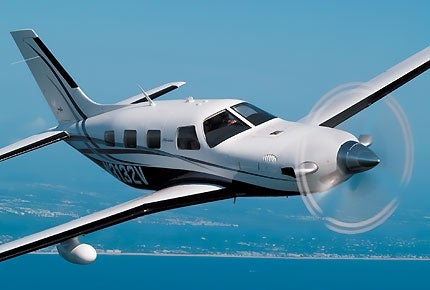
A decade ago when Piper introduced its new single-engine turboprop, the Piper Meridian, nobody was quite sure what to make of it. How would it coexist in Piper’s lineup with the popular pressurized piston single Malibu Mirage, on which the Meridian is based? And perhaps most importantly, would a new, expensive-to-develop turboprop single save Piper […]

Read More »
Features

Improving GA Safety

The 2006 accident statistics are out from the National Transportation Safety Board (NTSB) and theyre not good. When compared to 2005, aviation deaths rose from 617 to 779. According to the NTSB, nearly 90 percent of aviation fatalities occur in general aviation, which also accounted for a significant majority of the increase in aviation-related deaths from 2005 to 2006. Clearly, theres some room for improvement. Whats not clear, however, is how to go about it. Sure, education is key; so is ensuring pilots not only get experience but get the right kind of experience. To gain some additional insights-and insights from the U.S. government agency charged with investigating transportation accidents and recommending safety-related improvements-we spent some quality time with NTSB Vice Chairman Robert L. Sumwalt. Here are some excerpts from that conversation.

Read More »
Photos

Cessna Cuts Pilot Training Cost In Half

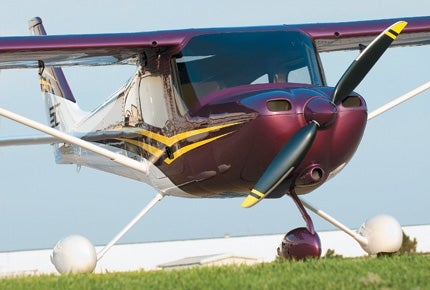
The most exciting news to come out of the big Oshkosh AirVenture show last July was that Cessna committed to building a light-sport airplane, the Model 162. The new two-seater will have a standard price of $109,500 complete with an exclusive Garmin flat-panel glass cockpit, a price well below half of any other Cessna single. […]

Read More »
Editor's Log

Southern Exposure

As this issues deadline approached, the final disposition-if any-of the FAAs ill-considered proposal to impose user fees on general aviation is unknown. Although existing authorizations for the FAA and its programs are set to expire at the end of September, the final outcome of the user fee debate may not be known until well into October, if then. Two versions of the FAA legislation are moving in Congress, one in the House (H.R. 2881) and one in the Senate (S. 1300). Of the two, the House version lacks user fees; the Senate version would impose them, starting with turbine-powered aircraft.

Read More »
Features

Gliding With Precision

From almost our very first flying lesson, pilots are taught what to do in the event a single-engine airplanes lone powerplant fails. As with too many concepts at that early stage of our training, we basically accept what were taught without many questions. Later, as we gain experience, we begin to think more about those early lessons and try to apply to them what our experience has taught us. In turn, many questions can arise. If your airplane ever becomes a glider, you would suddenly become very interested in its new aerodynamics. How promptly and accurately you can remember to make the most of the variables at your disposal would play a large part in determining where and how softly you land. Lets take a look at those variables and how they can affect your emergency glide.

Read More »
Features

Why Cant We Maneuver?

Most airplanes spend the vast majority of their lives in straight and level flight; climbing, turning and descending only as necessary to get on and off a runway. Its when pilots start yanking and banking, however gently and smoothly their control inputs, that problems start to arise-and the accident rate starts to increase. And when the yanking and banking takes place close to the ground, any error margin becomes slimmer still. In fact, according to the AOPA Air Safety Foundation (AOPA ASF) and its 2006 Nall Report, “maneuvering flight accounted for one-third of all fatal accidents” in 2005, the most recent year for which complete data is available.

Read More »
Features

Someone To Watch Over You

From their perches in the towers, approach controls and center work stations, air traffic controllers track us and guide us and provide valuable help when requested-and sometimes even when its not. Far from a separate society, controllers are an active part of the aviation safety team. From their unique vantage points, controllers have a pretty good idea of what works and what doesnt in aircraft movement. They know what pilots do right and what they might do better to fit into the system and get safely from departure to destination. I polled air traffic controllers to discover what we can be doing better to improve safety, fit into the flow of traffic, get the best possible information while en route, and perhaps expedite our handling and requests. Hear, then, the advice of aviations Watchers.

Read More »
Accident Probes

Choice of Action

Almost by definition, pilots generally are self-reliant, often preferring to depend on their own talent and experience instead of someone elses. At the end of the day, choosing to fly a personal airplane is, well, personal. Sharing with others our enjoyment of aviation often is a trait among pilots, of course, but the take charge, Type A personality seems more prevalent. In the early years of commercial aviation, the lone pilot shepherding his or her flock of passengers across the country took on mythical proportion. Later, professionalism crept in, replacing “seat of the pants” flying with hard data. Soon, multiple pilots were added to the flight deck, becoming a crew, despite what some of the more hardened pilots may have wanted.

Read More »
Features

Why It Went Wrong

Mishaps happen for a number of reasons, but all too often theres a “what were they thinking?” element to an NTSB accident report. In the calm, clear skies of retrospect-or a motionless easy chair-its easy to condemn a bad decision and move on. But its not usually a single bad decision that causes tragedy. Pilots dont take off intentionally choosing to put themselves in a no-win situation; they dont mean to kill themselves, their families and friends.

Read More »
Pilot in aircraft
Sign-up for newsletters & special offers!

Get the latest stories & special offers delivered directly to your inbox.

SUBSCRIBE