Register

Search Results for: general aviation inc

Features

Safe LSA Transitions

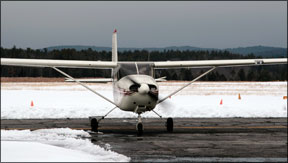
By all the usual parameters, people are turning to the new light sport aircraft (LSA) category and its accompanying sport pilot certificate in large numbers. Both apparently are having a favorable, if perhaps modest, impact on private flying in the U.S. The new aircraft category has translated into options and a new airman certification scheme so far posting some formidable numbers: About 60 new S-LSA types-special light sport aircraft, a factory-built, ready-to-fly machine-have been approved by the FAA under industry-developed consensus standards as of November 2007. Nearly 1100 new S-LSAs were registered through the same period. And, according to the Experimental Aircraft Association (EAA), as of July 2007 when association Vice President Earl Lawrence delivered a three-year report on the movement, 2100 new sport pilot certificates had been issued, along with 232 sport pilot instructor certificates and 240 examiners. Not too shabby, considering the FAA didnt publish the final sport pilot rule until August 2004; it was April 2005 before the first S-LSA won approval from the FAA.
Read More »
Features

VFR For IFR Pilots

Its an interesting phenomenon: As student pilots, we master VFR traffic patterns in just a few hours. After earning the private, we work on our instrument rating. Initially, nothing is quite so nerve wracking as a difficult approach. Then, our careers progress and we land that big job. IFR becomes old hat-we can shoot that approach without a second thought. In fact, we get so used to “vectors to final” that we get the shakes flying a VFR traffic pattern at a small airport on a nice day-something we mastered thousands of hours ago. What causes this odd reversal and what can we do about it?

Read More »
Aircraft Analysis

Running Dry

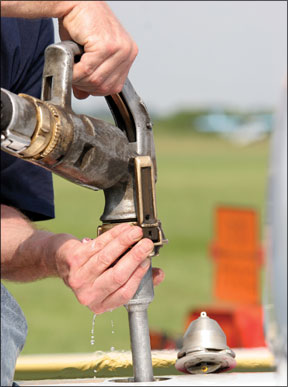
Some time ago there was an Internet debate on running a tank dry. Each side had some valid arguments and thought the opposing view was absurd. Debates are like that. One side was convinced airplanes would be falling out of the sky if pilots starting running tanks dry, then switching to one with fuel in it. The other side felt that airplanes would be falling out of the sky if pilots didnt run a tank dry, if for no other reason than to verify capacity. As such arguments go, both sides were right. And wrong. But both sides agreed on a central point: Theres no substitute for thorough knowledge and understanding of your airplanes fuel system. With that goal in mind, lets set aside the other arguments for a moment, take a look at what goes into fuel systems and what we as pilots should know about them.

Read More »
Airmanship

Flying On-Top of The CloudsTips

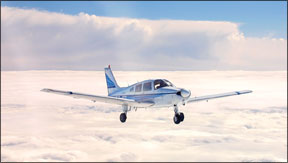
I love clouds; I always have, even as a child. When I learned to fly, I came to understand what they could tell me-as well as what they could do to me. Then, as I earned the thin suit of armor we call an instrument rating, I could not only look upon clouds from my new perspective, I could get up close and personal with them. Soon, I learned getting above them offered the best of many worlds, including greater visibility, better weather, a smoother ride and more advance notice of challenging weather ahead. But I also learned getting and staying on top of a cloud deck can put you someplace youd rather not be, even with an instrument rating.

Read More »
Features

Brake Right

Transforming our elegant aerial machines into land vehicles is arguably the single most difficult aspect of flying. Many flight hours are spent practicing approaches and landings, occasionally followed by smooth deceleration to a safe, controlled stop. Brakes help make this possible, but if you ignore or abuse them they can bite back in a most spiteful way. The brakes in most general aviation airplanes involve relatively simple systems, but theyre not as robust as an automobiles. For one thing, most personal airplanes arent equipped with an anti-lock brake system. For another, automobile brake components are larger, heavier and more powerful. Yet, we often find ourselves in an airplane on or near the ground traveling at highway speeds. And, like so many tasks associated with aviation, theres also a right and wrong way to use an airplanes brakes. Lets start with how to inspect them.

Read More »
Photos

The Real Glass Cockpit Question

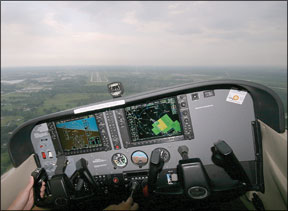
There has been a great deal of discussion about the difficulty, or lack of it, of transitioning from conventional flight instruments to flat-panel primary flight displays (PFD). Many also worry that new instrument pilots who learn on a PFD will find it very difficult to fly safely with a conventional round dial set of gyros […]

Read More »
General

Avoiding Midair Collisions

Probably the most feared situation in aviation, besides perhaps an inflight fire, is a midair collision. One moment a pilot is enjoying the flight. He may be checking his chart or tuning a radio. Or maybe he is talking with a passenger or taking a drink of water. Suddenly there is a loud crash. The […]

Read More »
General

Ten Truths to Fly By

An old friend was joshing the other day about how I fly my single-engine airplane like it is an airliner. Checklists, procedures, callouts, I do them all. My friend is an airline pilot and I took his remarks as a compliment. I have always thought that if we emulate professional aircrews (to the extent possible) […]

Read More »
Editor's Log

Winterization

Its that time of year when the IFR pilots primary aviation weather concern finally shifts completely from thunderstorms to airframe icing. Even if weve been forced to consider both hazards on the same flight, we probably can leave the thunderbumpers by the wayside for a few months. In truth, we should always be concerned about airframe icing, depending on the altitudes at which were flying. But winters onset doesnt mean airframe icing is the only operational concern we might face. In last months issue, Mike Gugeler tackled the topic of runways contaminated by rain, snow, slush, ice or a some evil combination. This month he serves up a detailed discussion on preheating. As Mike demonstrates, thinking about the whole airplanes preheating needs is not just a good idea, its also a significant safety consideration.

Read More »
Features

Cockpit Noise

As recently as 10 or so years ago, the idea of an aviation headset incorporating active circuitry reducing cockpit noise wasnt commonplace. Earlier, cockpits had become extremely busy, and reaching for a microphone every time ATC called proved to be a major distraction. Finally gone were the days when pilots and crews strained to hear the radio and each other, evoking memories of the takeoff scene from the movie Airplane! Headsets have become such a common-place item that we tend to take them for granted-we dont often pause to think much about the broader implications of an inferior headset. Having recently had the pleasure to test headsets in a laboratory for sister publication Aviation Consumer, I came away with a new-found appreciation for the fssafety benefits a good headset can provide.

Read More »
Pilot in aircraft
Sign-up for newsletters & special offers!

Get the latest stories & special offers delivered directly to your inbox.

SUBSCRIBE