Register

Search Results for: general aviation inc

Features

Mid-Air Collisions: The Myth And The Math

Few chapters in the great book of safe flying are as incomplete and misleading as guidance for avoiding mid-air collisions. In over 50 years of active flying, I have not yet seen any information accurately describing a workable method ensuring awareness and avoidance of mid-air collisions for the general aviation pilot. In fact, the FAAs well-meaning rules and guidance may be dysfunctional seeds of disaster, sown early in a pilots flying career, later leading to a mid-air collision. Its actually a familiar story: Concepts based on intuitive assumptions-instead of empirical knowledge-so often become concrete and immutable. The pilots ability to see and be seen is one of the most profound of all safety myths, and understanding why pilots are not always able to meet this obligation will help avoid complacency, motivating us all to compensate for deficiencies in the system. Lets get started.

Read More »
Features

When Its Too Bad For IFR, Go VFR

Having the instrument rating opens up a wide range of options for planning and completing flights our VFR-only brethren cant make. But the instrument ticket usually is not a piece of paper allowing go-anywhere, anytime capability, especially when used with most personal aircraft. Often, however, the same flight can be completed safely by staying VFR. More planning may be required, and youll likely be busier than if you went IFR, but safety isnt likely to be compromised. Here are some reasons you might want to stay VFR, and ways to do it safely.

Read More »
News

John Baker, Former AOPA President, Passes Away

An often irreverent and always passionate advocate for general aviation, John Baker passed away last week at his home in Angier, North Carolina. Baker served as president of the Aircraft Owners and Pilots Association from 1977 to 1990, and was known as a tireless and devoted champion of the cause. His efforts are credited with […]

Read More »
Aircraft

Something Old, Something New

In 1991, Bobby Bishop and his father were operating a skydiving operation out of Celina, Texas. They had a Cessna 182, a Pilatus PC-6 Porter, a DC-3 and a de Havilland Caribou. But they wanted something in between the Porter and the DC-3/Caribou size aircraft. A de Havilland Twin Otter didn’t seem cost-effective, and the […]

Read More »
Aircraft

Six Seat Stalwart: Used PA-32 Review

It’s been 45 years since Piper stretched the Cherokee fuselage to create the Six, and the much refined version of the airplane remains in production as the Saratoga II. That kind of production longevity is proof that Piper found an enduring market niche for the PA-32 family, and solid demand on the used market even […]

Read More »
Pilot Proficiency

Airwork: Where Are You Headin’?

I thought of it as a “fam” flight — a flight to familiarize someone with why general aviation engenders such passion. A week or so earlier, during a physical, my doctor expressed an interest in going for an airplane ride. Since I try to never postpone joy, I invited her. Lauren was hesitant to take […]

Read More »
News

Nall Report on 2008 Operations Is Released

The AOPA Flight Safety Foundation has released its latest Joseph T. Nall Report on general aviation safety (click here to access the report online). This year’s report covers 2008 accident data, the most recent available for complete analysis. And new for this year, the report now covers helicopters and for-hire GA operations involving aircraft weighing […]

Read More »
Aircraft Analysis

Top Four Fuel Exhaustion Excuses

Many pilots think running out of fuel is in the same category of a gear-up landing: It can never happen to them, until it does. While there may be several good reasons for landing with the gear still stowed, we can think of only two for running out of fuel. One of them involves fuel starvation-theres fuel aboard, but it cant get to the engine. In our view, the only time this excuse holds water is when it involves some kind of mechanical event-the fuel selector breaks off in the pilots hand between detents, for example, or a transfer pump fails. The only other legitimate excuse for running out of gas is when the weather caves and theres literally no place to land within our dwindling range. And thats rare enough we couldnt find any recent examples, although they may be out there.

Read More »
Features

Reading Radar Right

One of the most misunderstood pieces of equipment in the modern cockpit is airborne weather radar. For most of us, its a luxury we cant afford: either sferic devices (Stormscope/Strikefinder) and/or datalinked Nexrad images serve as a pilots third-best tool for avoiding thunderstorms. We say “third-best” because the best thing ever used for this purpose remains the Mk. I, Mod. I human eyeball. The trick, of course, is the eyeball only can be used in visual conditions. By happy coincidence, thats the best place to be when contemplating flight in an area of thunderstorms. But visual circumnavigation of convective activity isnt always possible. Instead-and if youve got the room in the nose or a wing-mounted radome-an airborne radar installation remains your second-best solution. Yes, Nexrad is widely available and much less expensive, but it doesnt do the same job as the airborne equipment.

Read More »
Training and Proficiency

Airwork: Aviate, Navigate, Communicate and Motivate!

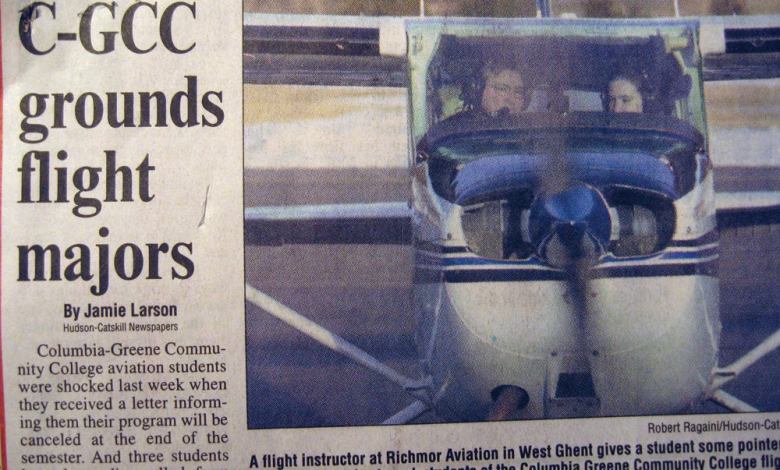
I was surprised and disappointed when I read the headline “C-GCC Grounds Flight Majors” in a local newspaper. Almost two months into the semester, school officials at a community college decided to pull the plug on its aviation sciences program. Earlier in the year I had been asked, along with another person (even more qualified […]

Read More »
Pilot in aircraft
Sign-up for newsletters & special offers!

Get the latest stories & special offers delivered directly to your inbox.

SUBSCRIBE