Register

Search Results for: general aviation inc

Features

Is 100LLs End Near?

Its no secret that 100LL aviation gasoline is one of, if not the, last leaded fuel in regular use in the U.S. Its also no secret-or at least it shouldnt be-that no other fuel offers the same capabilities throughout the general aviation piston fleet. Despite years of attempts to develop a substitute for tetraethyl lead (TEL, an additive helping boost fuel octane, preventing knock and valve-seat recession) or 100LL itself, nothing is FAA-approved as a replacement. Yes, promising research is being conducted into a substitute fuel or additive-especially over the last year or so. As those paying attention to environmental issues associated with aviation fuels know, the lead content of 100LL has long been an issue. The element is responsible for several long-lasting health issues, including neurocognitive, neurobehavioral, sensory, and motor-function effects in children exhibiting relatively miniscule blood lead levels.

Read More »
Pilot Proficiency

Safety Against the Odds

The e-mail we received here at Flying from Col. Sid “Scroll” Mayeux, chief of aviation safety at the United States Air Force Safety Center, was a little hard to believe. “Last year (Fiscal Year 2009),” Mayeux’s e-mail read, “was the USAF’s safest year in aviation safety, with 17 Class A Aviation Flight Mishaps for a […]

Read More »
Aircraft

Hawker Beechcraft Inundates the Newsroom at EBACE

Press releases from Hawker Beechcraft Corp. (HBC) filled journalists’ inboxes as EBACE opened its doors in Geneva this week. One of the new strategies announced there takes a page from premium automobile brands with a “certified” pre-owned aircraft program. Under the Hawker Beechcraft Select Pre-Owned Program, qualifying turbine aircraft (sorry, pistons aren’t included) purchased through […]

Read More »
Aircraft

Despite Defaults, Gulfstream Parent Sees Market Revival

First quarter results for General Dynamics revealed the largest number of new orders since mid-2008. Jay Johnson, GD’s president and CEO said, “The Aerospace Group is off to a very good start in 2010.” The business group includes Gulfstream Aerospace, Jet Aviation and GD Aviation Services divisions. International orders dominated the ledger for Gulfstream, continuing […]

Read More »
Pilot Proficiency

Training: Flight School Safety

When we talk about flight training safety, we usually refer to the steps an instructor can take to ensure a lesson is not marred by an incident or accident. However, there are also operational considerations that can contribute to flight training safety. I recently had a chance to talk with Dana Siewert, the director of […]

Read More »
Editor's Log

Good News, Bad News

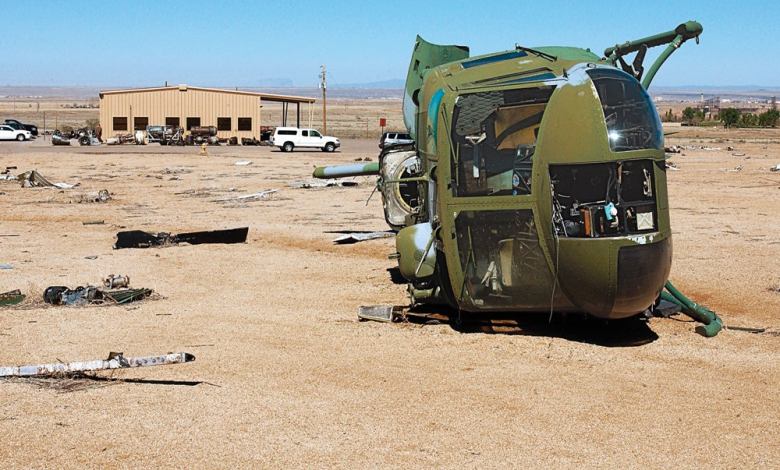
In early April, the National Transportation Safety Board (NTSB) released its preliminary 2009 aviation accident statistics. There is good news in the NTSBs numbers, which “show an overall decrease in U. S. civil aviation accidents.” Most of the good news belongs to those engaged in on-demand operations under Part 135, which achieved the lowest number of accidents and fatal accidents the industry segment has enjoyed in two decades. Hats off to them. But that good news is tempered once again (see “One,” in our May 2009 issue) by a dismal showing among Part 91 operators. And Part 121, scheduled, operators would have had a perfect year except for the February 12, 2009, crash of a Colgan Air Bombardier DHC-8-400 operating as Continental Connection Flight 3407 outside Buffalo, N.Y., which killed 50.

Read More »
Aircraft Analysis

When The Sparks Stop

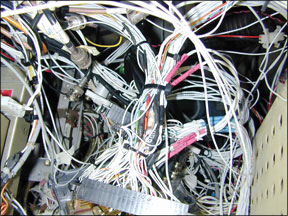
This aviation “thing” brings with it the potential for events seemingly designed to test our internal response systems. You know the kind: situations with substantial potential for our adrenal glands to start working overtime. Learning how to deal with these kinds of events is one of the things flight training is all about. The time we spend with an instructor practicing various scenarios-from broken gyros and other useless instruments to no-flap landings and complete engine failure-teaches us how to combat a number of not-uncommon problems. And, unless were flying a glider, hot-air balloon or powered aircraft lacking an electrical system, the prospect of losing those flowing electrons-especially when in flight conditions where we really, really need them-is one very real prospect.

Read More »
Airmanship

Extreme-Altitude Hazards

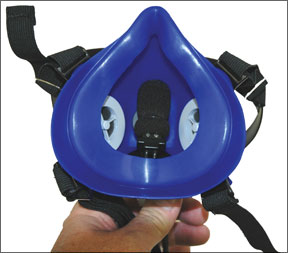
Most of my flying career was spent with an oxygen mask either five seconds away, or with it on and breathing 100-percent oxygen. After many sessions of lectures, altitude chambers and flight missions, oxygen education became a kind of gray thing. While the essentials stayed in the back of my mind, the details faded. That is, until my best friend died at the hands of the hypoxia monster. I learned and re-learned a lot during those next few weeks. One of the things I learned (or re-learned) is just how hostile is the high-altitude environment when were not prepared for it. Often, unfortunately, even if we are prepared, it can still rear up and bite us. Of course, the big problem with high-altitude flight operations is it can be a long way down to a safer level, where the air is denser. As well discover, an inability to breathe without some kind of assistance is just one of the problems.

Read More »
Features

Investing In WAAS

The FAAs Wide Area Augmentation System (WAAS) has been widely hyped as a boon to safety because it offers more precise approach guidance with vertical capability. While thats true on some approaches, it can also cost an aircraft owner a bundle of money. Worse, the market offers limited choices in equipment-Garmins GNS430/530W and G1000 are among the short list. There are plenty of reasons to buy WAAS, and for many new installations WAAS comes standard. Theres also ADS-B, which relies on a WAAS-enhanced GPS position. But is the safety enhancement worth the upgrade costs for the typical pilot? And what exactly are you getting out of the WAAS deal?

Read More »
Features

Five Exercises For Better Crosswind Landings

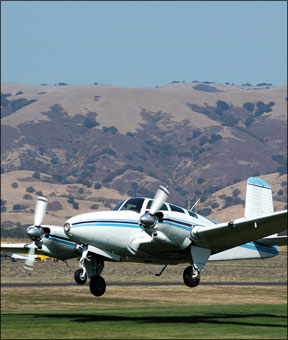
Everybody talks about crosswind practice, but few pilots do anything about it. Crosswinds are the number one factor in weather-related accidents, and even far more in-motion aviation insurance claims. The answer to handling crosswinds is usually to…practice crosswinds. Theres no question that practice makes one (at least closer to) perfect. And, as is the case with most other maneuvers we attempt when flying aircraft, landing in crosswinds requires the artful combination of a number of individual skills. As with so many elements of learning to fly and maintaining proficiency, there are several of ways to develop and improve your crosswind skills. You dont necessarily have to practice them in an actual crosswind, but you do need to be ready to combine them on the day when things are strong and gusty, and not aligned with the runway. Here are five exercises you and your CFI can use to develop better crosswind landing skills.

Read More »
Pilot in aircraft
Sign-up for newsletters & special offers!

Get the latest stories & special offers delivered directly to your inbox.

SUBSCRIBE