











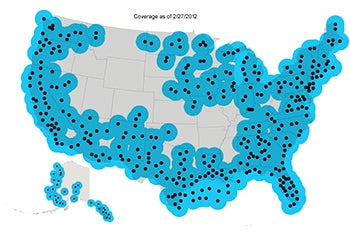
The FAA’s network of ADS-B transmitters is growing fast. In the past 18 months the number has mushroomed, and by the end of the year there should be at least 800 sites up and working. ADS-B, which the FAA officially mandated in 2010 for full adoption by 2020, is the NextGen surveillance technology, though sadly it will not stop us from having to keep our Mode-C transponders. There are added benefits: In addition to futuristic traffic capabilities, ADS-B gives pilots with ADS-B In capability (that is, those receiving the signal as well as transmitting it) in-cockpit weather for free.
Cool Animation: ADS-B Cloud Spreads

Key Takeaways:
- The FAA's ADS-B transmitter network is rapidly expanding, with at least 800 sites expected to be operational by the end of the year.
- ADS-B is the FAA's mandated NextGen surveillance technology, required for full adoption by 2020, though Mode-C transponders will still be necessary.
- Pilots with ADS-B In capability benefit from futuristic traffic awareness and free in-cockpit weather information.
Key takeaways sponsored by Aviator Pro | Start Your Training ->
See a mistake? Contact us.

