














NBAA Forms Coalition to Fight Washington’s Aircraft Luxury Tax

Groups argue that a recently passed bill will have ‘sweeping, unintended consequences’ for the state’s economy.

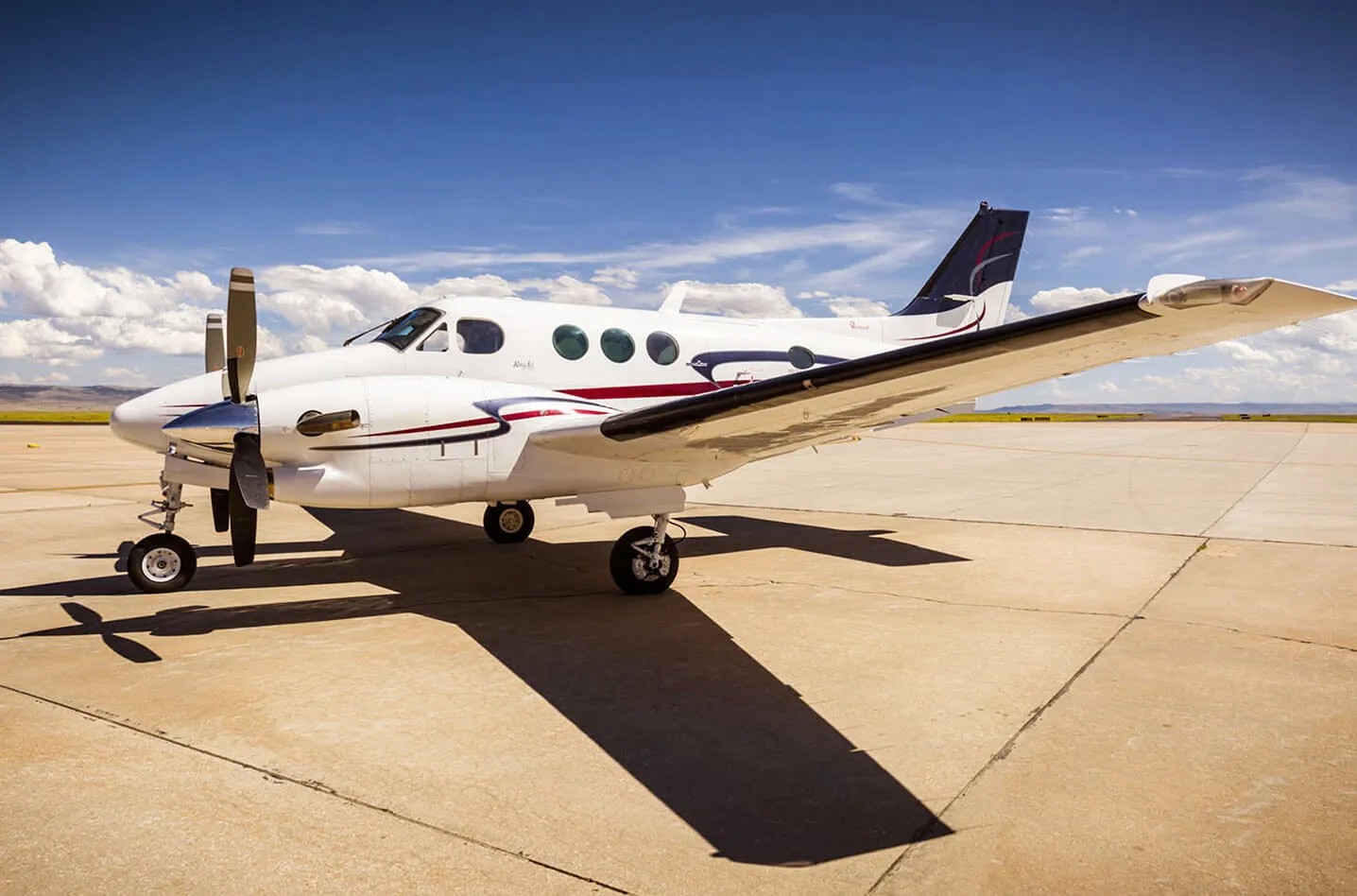
Beechcraft King Air C90A aircraft
Costly, noncommercial aircraft, such as this Beechcraft King Air C90A, face a 10 percent tax on sale, lease, and transfer in Washington state. [Credit: NBAA]
Gemini Sparkle

Key Takeaways:

  • A coalition of aviation industry groups is opposing a new Washington state 10% "luxury tax" on noncommercial aircraft valued over $500,000, intended to fund sustainable aviation fuel initiatives.
  • The groups argue the legislation is based on an "uninformed understanding" of high-value aircraft, warning of "sweeping, unintended consequences" for the state's economy and aviation sector.
  • They contend that these aircraft are essential for various services like medical transport, disaster relief, and business connectivity, not solely luxury items, and that the tax would negatively impact related jobs and businesses.
  • The coalition emphasizes the aviation industry's existing strong commitment to sustainability and seeks constructive communication with legislators to incentivize progress rather than impose burdensome measures.
See a mistake? Contact us.

Aviation industry groups are uniting to fight legislation in Washington state that they argue is based on a “grossly uninformed understanding” of high-value aircraft.

That was the language used by the National Business Aviation Association (NBAA), National Air Transportation Association (NATA), General Aviation Manufacturers Association (GAMA), Vertical Aviation International (VAI), Corporate Angel Network (CAN), and Angel Flight West in an April letter to Washington Governor Bob Ferguson.


Earlier this year, Ferguson signed off on a provision that will levy a 10 percent tax on the sale, lease, or transfer of noncommercial aircraft valued at over $500,000—as well as users of those aircraft. Proceeds will be deposited into the state’s Sustainable Aviation Fuel Account.

On Monday, NBAA announced it formed a coalition with the explicit goal of opposing the tax, which it described as “burdensome” despite the admirable goal of sustainability. Phil Derner, NBAA’s Western region representative, told FLYING the coalition comprises all of the aforementioned groups as well as chambers of commerce and smaller members, including the organization’s entire Washington state mailing list.

NBAA said the legislation has raised “significant concerns for business aviation,” which per Derner has caused some operators to reconsider renewing their leases in the state. He said that while business operators are “at the forefront” of the issue, the luxury tax would affect “nearly every corner of general aviation.”

Per NBAA, the coalition is working to open lines of communication with “key partners,” including the bill’s sponsor. Recently, it said, about 100 stakeholders met at Seattle Paine Field International Airport (KPAE) to discuss their needs and hear from Washington State Representative Tom Dent—a “strong industry advocate” and leader of the state’s aviation caucus.

“Sustainability is a driving force for NBAA and the broader aviation industry, as evidenced in our 2050 net-zero emission target and advocacy for sustainable aviation fuel,” Derner said in a statement. “This coalition is intent on communicating that commitment, while also dispelling misconceptions and highlighting aviation’s positive contributions to environmental progress. We are here to build a constructive relationship that incentivizes and empowers our industry to be a better participant in sustainability and a better neighbor in communities throughout the state, not just in the big cities.”

Case For (and Against) a Luxury Aircraft Tax

Washington state’s 10 percent tax on luxury noncommercial aircraft is set to take effect in April, impacting aircraft plus trade-in property valued over $500,000. For leased aircraft, fair market value at the start of the lease must be greater than $500,000.

Tax will be collected only on the “portion of the selling price in excess of $500,000,” the bill reads. In other words, the buyer of a $600,000 aircraft would be taxed $10,000 because they surpassed that threshold by $100,000. However, Derner said some in the industry have interpreted the language to mean the tax would be $60,000, or 10 percent of the full $600,000 price.

The idea behind the legislation is to generate fresh funding for transportation sustainability projects. But NBAA and other groups in their letter warned it could have “sweeping, unintended consequences” for the state’s economy.

Stakeholders argued that costly, noncommercial aircraft are not just luxury items. CAN and Angel Flight West, for example, operate networks of volunteer pilots that fly to underserved rural areas.

Other organizations, including the Washington State Department of Natural Resources’ aviation division, use expensive helicopters—like the Bell UH-1H(M) Huey—to battle blazes from above or evacuate victims. Agricultural operators often fly costly aircraft for crop dusting and environmental monitoring.

All of these stakeholders, the groups said, would be negatively impacted by the higher tax.

Business and recreational flyers will feel the difference, too, as will airports, which could see fewer operations. According to the groups, operations that would be affected by the tax support 407,000 airport jobs and generate $8.6 billion in economic output. In addition, 107 repair stations, 22 flight schools, 4,400 instructors and nearly 8,000 students would be “adversely affected,” they said.

NBAA said the legislation passed with “limited industry input,” prompting the formation of a coalition to extol the industry’s commitments to sustainability.

NBAA is targeting net-zero emissions from business aviation operations by 2050—a goal shared by many U.S. and international organizations. In 2019, it created an Emerging Technologies Committee to advocate for industry-friendly rules for new, environmentally friendly entrants—drones, electric vertical takeoff and landing (eVTOL) air taxis, supersonic jets, and others.

eVTOL aircraft, in particular, will have a “profound impact” on the industry’s future, NBAA wrote in a 2019 report titled “Business Aviation Embraces Electric Flight.”

At the group’s 2025 Business Aviation Convention and Exhibition (NBAA-BACE) in October, attendees could purchase helicopter flights from Blade Air Mobility, whose passenger division was acquired by eVTOL developer Joby Aviation in August. While those trips weren’t electric, passengers had the chance to speak with Joby representatives about the company’s plans to integrate air taxis on the Blade platform. That combination—as well as a planned integration with Uber —could happen in the next few years.

“By resetting the business aviation community’s relationship, we intend to keep legislators and the public better informed on our industry’s commitment to Washington state, its economy and its environment,” Derner said of the new coalition.

Derner told FLYING that the Washington coalition may be the first of many. He emphasized NBAA’s effort to improve communication with policymakers in order to proactively provide input, rather than react to signed legislation.

Jack Daleo

Jack is a staff writer covering advanced air mobility, including everything from drones to unmanned aircraft systems to space travel—and a whole lot more. He spent close to two years reporting on drone delivery for FreightWaves, covering the biggest news and developments in the space and connecting with industry executives and experts. Jack is also a basketball aficionado, a frequent traveler and a lover of all things logistics.

Ready to Sell Your Aircraft?

List your airplane on AircraftForSale.com and reach qualified buyers.

List Your Aircraft
AircraftForSale Logo | FLYING Logo
Pilot in aircraft
Sign-up for newsletters & special offers!

Get the latest stories & special offers delivered directly to your inbox.

SUBSCRIBE
