














FAA Seeks to Recruit Contracted ATCs to Its Ranks

Agency’s latest action to address a long-standing shortage would tap into a pool of privately managed air traffic controllers.

air traffic control ATC tower
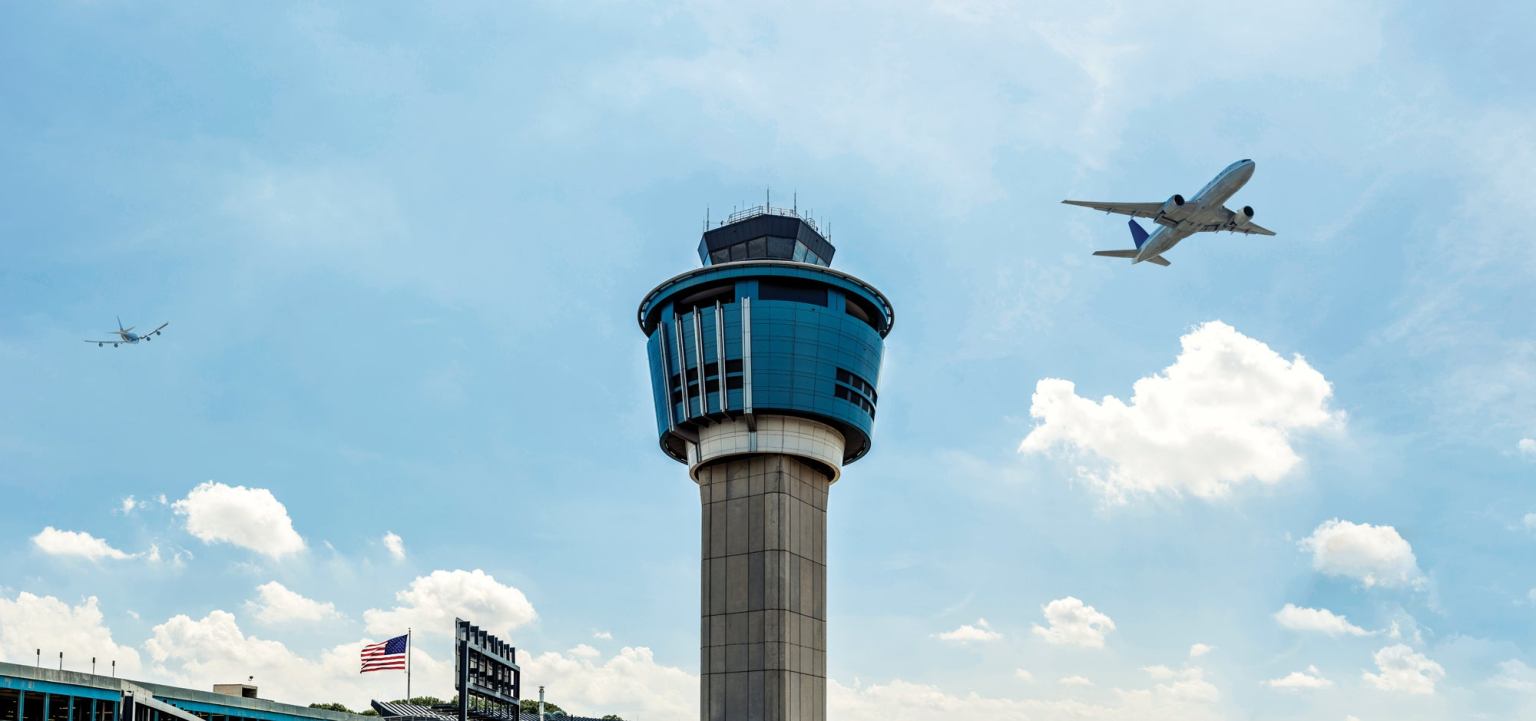
FAA pilot program seeks to convert two federal contract towers to agency-owned facilities. [Credit: iStock/JasonDoiy]
Gemini Sparkle

Key Takeaways:

  • The FAA is launching a pilot program to combat its persistent air traffic controller (ATC) shortage by taking over federal contract towers (FCTs) and integrating their privately managed controllers into the federal workforce.
  • This initiative aims to strengthen the ATC pipeline by standardizing training for these contract controllers, allowing them to be deployed across the FAA's network.
  • Despite previous recruitment efforts and a revised staffing model, the FAA still faces an estimated shortage of approximately 1,500 controllers, prompting this new strategy to leverage existing, albeit also shorthanded, private sector talent.
See a mistake? Contact us.

In its latest move to combat a longstanding shortfall of air traffic controllers (ATCs), the FAA will look to swell its ranks by dipping into a pool of privately managed controllers.

The agency on Monday said it will launch a pilot program to take ownership of federal contract towers (FCTs)—ATC facilities that follow FAA qualification and training requirements but are operated by non-agency personnel. The converted towers would be placed under direct FAA oversight, and their controllers would receive standardized training that allows them to either remain at their facility or be relocated to one of the agency’s approximately 300 other sites.


The FAA said in a news release that the move will “strengthen the controller workforce pipeline while preserving safety in complex airspace.” Per a new ATC staffing model it released Friday, the agency has an estimated shortage of about 1,500 certified professional controllers (CPCs). That figure would be even higher—about 3,500—under the regulator’s previous model, developed collaboratively with the National Air Traffic Controllers Association (NATCA).

NATCA on Monday told FLYING that it was left out of the FAA’s decision to modify the staffing model, which reduced its targeted ATC headcount by about 2,000. The union said in a statement that the rationale behind the decision is flawed.

Through fiscal year 2028, the FAA seeks to onboard 6,900 controller trainees and estimates it will lose about 5,307, netting it 1,593 in total. It has deployed an array of strategies to boost hiring and retention, including bonuses for trainees at the FAA Academy in Oklahoma City, incentives for retirement-age controllers to stay on the job, and a recent hiring push targeting gamers.

Still, most U.S. airports lack control towers, and those that have them are often undermanned.

FAA Turns to Private ATCs

Like FAA-owned facilities, FCTs are shorthanded. Per a report published in March by the U.S. Transportation Department (DOT) Office of the Inspector General (OIG), the FAA’s FCT program as of April 2025 was 276 controllers or about 18 percent shy of its targeted headcount, driven largely by attrition and stagnant wages.

The program comprises more than 1,500 ATCs across 266 facilities, representing about half of the nation’s control towers. They collectively handled more than 17 million operations in 2023.

Per the FAA, contractors meet the same qualification and training requirements as agency-trained controllers. The agency in 2024 awarded 10 contracts to FCT providers valued at around $1.5 billion, each covering a different swath of the country. They provide on-the-job training to ATCs who hold FAA control tower operator (CTO) certification, or who graduated the CTO-Partership program or one of the 11 Enhanced Air Traffic Collegiate Training Initiative (AT-CTI) universities.

Per the OIG, though, FCT contractors said they have not hired a single Enhanced AT-CTI graduate.

“FAA is facing a well-documented air traffic controller staffing shortage, and this applies to the FCT Program,” the OIG said. “Stabilizing controller staffing at contract towers is critical to the overall safety of the NAS.”

Unlike FAA towers, contract towers typically have strict operational hours. Occasionally, FCT airports revert to “pilot-controlled” operations, where pilots manage their own traffic due to tower absences. The OIG found that the FAA struggles to validate contract tower staffing figures despite taking steps to improve visibility, such as reducing payments for contractors who fail to provide adequate data.

Despite those issues, the agency will gauge whether it could safely draw from the depleted third-party workforce to fill its own ranks.

“As air traffic demand continues to grow, this program will help ensure the FAA has the experienced workforce needed to manage complex operations at these towers,” FAA Administrator Bryan Bedford said in a statement.

The FCT program was established in 1982 primarily to outsource ATC services at low-traffic facilities. The new pilot program will target “high-activity” FCTs for transition, beginning with towers at Bozeman Yellowstone International Airport (KBZN) in Montana and Mesa Gateway Airport (KIWA) in Arizona.

The FAA said it expects to complete the two tower transitions within 29 to 44 months, and qualified personnel will transition with their facility. Once they are operational, the agency will perform a safety analysis to determine whether the effort should be expanded.

Per the FAA Reauthorization Act of 2024, which outlines the pilot program, the converted facilities would be Level I towers. The legislation authorizes Congress to make available up to $30 million over five fiscal years to complete the effort.

Earlier in May, the FAA allocated nearly $86 million to upgrade contract towers at 41 airports in 24 states. An FCT grant program will provide $20 million annually over the next five years to support a range of infrastructure upgrades, including the installation of modern ATC and communications equipment.

Per the FAA, other efforts to strengthen the ATC workforce are already paying dividends. On Friday, it estimated that hiring surges and financial incentives it has implemented since 2025 have resulted in a net gain of 568 personnel. Transportation Secretary Sean Duffy said in April that the department’s latest hiring push netted 12,000 applications in just 24 hours—the most in a single day in its history, he said.

The FAA has turned to gamers, military controllers, retirement-age personnel, and other labor pools to address its chronic ATC shortage, to little avail. The hope is that recruiting third-party controllers could finally drive results.

Jack Daleo

Jack is a staff writer covering advanced air mobility, including everything from drones to unmanned aircraft systems to space travel—and a whole lot more. He spent close to two years reporting on drone delivery for FreightWaves, covering the biggest news and developments in the space and connecting with industry executives and experts. Jack is also a basketball aficionado, a frequent traveler and a lover of all things logistics.

Ready to Sell Your Aircraft?

List your airplane on AircraftForSale.com and reach qualified buyers.

List Your Aircraft
AircraftForSale Logo | FLYING Logo
Pilot in aircraft
Sign-up for newsletters & special offers!

Get the latest stories & special offers delivered directly to your inbox.

SUBSCRIBE
