Register

System

I Want My GPS

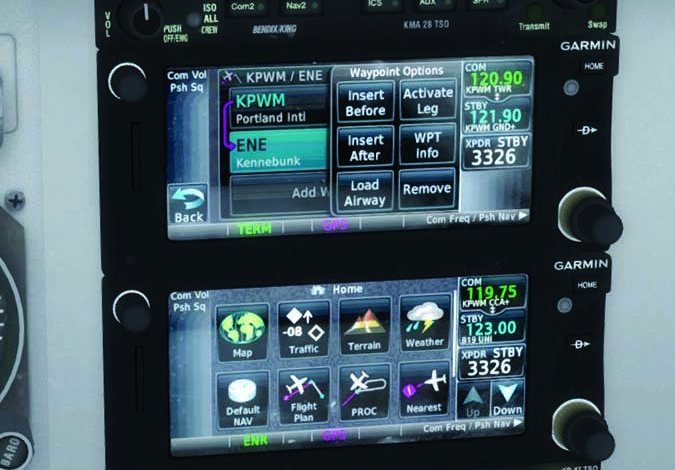
We need completely realistic virtual avionics. Ive been ringing this bell for a decade now and have achieved exactly nothing. Simulator training for real-world pilots is crippled without them. Pilots cant practice the buttonology, which atrophies even faster than a six-pack scan. Pilots also want their own panels to fly virtually. I say thats one of the biggest barriers to expanding the use of simulation.

Read More »

IFR Briefing: December 2016

The FAAs long-awaited ADS-B rebate program launched on September 19, and drew more than 1300 applicants in the first two days, according to David Gray, the FAAs ADS-B program manager. A robotic co-pilot that can be quickly installed in a variety of aircraft has been successfully tested in a Diamond DA-42 and a Cessna Caravan by the Defense Advanced Research Projects Agency. Textron Aviation flew its prototype Citation Longitude for the first time, in October. The super-midsize Longitude was announced in 2012. The crew of a Hawker 700A jet that crashed in Akron, Ohio, a year ago showed a disregard for safety, NTSB Chairman Christopher Hart said in October, and the company they worked for, Execuflight, also fell short of their obligations.”

Read More »

Where Your PIREPs Go

Weather and NOTAMs are a huge percentage of the mountains of data controllers process daily, and a significant chunk of that comes from pilot reports. Some pilots wonder how the information they share gets processed by ATC. As one IFR reader expressed: It appears that most reports of icing/tops/bases that are reported to ATC never make it into the PIREP system.

Read More »

IFR Briefing: November 2016

Air traffic controllers need better training to effectively assist aircraft in distress, the NTSB said in a safety-recommendation report released in September. In September, the FAA began offering a $500 rebate to aircraft owners who upgrade to ADS-B-capable avionics. New FAA rules that became effective in August make it easier for operators to secure a commercial drone certificate, and its expected their numbers will quickly outpace manned-aircraft pilots. NTSB staffers who investigated the ditching of USAir 1549 in the Hudson River in 2009 say the Hollywood movie about the event, Sully, portrays them in an inaccurate and unfair light.

Read More »

Reader Feedback: November 2016

In the June issue, a reader had a question regarding the TERPZ FIVE departure at BWI. Your response in a lost com scenario was that you should climb to TERPZ at 11,000 then climb to your filed altitude after 10 minutes. I disagree. In the regs, 91.185 offers clear altitude guidance in a lost com situation. It is simply the highest of 3 altitudes-the altitude in your clearance, the altitude you were told to expect, and the highest IFR altitude. No mention is made about waiting for 10 minutes nor about a filed altitude.

Read More »

Reducing the Ruckus

Airports are usually born in the lesser-populated outskirts of their namesake town. Over time, they often find themselves enveloped by suburbs and industry. This close contact inevitably leads to tension, as city populations and aviation traffic demands grow in parallel, spurring a need to reign in the noise. Noise abatement often begins with good neighbor policies-typically voluntary, common-sense practices designed to assuage the locals.

Read More »

Lower Won’t Work

While we usually train by flying right to minimums and then frequently flying the missed, how often in our actual flying do we miss and do it again, or divert to an alternate? How often do we get caught by surprise when the ceiling were expecting to break out of is lower than we thought (or lower than we need)? For those of us operating under 14 CFR Part 91, how often do we consider or actually find ourselves pushing the looser legal limits of landing under IFR?

Read More »

When Air Traffic is Light, ATC Lets You Take Your Time Landing

Controllers cant just look where the traffic is now. Were mentally projecting every route ahead to see future conflicts. If Ive got two 120-knot aircraft at the same altitude converging on a point 20 miles away, in 10 minutes theyll be waving to each other. Something-like an altitude change-must be done in 10 minutes. If I need to use immediately in that altitude clearance, I screwed up by waiting way too long.

Read More »

Approach Charts: Read the Fine Print

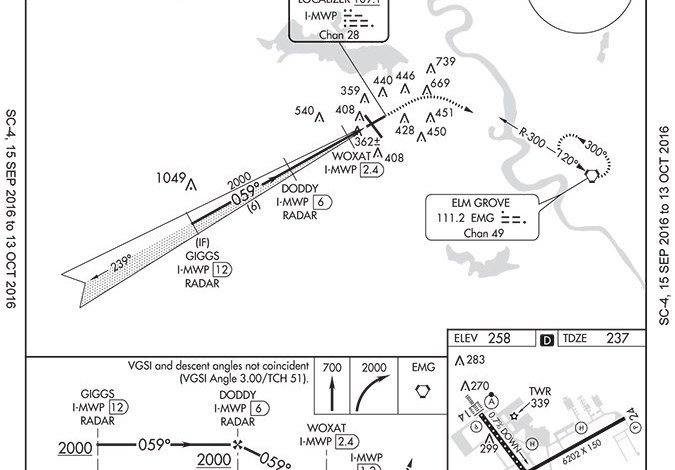
After selecting a specific approach, reviewing the other approaches might provide useful information. For example, until recently one Runway 16R approach at Reno/Tahoe (KRNO) had the note: Caution: intensive glider activity between PYRAM and WARMM up to 12,000. Seven other approaches transit the same area but offer no such warning.

Read More »

EAA AirVenture, Replacing Aftermarket ECI Cylinders, General Aviation Accidents Decreasing

The FAA issued its final rule in August on a controversial airworthiness directive requiring the replacement of aftermarket ECI cylinders in 6200 Continental aircraft engines. It took 13 years from start to finish, but in July the SolarImpulse team succeeded in its quest to fly a solar-powered aircraft around the world. It may not be the worlds sleekest or most beautiful aircraft, but the Airlander 10 is unique, and in July it left its hangar and flew for the first time. The number of general aviation accidents decreased in 2015 compared to the year before, continuing a recent trend, according to the 25th Joseph T. Nall Report by AOPAs Air Safety Institute.

Read More »
Pilot in aircraft
Sign-up for newsletters & special offers!

Get the latest stories & special offers delivered directly to your inbox.

SUBSCRIBE