
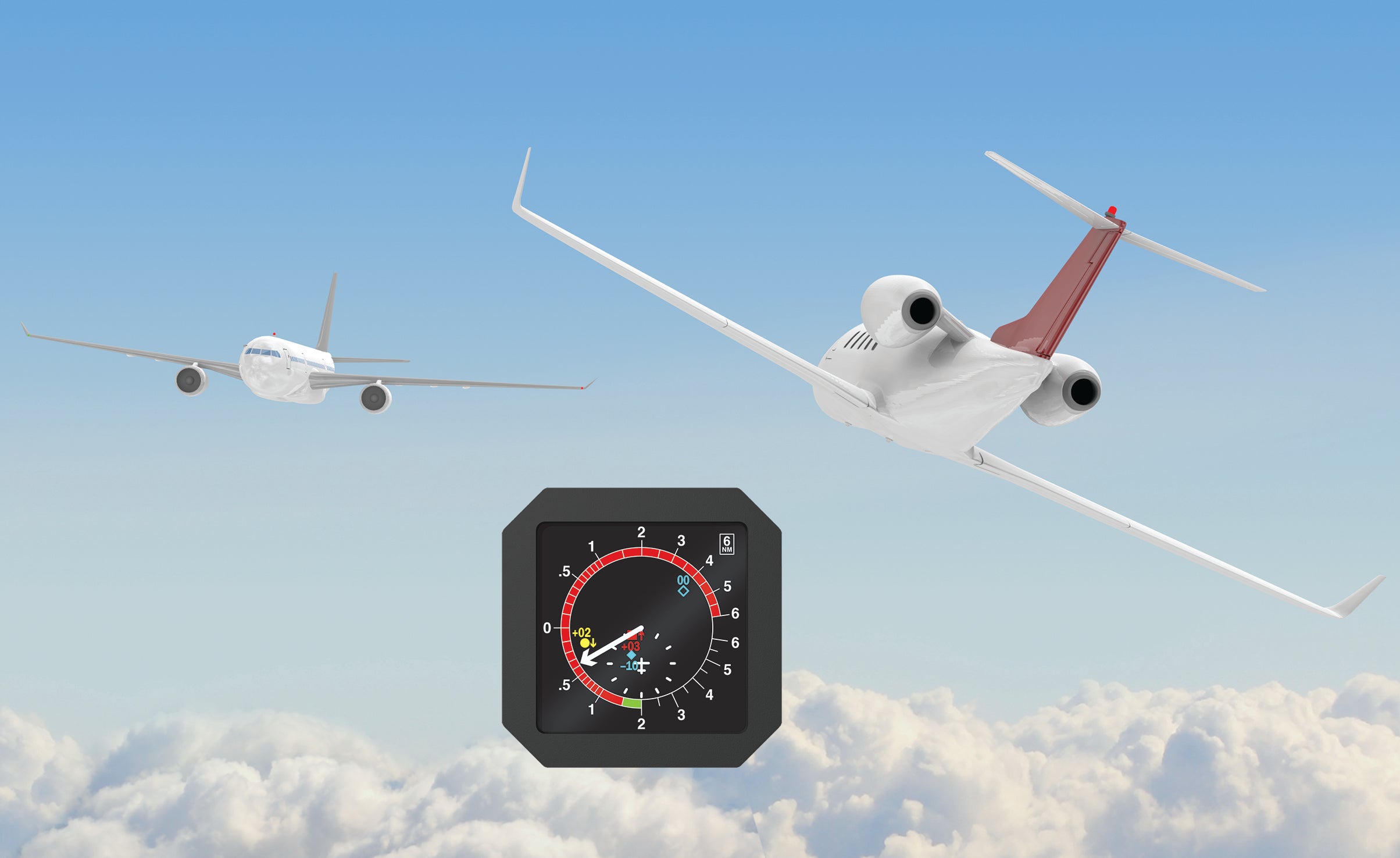
For the past 30 years, aviation has benefited from traffic collision avoidance systems (TCAS) installed in large airplanes. The newest version of this safety technology, TCAS II, provides aural and visual warnings to pilots as well as resolution advisories instructing, for example, one airplane to climb and another to descend to avoid a midair collision. Here’s how TCAS II works:
How It Works: TCAS II

Key Takeaways:
- TCAS II is an advanced aviation safety system that uses radio interrogation of transponders to create a 3D map of nearby aircraft and provides pilots with warnings and Resolution Advisories (RAs) to prevent mid-air collisions.
- The system's RAs instruct pilots (e.g., to climb or descend) and negotiate with the intruding aircraft to take the opposite action, defining a protected volume of airspace around the TCAS-equipped plane.
- Enhanced by Change 7.1 software, TCAS II can now reverse previous advisories, issue "level off" alerts, and incorporate terrain data to ensure safe descent commands, making it more adaptable and robust.
Key takeaways sponsored by Aviator Pro | Start Your Training ->
See a mistake? Contact us.