











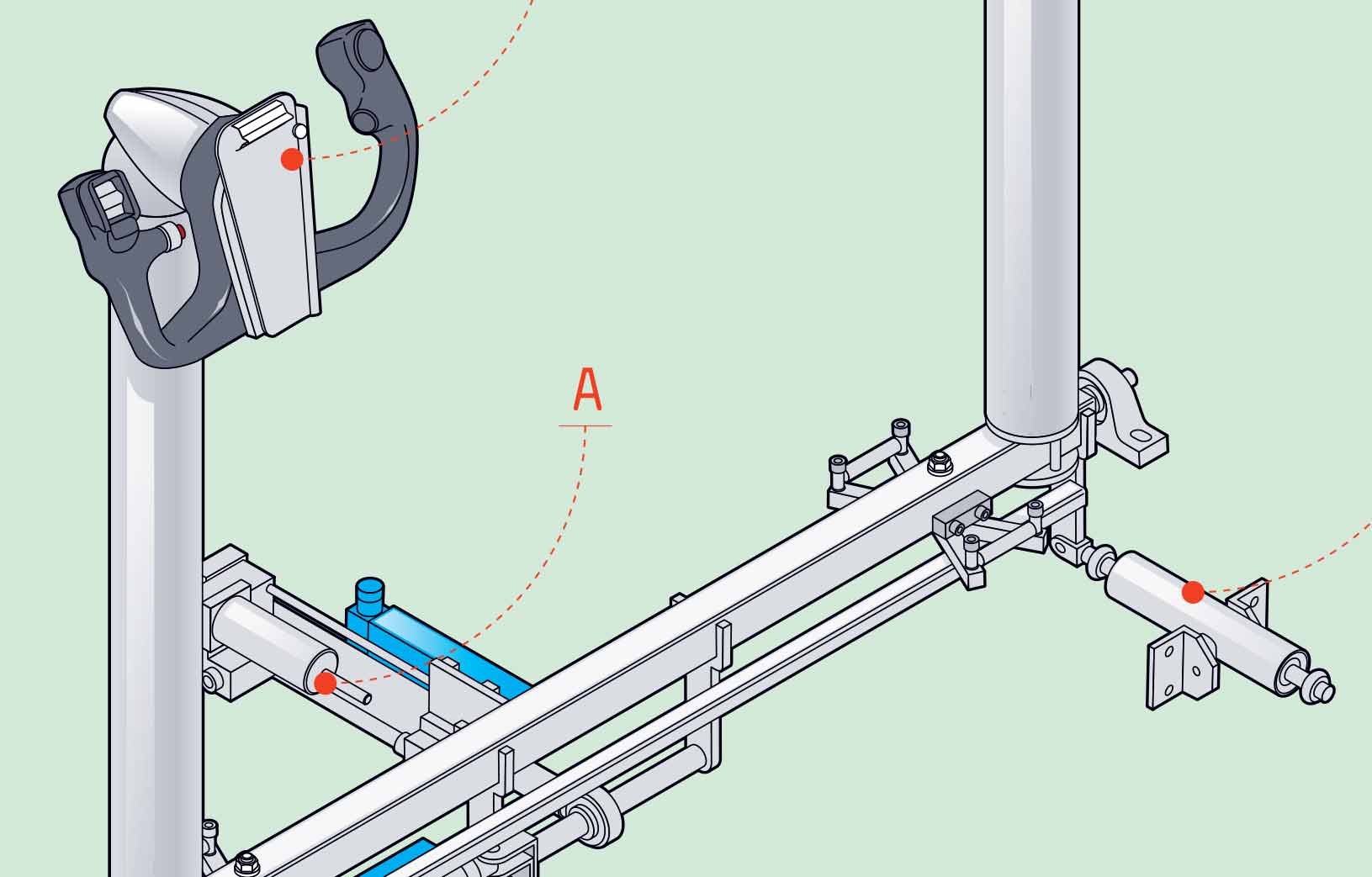
Think of the stick shaker/pusher found in transport-category aircraft as a bit of a lazy pilot’s angle of attack indicator. Should the flying pilot become distracted enough that they fail to notice an increasing angle of attack, to a point where the wing is about to cease producing sufficient lift, an airplane equipped with a shaker/pusher system will jump in to try to save the day by reducing the angle of attack. More precisely, the stick shaker acts as a stall-warning device, while the stick pusher’s job is one of stall avoidance.
How it Works: Stick Shaker/Pusher

Key Takeaways:
- The stick shaker/pusher system in transport-category aircraft functions as a critical safety device, providing a stall warning (shaker) by vibrating the control wheel and then actively preventing a stall (pusher) by pushing the control wheel forward to reduce the angle of attack if the warning is ignored.
- The shaker activates when angle of attack sensors indicate an impending stall, while the pusher takes over if the pilot fails to correct the high angle of attack, potentially taking pitch control away.
- Modern variations of this system exist, such as Textron Aviation's Citation Longitude, which integrates the autopilot computer for the pusher function instead of an electro-mechanical device, and its forceful activation is typically demonstrated in simulators or during pre-flight ground checks.
Key takeaways sponsored by Aviator Pro | Start Your Training ->
See a mistake? Contact us.

