











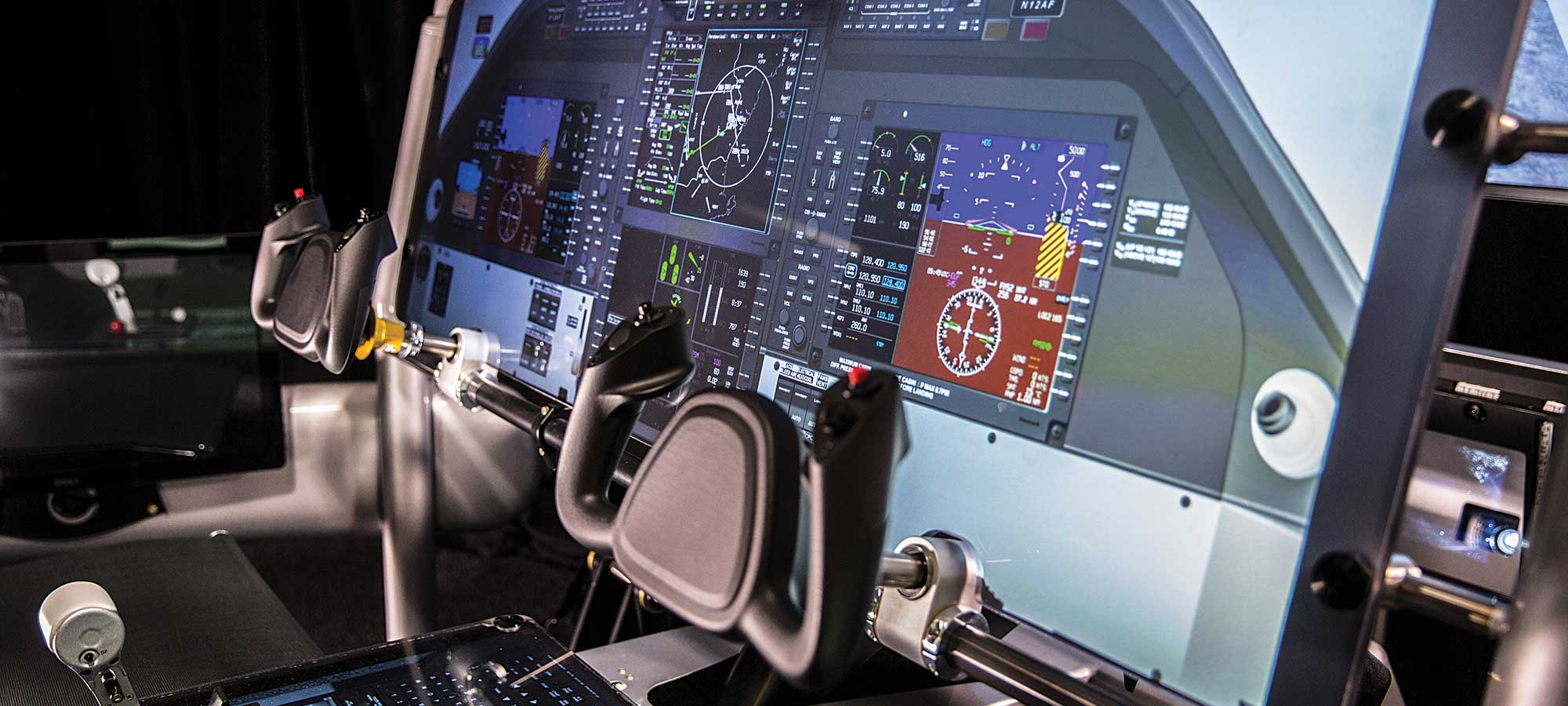
The voice behind me was a familiar one: “You pilots love your toys, don’t you?” I turned around in the coffee shop to see my neighbor’s smiling face staring at the flight-simulation app I was playing on my iPhone. I smiled and nodded as the wave of his hand said, “Go back to your game.” Last time I checked, the App Store offered 20 different flight-simulator games, some free, the rest for less than 10 bucks apiece. Of course, those simulators are toys, distractions when someone’s waiting for a train, a plane or an Uber. Once you move past games, higher-fidelity machines used for flight training and currency share a common purpose: to effectively, efficiently and safely train pilots for the real world before they take command of airplanes.
The Ever-changing Landscape of Flight Simulation

Key Takeaways:
- Professional flight simulators are indispensable tools for safe, efficient, and cost-effective pilot training, enabling practice of dangerous scenarios impossible in real aircraft.
- Technological advancements and FAA regulations have significantly enhanced simulator realism and fidelity, leading to reduced training hours and improved pilot proficiency for various certifications.
- While constantly improving, simulators have historically faced limitations in accurately replicating extreme flight conditions, leading to critical advancements like Upset Prevention and Recovery Training (UPRT).
- The future of flight simulation emphasizes software and AI-driven performance measurement, alongside new platforms like cloud-based systems, to further optimize training outcomes and realism.
Key takeaways sponsored by Aviator Pro | Start Your Training ->
See a mistake? Contact us.

