











Despite a falloff in world air traffic since early 2020, Ted Stevens Anchorage International Airport (PANC) in Alaska still represents a stopover point for thousands of airline and business-aviation flights between North America and Asia, as well as thousands of local general aviation and military airplanes. Visitors will notice that many of those local GA aircraft are mounted on floats, so they can freely move between PANC and the nearby Lake Hood Seaplane Base. About the terrain transient pilots can expect, city-data.com says: “The Chugach Mountains to the east have a general elevation of 4,000 to 5,000 feet, with peaks from 8,000 to 10,000 feet. These mountains block warm air from the Gulf of Mexico, keeping precipitation relatively low.”
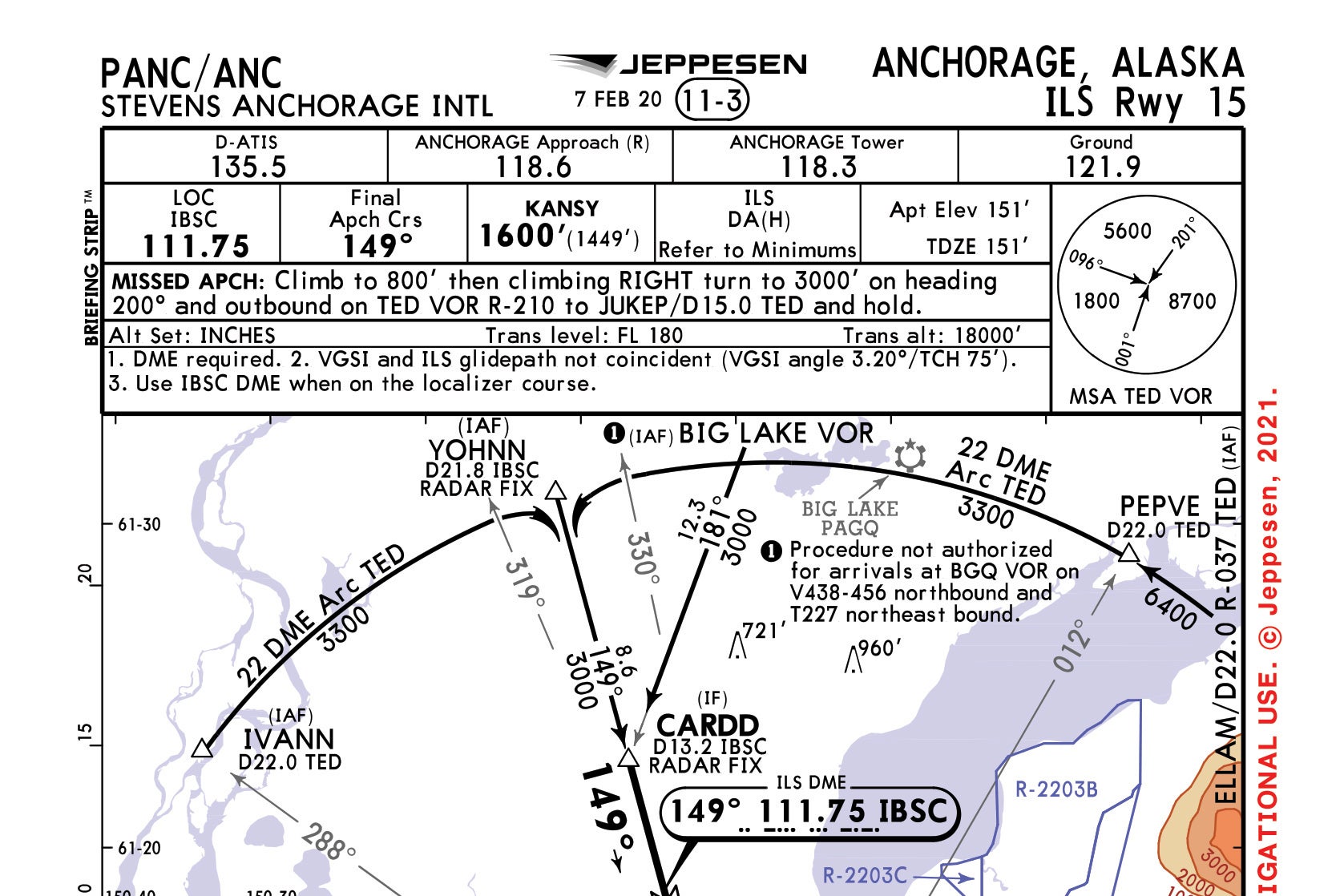
Anchorage ILS Runway 15

Key Takeaways:
- The ILS Runway 15 approach at Ted Stevens Anchorage International Airport (PANC) explicitly requires DME (or a suitable substitute like GPS) and utilizes DME arcs for initial approach.
- The procedure includes a feeder route with specific limitations for certain inbound VOR routes and offers two distinct missed approach procedures leading to the same holding fix, differing only in the VOR/DME source used for identification.
- This approach publishes only ILS minimums, meaning it cannot be flown as a non-precision localizer-only approach if the glideslope is inoperative, nor can it be used for circling to land on other runways.
Key takeaways sponsored by Aviator Pro | Start Your Training ->
See a mistake? Contact us.

