Squawk Box

Jammed And Frayed

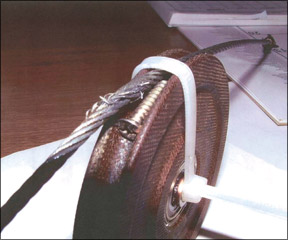
The control yoke was binding when turned left approximately 45 degrees. Upon inspecting the aileron control system, a screw was found lodged in a pulley groove and the cable (p/n 106-524044-19) was damaged. The aircraft had flown 2.0 hours since its last annual inspection. The screw appeared to be a floor panel screw.
Read More »

Crack Me Up

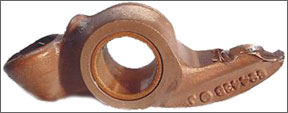
During a 100-hour inspection, several cracks were discovered on the inboard elevator hinge bracket (p/n A730258N). Additional cracks were found on the seven aircraft after a fleet-wide, one-time inspection was completed. Aircraft times varied from a low of 2507.7 hours to the group high of 2740.3 hours. The difference is a mere 232.6 hours, with 2671.4 the average of the seven records. Everything is cracking right on schedule-you could plan a vacation period around these numbers.

Read More »

Engines And Accessories

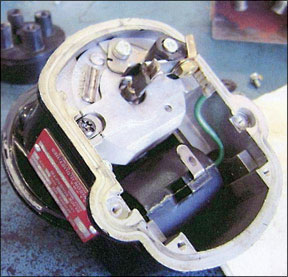
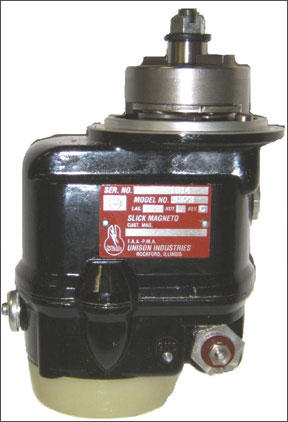
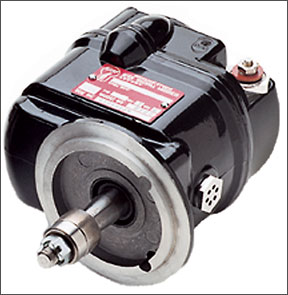
Two different Cirrus SR22 aircraft (powered by Continental IO-550-N27 engines) were discovered by the same shop to have broken magneto gear teeth. The first instance was discovered as a result of engine roughness during a pre-takeoff engine run-up: The l/h magneto was not firing properly and, upon inspection, the distributor gear (p/n: 10-357586) was found to be missing approximately ten teeth. The second instance was discovered during a routine 500-hour inspection. There was no pre-inspection indication of a problem with the magneto.

Read More »

Untorqued, Delaminated

Inspection of a recent engine installation uncovered a fractured engine-mount bolt. After informing the STC holder of the failure, we were told we should have re-torqued these bolts after 25 hours of operation. This information was not included in the STC. The submitter believes the STC is inadequate in ensuring continued airworthiness.

Read More »

Missing And Disconnected

Transport Canada (TC) in late 2009 issued a Service Difficulty Alert detailing failure of a parked aircrafts control yoke that broke during high-wind conditions. A complete fracture occurred between the yoke pivot area and the elevator attachment point due to severe internal corrosion. A 2001 Cessna service bulletin provides instructions for creating an inspection hole, recommending annual inspection and corrosion treatment.

Read More »

Cracks And Malfunctions

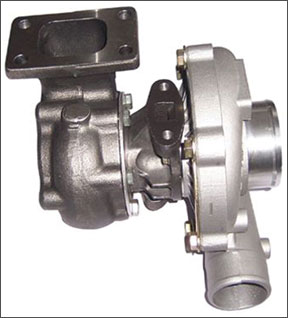
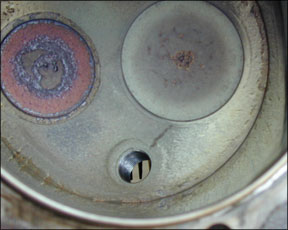
During an accident investigation, the top l/h engine cowling was found with evidence of fire damage. The l/h exhaust manifold pipe was loose and the l/h turbocharger clamp was lying in the bottom of the engine cowl. This aircraft was destroyed in fire, sustaining one fatality. Exhaust clamp p/n: MVT69183200LW1. The engine was a Lycoming TIO-540-J2B, presumably installed under an STC.

Read More »

Cracks And Malfunctions

During flight, the autopilot started to disconnect on the pilot. On the third attempt to engage the autopilot, the aircraft made a sudden, uncommanded 1500-fpm descent. The pilot used control-wheel steering and the autopilot disconnect button, but the autopilot would not disengage. He overpowered the autopilot to regain control; the autopilot remained on after he pulled the circuit breaker. He recycled the breaker and was successful in disconnecting the autopilot. The pilot also reported the electric trim switch seemed to work backwards. Maintenance personnel found water accumulated behind the rear curtain where the pitch servo is located.

Read More »

Wear And Tear

The right aileron was binding during aerobatic maneuvers. Investigation revealed the clearance between the aileron and the aileron bay rib was approximately 1/16 inch. Per American Champion, it should be inch. The inboard aileron bay rib appeared to have bowed due to fabric shrinkage, causing the interference. The aileron rib fabric was opened and the rib was relocated outboard 3/16 inch. Per the manufacturer, aileron balancing was not required. The aileron was reinstalled, with the clearance and operation satisfactory.

Read More »

Rivets And More

During a scheduled inspection, the wire bundle mount (p/n S2606-2) holding the flap motor wire harness was found detached from the rib in the right wing, allowing the wire bundle to chafe into the inspection panel support on the wing. The wire bundle had two wires which were chafed completely through the insulation, allowing contact with the inspection panel support. Inspecting these mounts and replacing them as needed is recommended.

Read More »

Assorted Failures

A repair station has replaced several upper torque links after finding them bent at inspection (approximately five have been found). Only one was found cracked. The submitter believes landing impact with more than the recommended strut extension (five inches maximum), according to the service manual. Strut extension is adjusted by adding shims (p/n 1243618-2.)

Read More »
Pilot in aircraft
Sign-up for newsletters & special offers!

Get the latest stories & special offers delivered directly to your inbox.

SUBSCRIBE