Squawk Box

Cracks And Corrosion

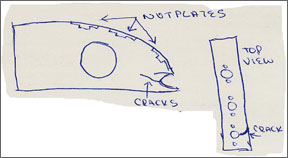
The pilot reported a loud “pop” just before entering the pattern. When he extended the gear, the green “gear down” light would not come on. A fly-by revealed the left main gear was in transit. A gear-up landing ensued. Inspection revealed the left main gear actuator (p/n 9882015-2) housing was cracked across the forward attach bolt hole. The cracked housing allowed the piston rack to jump gears on the pinion gear attached to the main gear leg. This area is inspected each 100 hours for cracks and defects very carefully, (using) lights and inspection mirrors. Time since last inspection: 25.0 hours.
Read More »

Slippage

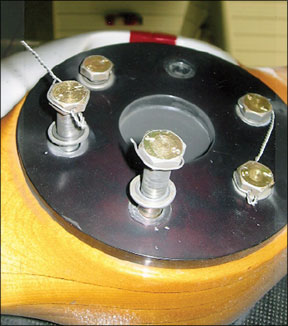
During the Cessna 172Ss first 100-hour inspection, a technician found both magnetos had slipped their timing approximately five degrees. The aircrafts magneto-to-engine timing was checked shortly after delivery, at 4.3 hours. Orange putty on the magneto hold-down studs was noted. It appears the magnetos have drifted significantly to the advanced position in 93 hours. This has been an ongoing issue with the engine and magneto manufacturers; SB2-08 does not address an advanced timing condition as in this case.

Read More »

Chafed, Cracked, Seized

A mechanic writes, “Two aileron cables, one flap cable, and the fuel line are all routed through the l/h lower aft door post area. This fuel line is protected by a plastic sleeve, but an (aileron) cable wore through the sleeve (and began cutting) into the fuel line. This line (p/n 0500106-326) is approximately 20 inches long with four bends. I suggest a one-time inspection in case other aircraft might have this problem.”

Read More »

Diamond Door Departs

At rotation speed on the takeoff roll, the aft passenger door (p/n DA4-5221-00-00-2) departed the airframe, narrowly missing the tail plane and rudder. The door was later recovered. The aft hinge was broken off and the forward hinge damaged. Investigation revealed the hinge had cracked (then broke), due in part to the materials used in part fabrication and the high pressure placed upon it by the door opening strut (p/n DA4-9052-00-11). The door and hinge are one assembly made of composite material. The hinge is approximately -inch wide. The strut is attached near the rear hinge. It exerts approximately 90 pounds of force near the hinge attach point. Even though the door employs a safety latch handle, when the aft hinge fails the door flexes enough to slide past the stop.

Read More »

Cracking And Sticking

The crew heard a noise when the landing gear was retracted. The left landing gear remained in a partially retracted position, unable to retract or extend. A successful gear-up landing ensued. The l/h landing gear actuator body (p/n 128101-3) had cracked at the forward mounting bolt hole, allowing the actuator bore to open enough that the piston would not engage the pivot sector gear sufficiently to move the landing gear.

Read More »

Cracking Up – NTSB Reports

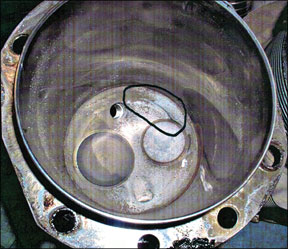
Prior to installing an overhauled fuel cell, it was found to contain a large quantity of sawdust-like particles. Further inspection revealed the foam filling the fuel reservoir was breaking down. The older cells reservoir foam insert was compatible with 100/130 fuel. However, 100LL causes the foam to break down into fine particles that get trapped in filters and screens. This problem is addressed in service bulletin (SB) number 2109 which replaces the old style foam (p/n 369200157) with a product that is suitable for use with 100LL.

Read More »

Just Plain Broken

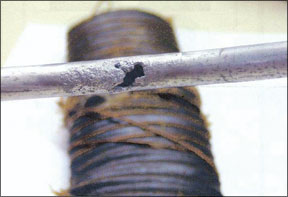
While in process of checking the individual oxygen masks during an annual inspection and five-year O2 bottle re-certification, a technician heard a very faint sound of a gas leak in the overhead interior paneling of the aircraft. After pulling the headliner for a closer inspection and plumbing in low-pressure nitrogen for troubleshooting, the technician narrowed down the “hiss” to a line just forward of the cabin door (p/n 5100107-46). To access this line, which passes through a structural beam in the overhead, it was necessary to drill out approximately 40 rivets securing a thin honeycomb panel to the overhead (structure). Above the panel is the ducting supplying the cabin Wemac vents. The line as pictured has been cleaned up and the corrosion removed for clarity. The corrosion occurred where the ducting passed under it. The ducting was removed to facilitate line removal, and was found to be totally deteriorated.

Read More »

Wear and Tear

A mechanic writes, “Upon changing a tire on a Cleveland wheel assembly on this aircraft, it was discovered the wheel half holding the bearing race was cracking. It had cracked over 180 degrees around the opening, which eventually could have (led) to a serious accident.” When technicians began to “flip” the tire to even out the wear, they found a loose bearing race. The wheel crack was then found, having progressed more than 180 degrees around the axle hole. Provided wheel p/ns are 199-64 and/or 40-40A.

Read More »

Separations

A technician submitted discrepancy reports for the same problem in six different aircraft undergoing annual inspection. Aircraft included an F33A Bonanza, V35B Bonanza, A36 Bonanza, a Model 55 Baron and two B95 Travel Airs. Of these six aircraft, total times ranged from 3144.9 to 5255.1 hours. The FAA noted, “This is awfully good anecdotal evidence arguing for close attention to these actuation attach points after a couple thousand hours.”

Read More »

Bent, Corroded, Cracked

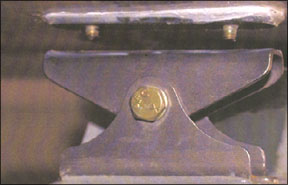
A pilot reported total loss of elevator control on final approach. Investigation revealed the rear control stick was no longer connected to the elevator push rod. The aft belly pan was removed and a loose bolt and washer were found. The nut was not found. The other rod ends were inspected for safety; the self-locking nut and bolt for the aft interconnect push rod was very loose. The existing hardware was not reinstalled because it was found loose during the inspection. New hardware was installed for each noted discrepancy. The owner was advised to have a factory service center inspect the aircraft, and make repairs according to the maintenance manual and parts book.

Read More »
Pilot in aircraft
Sign-up for newsletters & special offers!

Get the latest stories & special offers delivered directly to your inbox.

SUBSCRIBE