Squawk Box

Engines And Accessories

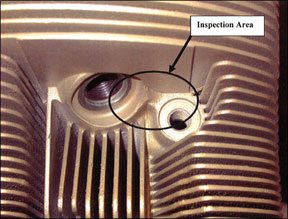
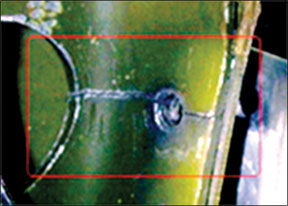
On July 14, 2009, Teledyne Continental Motors (TSM) published the latest revision to its Mandatory Service Bulletin MSB09-1B. In it, TCM states it has determined a tool used to manufacture new TCM-brand cylinders “created an area of reduced thickness” between the upper spark plug bore and the fuel injector/primer nozzle bore “that may result in a crack after prolonged operation.” The MSB includes a list of affected engine models and engine/cylinder serial numbers dating back to August 2006 that may be affected.
Read More »

Twin And Turbine Troubles

Selecting the landing gear “down” produced an unsafe nose gear indication. Manual gear extension proved unsuccessful. The nose landing gear collapsed upon landing. Inspection revealed the nose landing gear linkage adjusting fork (p/n 5045211-2) had fractured, preventing extension of the nose landing gear to a down and locked position. Evidence suggests this fracture was progressive in nature, and some degradation to the components structure existed prior to failure.

Read More »

Twin And Turbine Troubles

The nose landing gear would not deploy on approach to landing. After nosegear removal, actuator drive shaft (p/n 50-820218) internal spline was discovered worn and sheared. Lubrication maintenance should be consistent to help reduce wear.

Read More »

Chronic Door Separation?

The rear seat (p/n 7-1500; revision B) failed at the left hinge point. The AN3 series bolt pulled through the hinge lugs, which are welded to the seat frame bottom. The right hinge holes show elongation, but remained intact. This aircraft was doing spin training at the time of the incident. Modifying the seat frame to current standards is recommended.

Read More »

Cracked, Loose, Failed

During slow-flight maneuvers, the instructor noticed the green, landing gear “safe” light was not illuminated. The student observed the left gear was hanging out-and swinging. The gear was cycled, but the left main remained free and disconnected. The instructor elected to retract the right and nose gears and land gear-up. Maintenance found the left gear pivot had sheared at the spline shaft. The right gear was removed and Zyglo checked. Close inspection found the right pivot was cracked three-quarters of the circumference around the spline shaft, nearing complete failure. Gear pivot p/n: 22411143.

Read More »

Cracked, Loose, Failed

New deice boots were installed on all three blades of this Hartzell propeller, which later was mounted by the owners mechanic. One of the three boots came off after approximately seven hours of flying, resulting in a dent on the aircraft fuselage. When installing a new boot on the propeller, we observed the adhesive did not separate from the blade. The boots on this propeller are long strap boots. If properly positioned during spinner installation, it remains contained within the spinner. Since the two remaining boots remained attached, it is likely the boot strap was not positioned properly during spinner installation, resulting in the boot separating from the blade. Goodrich p/n 4E1188-3.

Read More »

Cracked, Loose, Failed

The forward outboard, lower wing spar caps were found cracked. The cracks-on both left and righthand assemblies-radiated out from the fourth Huck rivet forward, passing through the wing attach hinge. This aircraft was inspected 15 months /404.2 hours ago by eddy current. No cracks were found at that time. Wing lower spar cap part numbers: l/h: 000-110012-1; r/h: 000-110012-2.

Read More »

Broken, Loose, Failed

The pilot was making a left turn in front of a hangar. He pulled the control wheel full aft to take the weight off the front wheel and the control wheel broke off in his hand. The break formed across the wheel, from the lower left to the upper right. Control wheel p/n: 0513168-2.

Read More »

Heating And Cooling

A mechanic found the same problem on two identical aircraft:, “The carburetor heat control arm (p/n: D4F-7326-12-00-1) broke off the carburetor air box, causing uncontrolled selection of carburetor heat versus ram (cold) air intake.” The mechanic recommends installing thicker material on the carburetor heat control arm lever, or a different welding/heat treating process, or a different attachment provision altogether.

Read More »

New Parts, Old Problems

The FAA is encouraging owners and maintainers of Cessna T303, 336, 337 and all legacy, pre-1986 single-engine models to adhere to AD 87-20-03R2. The AD was issued because of pilot/copilot seat slippage due to the latch pin not properly engaging in the seat rail/track. The FAA states, “Compliance with AD 87-20-03R2 should have eliminated accidents and Service Difficulty Reports (SDRs). However, in the past decade we have seen a resurgence in the number of accidents [which] may indicate the inspections of the seat tracks are not being adequately performed or existing problems are not being corrected.” The FAA strongly suggests reviewing AD 87-2-03R2. Cessna SEB07-5R1 or MEB07-1R1 covers secondary seat stop installation.

Read More »
Pilot in aircraft
Sign-up for newsletters & special offers!

Get the latest stories & special offers delivered directly to your inbox.

SUBSCRIBE