Aviation Safety

Differences

In many ways, talking about flying consistent traffic patterns as a way to help perfect our landings is a fools errand. Thats because each pattern, approach and landing is different. Tower can bring us in directly to the runway on a long final or a short right base, or ask for an extended downwind. What was a mild left crosswind when you landed this morning can be a honker from the right this afternoon.

Read More »

Be Where You Should Be

Since a good landing comes from a good approach, if you fly the traffic pattern the same way each time, youre most of the way toward perfecting your landings. Try these suggestions for what to do and where to be at each point in the pattern, and youll be consistently gliding over the threshold at the proper speed and altitude. Modify as necessary for conditions, of course, but aim to hit each of these yardsticks in the pattern and youll have eliminated some of the more common problems pilots have with their landings.

Read More »

Laid-Back Landings

Year after year, far and away the largest number of fixed-wing accidents result from attempts to get those airplanes back onto the ground. So says the AOPA Air Safety Institutes 23rd Joseph T. Nall Report, examining general aviation safety during 2011. Landing accidents are more than twice as frequent as any other pilot-related accident category, according to the Report. Thats the bad news. The good news is we can do something about it: improve our performance.Theres no question landing an airplane is a complex task, but one way to ensure we always perform well is consistency: do it the same way each time and youll eventually get good at it. In other words, we need to make our landings routine, not excitement-filled adventures where the outcome is in doubt until the last moment.

Read More »

Planning To Divert

Pilots, being independent-minded-perhaps to a fault-and mission-oriented, dont launch on a flight intending to land someplace other than their destination. Overcoming that mindset and accepting the reality that theyre not going to make it on the first try can be a problem for those who drank heavily when the my way or the highway Kool-Aid was served. But we all have to accept reality sometimes and admit conditions wont allow us to complete the mission, at least right now.

Read More »

Weighty Matters

I had been doing a lot of flying, but most of it involved long, multi-hour legs, solo. As one consequence, I was logging only one or two landings for every five or so hours. Even though the airplane I was flying was well-equipped (read heavy for its model), most of my flights ended up with only a couple of hours worth of fuel. In other words, my recent experience with landings, though far in excess of the minimum required to remain legally and technically proficient, meant I always was landing a fairly light airplane.

Read More »

ROI

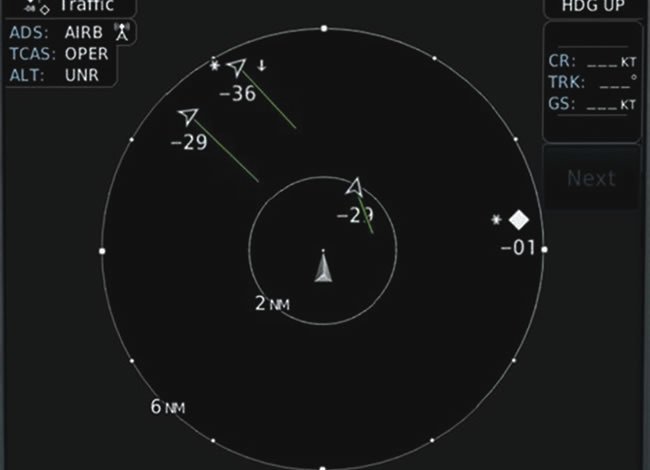
Like me, youve probably been using the FAAs free traffic and flight information. The two services, TIS-B and FIS-B, respectively, comprise the basic benefits the typical GA operator can expect from ADS-B IN, a component of the FAAs NextGen ATC system. Theyre available now, well in advance of the FAAs 2020 mandate to install and use the other component, ADS-B OUT.

Read More »

Motor Club

Failed Landing Gear MotorAfter takeoff, crew selected gear lever to up. Gear traveled halfway up and stopped. Crew selected holding area and ran checklist, manually lowering gear, followed by normal landing. Inspection revealed landing gear motor had failed and tripped the 60-amp circuit breaker under the floor. Motor was repaired and ops check was good.Part Total Time: 9452.0 hours

Read More »

NTSB Reports: December 2014

The unregistered aircraft was substantially damaged when it impacted terrain at an unknown time. The private pilot was fatally injured. Visual conditions prevailed. The accident pilot was last observed flying the single-seat gyrocopter at about 1350 on the day of the accident. The wreckage was subsequently located the following day about 0915, about 750 feet east of the departure airports Runway 26 threshold. The private pilot held a rating for single-engine land-based airplanes.

Read More »

Bulletproof

As a pilot gains ratings and experience, he or she usually transitions to bigger, faster and more capable aircraft. Progress quickly enough to aircraft with enough bells and whistles in them and its easy to become impressed with all the capabilities at your fingertips. Equipment like airborne weather radar, approved de- or anti-icing and two powerful engines translates into an almost-all-weather airplane. With all that capability eventually comes a desire to use it in the belief the aircraft was designed to reliably detect and avoid anything Mother Nature can throw at it. And then, every now and then, someone discovers no airplane is bulletproof, and no pilot can handle everything, either.

Read More »

Extreme Maneuvering

Most pilots are content do drone along in the straight-and-level, rarely banking beyond 30 degrees or pitching up and down beyond 10. Meanwhile, aerobatic pilots enthuse in their ability to fly upside down, vertically and in all combinations. Somewhere in the middle of these two extremes are what the FAA calls performance maneuvers, generally thought of as those required on the commercial airplane pilots practical test.

Read More »
Pilot in aircraft
Sign-up for newsletters & special offers!

Get the latest stories & special offers delivered directly to your inbox.

SUBSCRIBE