Aviation Safety

Departure Alternates

Aviation Safety recently ran two articles, in the December 2014, and January 2015 issues) on the various considerations involving low-weather IFR departures. Under FAR 91, if we can find the runway in the fog, its legal to launch. Somewhat Darwinian, but legal.

Read More »

Finding Alternates With An EFB App – Is This Really So Hard?

Electronic flight bag (EFB) apps running on a tablet computer, as depicted above, have greatly increased the typical pilots SA (situational awareness). As this articles main text relates, some pilots havent figured out how to use their EFBs to answer the many questions necessary to legally and safely pick alternate airports. They supposedly prefer paper charts and a plotter. (Really. Have you guys seen the size and number of books of Aeronav charts required for 48-state coverage lately? The proliferation of LPV, LNAV and similar approaches has swollen them in size, weight and number.)

Read More »

Which Way Will It Go?

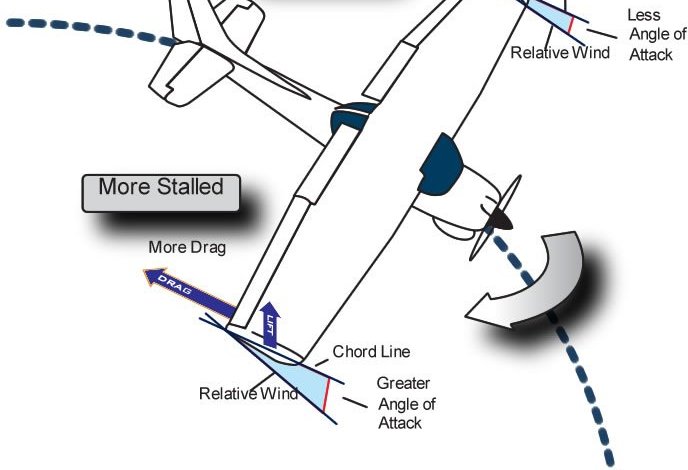
For many, predicting the direction in which an airplane will spin is a Fools Errand-any spins should be avoided in the first place. But understanding how a spin develops and how control deflections help determine the spin direction also can help us avoid them.

Read More »

Time To Bite The Bullet?

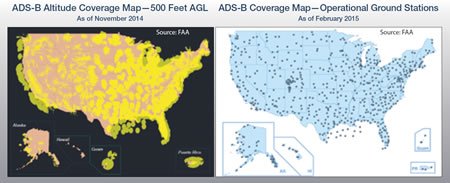
Unless youve been living under a rock, youve probably heard of ADS-B, or Automatic Dependent Surveillance-Broadcast. As of January 1, 2020, youll need this equipment to routinely fly in U.S. airspace where the FARs now require a working Mode C transponder. The FAA rule mandating ADS-B in 2020 went into effect in 2010, so theres little argument that operators havent had enough warning about it, and its not likely the FAA will change the deadline. There are two flavors of ADS-B, the in and out kinds. For now, only ADS-B Out is required in 2020; ADS-B In is optional. Both flavors are operational today, as the two coverage maps below demonstrate.


Read More »

A Couple Of Things

As GPS becomes more ubiquitous-and as the FAA works to reduce its expenses for things like navigation facilities, airports and controllers-it has long-range plans to unplug hundreds of VOR facilities throughout the U.S. in favor of the satellites. There were 967 U.S. VORs operating in late 2012, and AOPA says the FAA wanted that number to be 500 by January 2020, when ADS-B and the next-generation ATC system are supposed to be in place.

Read More »

Shafted

As the aircraft climbed through FL190, the pilot reported a loss of power. An emergency descent was begun and an unscheduled landing was planned. Some power was restored as the airplane descended. On landing, inspection revealed the shaft between the turbocharger compressor and exhaust wheels had broken in two.

Read More »

Out Of Control?

Your May 2015 issue exemplifies continued excellence by probing the contributing factors leading to aircraft accidents. Articles on icing, fueling, landings, situational awareness and IMC are likely activities that we experience every time we fly. My interest as a pilot and investigator is to focus on the factors that lead to human response errors.

Read More »

Losing It

Spatial orientation is the bodys natural ability to maintain orientation and/or posture in relation to the surrounding physical environment, both at rest and in motion. Its a highly evolved ability, which uses visual and vestibular (inner ear) sensory inputs, as well as our sometimes unconscious ability to understand positioning of our body and its various parts. Together, these senses tell our brain what our body is doing and what is happening to it.

Read More »
Pilot in aircraft
Sign-up for newsletters & special offers!

Get the latest stories & special offers delivered directly to your inbox.

SUBSCRIBE