











Aviation Safety
Differences
Everyone remembers the first airplane they flew. But what about the second one? Chances are it was a lot like the first one, but still was different. While the make and model may have been the same, the serial and registration numbers were different, of course. Even trivial differences between the two likely was a topic of discussion with your instructor. The conversation may have included how different avionics equipment was installed, or one of them never had a working landing light, or had a prop offering better performance. In an extreme, you could have been mixing makes, models, wing position and avionics. There likely was a moment where you couldnt find that blemish on the windshield you used as a reference point, or found the throttle too stiff.

Real-World Alternates
One of the concerns many pilots express about doing their flight planning on a tablet computer is that they dont spend time with a chart and a plotter looking over a route. They end up starting a flight with less situational awareness about airports where they can bail out if something goes wrong en route. That, combined with what can become a rote fixation on selecting an IFR alternate based only on the regs regarding weather at the destination, is an invitation to poor decision-making when a little smoke in the cockpit means shutting off the electrical system a third of the way into the flight, or the engine starts running rough on initial climb from an airport thats below approach minimums.One way out of these dilemmas is to keep in mind the FARs are, by law, nothing more than minimum standards-and only looking at an alternate airport for the destination on an IFR flight of 500 miles might not be doing ourselves any favors. We always need an ace in the hole, and it doesnt have to be the one we tell the FAA about on the flight plan.
Where were going, we dont need roads
The private pilot/owner planned to fly to at least two back country airports in a neighboring state. His first destination was an unpaved USFS strip. The runway, oriented 11/29, was reported to be 2765 feet long and 50 feet wide. It was located in a narrow valley, and situated about 30 feet southwest of the main road that transited the valley. An unpaved road exited the main road immediately southeast of the threshold of Runway 29, and then turned northwest to initially merge with the runway. About 300 feet northwest of the threshold, the unpaved road diverged slightly southwest of the runway, before assuming a track separate from but parallel to the runway.
Of Prop Strikes And Other Mischief
Prop strikes are more common than most pilots realize. Depending on the circumstance, they dont have to be reported to the NTSB if damage is not considered substantial. But if you have ever had to pay for a new prop or an engine tear-down, there is no way on earth youd consider a prop strike minor. They are to be avoided.
Off The Beaten Path
Private pilots are required to demonstrate soft-field technique before they earn their certificates. The FAA, however, doesnt require you to demonstrate that skill on an actual soft field. Perhaps they should. Its too easy to find examples of pilots filling out reports of accidents and incidents involving unpaved landing surfaces. Based on my experience and those of other pilots like me, there are many novel ways a pilot can screw up when venturing off pavement. Insurance companies know this and often restrict operations to paved runways.
NTSB Safety Alert Highlights
Mastering Mountain FlyingUnderstanding Flight ExperiencePerform Advanced Preflight After Maintenance
Can You Spin Your Flivver (Intentionally)?
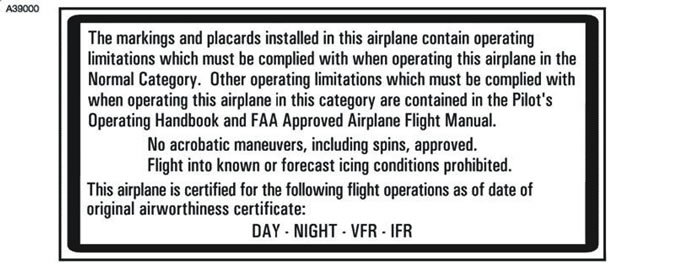
You might be able to do spin training in your own airplane. The first thing to check is whether its placarded against intentional spins, as depicted above. If not, you may still need to find a CFI willing to spin your airplane, plus a couple of parachutes. It may be easier and cheaper to simply find the local spin instructor and sign up for the training in his or her airplane.
Tips From The NTSB
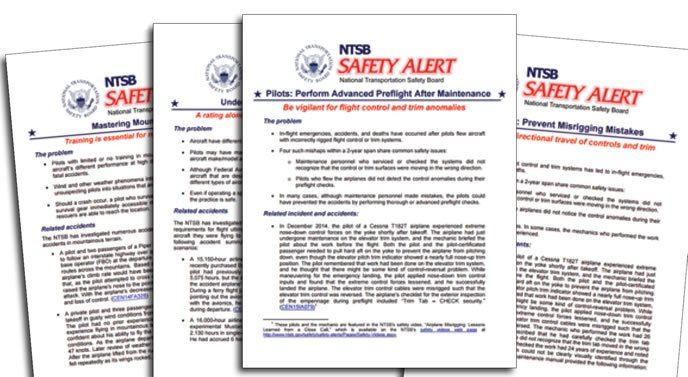
Theres no question pilots can make dumb mistakes-each month, the back pages of this magazine have the proof. In many instances, however, pilots make mistakes because they werent warned of the consequences of their (in)actions. In other words, sometimes they dont know what they dont know. Its the NTSBs role to investigate aviation accidents in the U.S., and to come up with recommendations on ways to prevent them.
Filing an Alternate is Required…Unless…
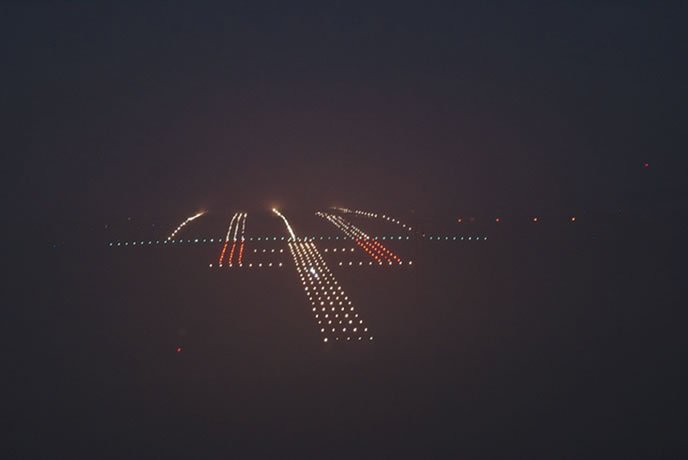
When filing an IFR flight plan, the language of FAR 91.169 makes listing an alternate airport the default: You have to name one unless the circumstances of the flight are such that it falls under both of the two listed exceptions: First, the airport must have a published instrument approach procedure. Second, the forecast weather meets the 1-2-3 rule: For an hour before to an hour after the ETA at your destination, the weather is forecast to be equal to or better than a 2000-foot ceiling with three statute miles visibility.
