Aviation Safety

My Sport Does Not Assume My Net Worth

If youve been following the general aviation industrys efforts to secure federal legislation deregulating FAA medical certification, you know its been a long, frustrating process (though not nearly as long or frustrating as some of the industrys other legislative efforts). The legislation is S. 571, the Pilots Bill of Rights 2 (PBOR2), introduced in the U.S. Senate by Sen. James Inhofe (R-Okla.). A companion bill, H.R. 1086, was introduced in the U.S. House of Representatives by Rep. Sam Graves (R-Mo.)

Read More »

Antennas

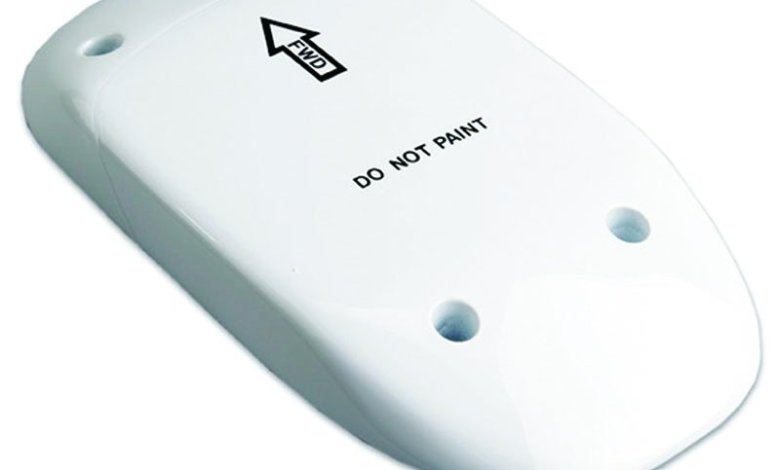
During post-flight inspection, cracks were discovered on the ELTs rod antenna, approximately six inches from the base. The #2 GPS lost signal during an RNAV approach, generating a warning on the Garmin G1000. An operator noted it had experienced four-plus failures of the whip antenna installed for the Artex ME406 ELT. Flight experienced en route loss of GPS reception on all four devices, including a GTN 750/650 installation plus two portable WAAS GPS receivers. The GNS 430W indicated no satellite coverage while in flight. A portable GPS also indicated lost coverage.

Read More »

How Flight Hours Translate to Experience

Whenever two or more pilots get together in the same place, the conversation eventually gets around to which of them has the greatest number of flight hours. The yardstick of how much time youve spent aloft is more than just small-scale bragging rights, of course-it also can determine whether youre eligible for a subsequent certificate, or even legal to carry passengers. And then theres the matter of insurance coverage.The simple fact is that most of the aviation world measures how competent we are in the cockpit by how much time we may have spent there. The inference is that high-time pilots are safer, and that low-time pilots are less safe. The fallacy is highlighted if we put someone with 20,000 hours as PIC of a 747 into a piston single and ask him or her to perform an engine-out approach from downwind: Without some practice-i.e., some experience with that particular operation-its not likely to turn out well. What is experience? How to measure it? Most important: If its so valuable, how can we get more of it?

Read More »

Aircraft Propeller Maintenance

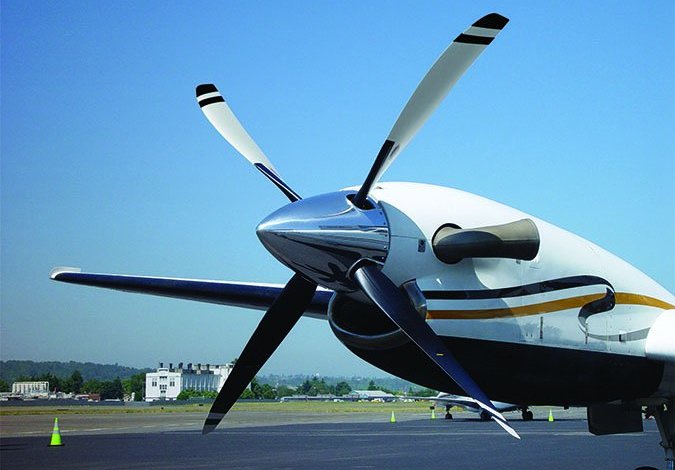
Boiled down to the basics, there are two kinds of airplane propellers: fixed-pitch and everything else. With a fixed-pitch prop, of course, the pilot cant change the angle at which the blades are aligned with the hub and thereby adapt it to situations involving variations in power and airspeed, both of which can influence a propellers efficiency.Depending on an operators needs, a fixed-pitch prop can be designed to maximize cruise speed or climb performance, but not both. In fact, it will be most efficient at only a specific, optimized rpm. At all other rpm settings, performance will suffer. The result found on the typical personal airplane usually is a compromise between allowing the engine to turn at its best-power rpm (climb) and creating the greatest forward momentum (cruise).

Read More »

Propeller Blades’ AOA Changes with Airspeed

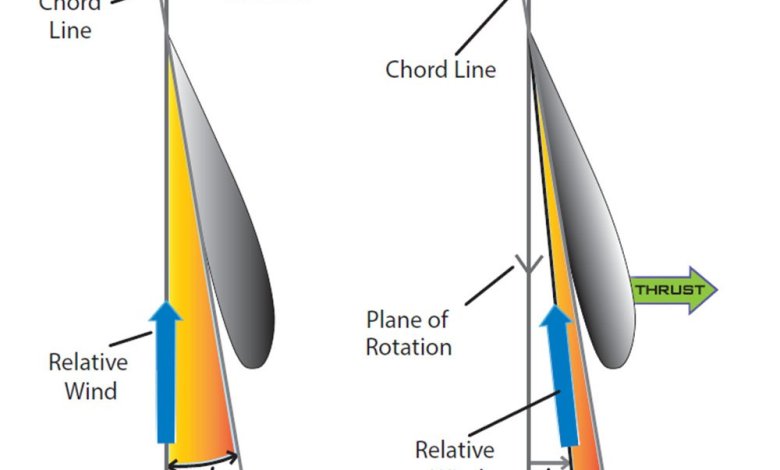
For some, the concept of how a constant-speed propeller maintains the desired rpm can be a difficult one to grasp. What the FAA’s Airplane Flying Handbook (FAA-H-8083-3B) has to say may help: “When an airplane is nosed up into a climb from level flight, the engine will tend to slow down. Since the governor is […]

Read More »

Memorable Aircraft Accidents

The typical flight in a personal airplane is uneventful. We take off, fly the mission and land. Every now and then, though, stuff happens. Its one of the reasons flying has been called hours and hours of boredom punctuated by moments of sheer terror, a description it shares with many other activities. In fact, most of us have our own tales to tell, stories of airborne drama weve experienced personally or heard directly from the people involved.Ive been doing a lot of flying recently, spending quality time at airports and remote landing strips with other pilots and their airplanes. Along the way, I picked up several there I was narratives from pilots who made serious errors in judgment, plus others who experienced what can only be described as bad luck. Sharing these narratives with other pilots helps add to our knowledge of what can happen, how we should prepare for it and what we can do in response. In reflecting on them, I soon realized they all have a common element. And since I was the pilot for one such event, I can assure you: When an event begins, it often happens very quickly, providing little warning.


Read More »

Airspeed & Turbulence: Easy Adjustments

The airspeed indicator always has been one of a pilots most useful tools for measuring aircraft performance. Its colorful, with white and green, maybe a pair of red lines and a blue one, and maybe some yellow. And theres that big white needle we use for bragging rights. Early on, we were taught some of the most important speeds we need to know and use arent marked on it. One of them is the airplanes design maneuvering speed (VA), sometimes confused with the turbulent air penetration speed, which perhaps is better known as design speed for maximum gust intensity (VB).But is there a difference between VA and VB? What is it, and when do you use them? Why? Which should we be concerned more with as a pilot, and when? And airplanes are stressed to lower negative-G limits than their positive G-load limit-what about negative-G encounters in turbulence? Lets look at the operational reality of airspeed and G-load control in turbulent air.

Read More »

Facing Lake Effect Conditions

The potential for in-flight icing during an IFR flight-regardless of whether the airplane is approved for flight into known icing or not-means doing serious plotting and scheming prior to departure, and throughout the flight. As has been demonstrated for years, structural icing does bad things to airframes. Best to presume every cloud will contain ice, and plan accordingly.To illustrate our point, well look at a hypothetical flight from the Lima (Ohio) Allen County Airport (KAOH) to the Wexford County Airport in Cadillac, Mich. (KCAD). (Were going to KCAD because the FBO rents airplanes on skis and we purely love skiplane flying.) To get there, well be flying a Cessna 177B Cardinal, a stable instrument platform with satisfactory climb and cruise performance, but lacking turbocharging or real ice protection.

Read More »

Lake Effect

The downwind sides of any large body of water—and especially the Great Lakes—can be perennial winners of the rotten-weather-in-winter prize. The air moving across them picks up moisture, then dumps it in the form of snow from heavy, ice-laden clouds over the downwind land area. The cloud cover almost invariably harbors ice and generates localized […]

Read More »
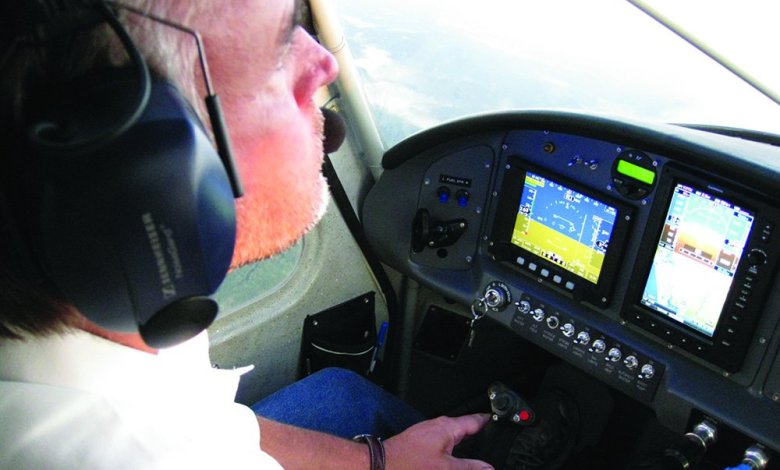
Pilot in aircraft
Sign-up for newsletters & special offers!

Get the latest stories & special offers delivered directly to your inbox.

SUBSCRIBE