Aviation Safety

NTSB Reports: July 2016

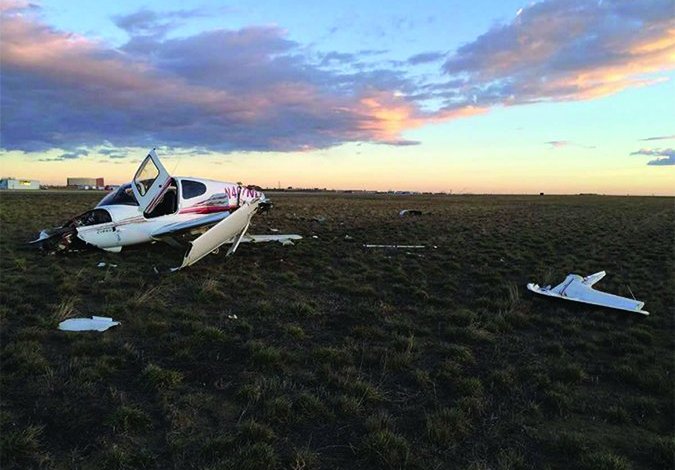
The airplane was destroyed at 1456 Eastern time shortly after takeoff. The flight instructor, the private pilot receiving instruction and the pilot-rated passenger were seriously injured. Visual conditions were reported. An air traffic controller who witnessed the accident reported that, when the airplane was at about 400-500 feet agl, it made a sharp right turn followed by a sharp left turn. It then entered a steep nose-down descent before disappearing behind a tree line. An explosion followed. The controller recalled the airplanes landing gear was retracted.
Read More »

Aircraft Ground Handling

It was an early departure from the Philadelphia (Pa.) International Airport (KPHL) back to home plate. Thanks to an in-flight encounter with severe turbulence two days earlier, which injured three of my passengers, it had been a memorable three-day trip. I was the pilot flying the 757 for our last leg. As we taxied out, we checked the winds one last time before taking Runway 27L. It was early morning, and ATC still was doing noise-abatement departures to the west even though the winds were out of the east at 7-8 knots. We had a tailwind limit of 10 knots, and we were fairly light, maybe just over 200,000 pounds. So we were good to go.

Read More »

As Safe As The Airlines?

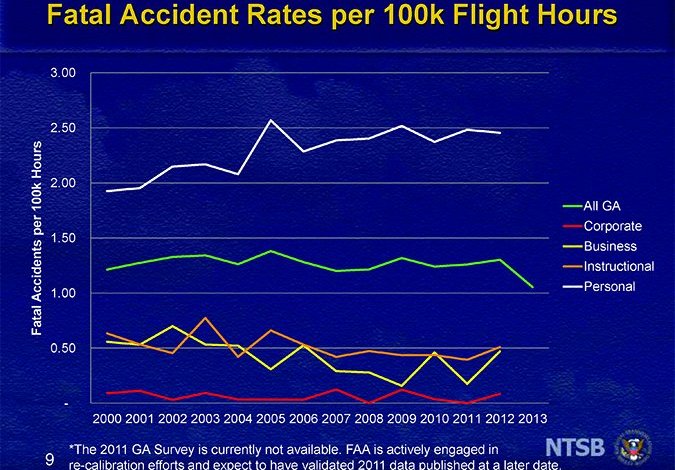
Scheduled passenger airlines in the U.S. have achieved an incredible level of safety. Domestic passenger operations under FAR Part 121 have achieved an unheard-of record: a near-zero fatality rate since 2010. Most of us presume general aviation operations under Part 91 never can approach this level of safety without draconian over-regulation. And most of us may be correct. It was never about the regulations, of course.

Read More »

Course Reversals

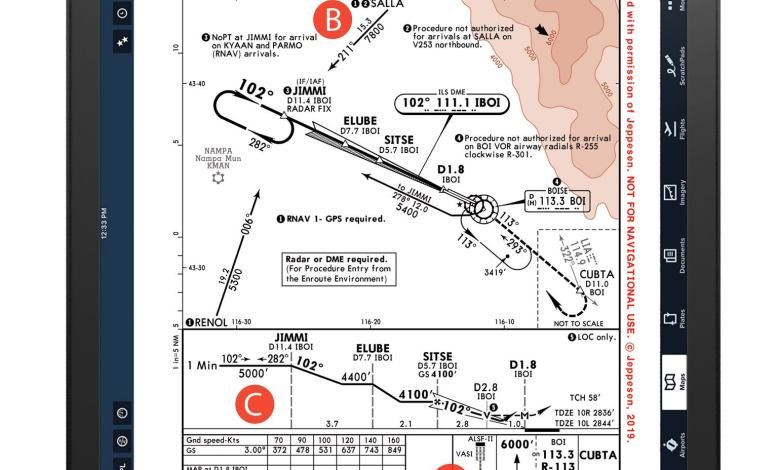
The good news about this plan was the VOR/DME procedure we wanted to fly into Winter Haven used LAL as an initial approach fix. The middling news was we were doing this at 2700 feet msl, 700 feet above the minimum crossing altitude at LAL, to stay above KLALs Class D, which tops out at 2600. So Id need to carefully pull the plug after crossing LAL to ensure I could get down to the MDA before getting too close to the airport. But the hold at LAL coming off the miss at VDF had us going the opposite direction, and we were trying to do this on our own, using published procedures.

Read More »

Unsecured Cargo

One of the things primary students learn early during their ground-school training-perhaps before they ever get into an airplane-is that the items loaded into it can weigh no more than a certain amount, and have to go in certain places. Overloading the aircraft, and/or placing heavy items far from its nominal center of gravity, is bad, theyre told. Somewhere along the way, it might also be explained that those items need to be secured. But the common way we load airplanes-especially those in which the passenger cabin and the cockpit are the same space-is to throw some soft-sided luggage in the baggage compartment, maybe throw some heavy things in the back seats or the floorboard behind the front seats, and light the fires. Little thought usually is given to whether those items should be secured, or how. Thats in sharp contrast to how we treat the passengers.

Read More »

NTSB Looking At Future Pirep Improvements

New ways to improve pilot reports-Pireps, including their collection, dissemination and use-is the topic of a two-day forum the NTSB announced in early June. Entitled PIREPs: Pay it Forward…Because Weather for One is Weather for None, the forum is expected to draw other federal agencies, air carrier organizations, aviation associations and academics. Panel-discussion topics are set to include the use and significance of Pirep information to weather services, air traffic controllers, pilots and researchers; the lifecycle of a Pirep; Pirep training, education and operations; and future improvements and emerging technologies for Pireps, the NTSB said.

Read More »

Proficiency On A Budget

Deep down, most pilots would admit they need more practice and instruction than they get. I know there have been lapses in my skills over the years, and as equipment and operating rules change, I have had to spend more time on learning how to use and benefit from them. Like many pilots, I like to train and would do it more often, except for the time and the expense. In reality, most of us have two training budgets, each with limitations: a financial budget and a time budget. Admitting its often difficult to increase allotments to either without significantly and adversely affecting other parts of our lives, how can we get the most benefit from the time and money we do have for flying? How can we realistically assure proficiency on a budget?

Read More »

3 Ways to Lose Control of An Airplane

Weve always had stall/spin accidents. Today, refinements in data collection and analysis, plus improved aviation-accident taxonomy, have led the industry to adopt the loss of control in-flight, or LOC-I, nomenclature. Whatever its name, ICAOs Common Taxonomy Team calls it …an extreme manifestation of a deviation from intended flight path. It leads the statistics for business, instructional and personal flying as the single most-prevalent cause of general aviation accidents.

Read More »

Best. Nordo. Ever.

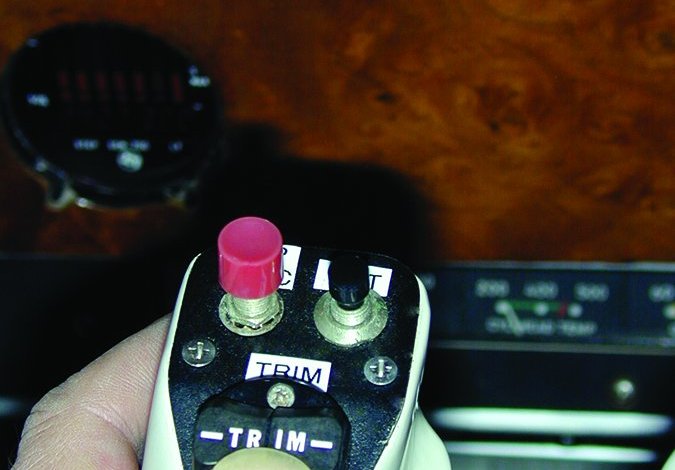
Earlier in the year, I found myself headed toward Albany, N.Y., to visit a long-time pilot-friend and play with airplanes. I was flying a second friends airplane, IFR, and being vectored for a visual approach through a cloud deck. All of a sudden, I can hear ATC, but they cant hear me. So I reached down between the front seats for the handheld mic-but there is no handheld mic. Theres a bracket, but nothing on it.

Read More »

More on JFK, Jr.

Kennedys current logbook was not located. The NTSB used records from training facilities, copies of flight instructors logbooks, and statements from instructors and pilots to estimate the pilots total flight experience …at about 310 hours, of which 55 hours were at night. His estimated flight time in the accident airplane was about 36 hours, of which 9.4 hours were at night.

Read More »
Pilot in aircraft
Sign-up for newsletters & special offers!

Get the latest stories & special offers delivered directly to your inbox.

SUBSCRIBE