Instrument Flying

Single-Pilot Jets

While most of us probably feel fortunate to be able to fly any kind of general aviation aircraft, most of us also have fantasies about owning and flying more expensive machines, including jets. A small number of us achieve that goal and obtain certification to operate small jets single-pilot. But the safety record of these operations is mixed. Some recent accidents point to gaps in the training and checking associated with single-pilot type ratings.

Read More »

Into The Flight Levels

It seems to be an arbitrary cutoff, 18,000 feet. However that height was originally chosen, its the altitude that defines, at least in U.S. airspace, what we call the flight levels. There are a number of rules that apply to all airplanes flying at and above FL180 but less obvious are some of the real-world considerations protecting you and your passengers as you climb above 18,000 feet-considerations that relate to very real hazards.

Read More »

Skyhawks

Landing light switch was stuck in the on position. Suspect internal arcing and welding of contacts. The overheating caused by the arc- ing can cause the switch body to melt, but did not in this case. No signs of heat damage of external switch surface were found.

Read More »

Ground Handling 101

it’s ideal to have at least two sets of eyes monitoring the activity. A wing-walker or other observer can help the tug’s diver with depth perception and likely see potential obstacles invisible from the driver’s seat.üThis Cessna 177 Cardinal appears to be well-secured. The cabin cover fits well and its straps are snug. The tiedown ropes are knotted close to the rings and it appears a control lock is installed.”

Read More »

Touch-And-Goes

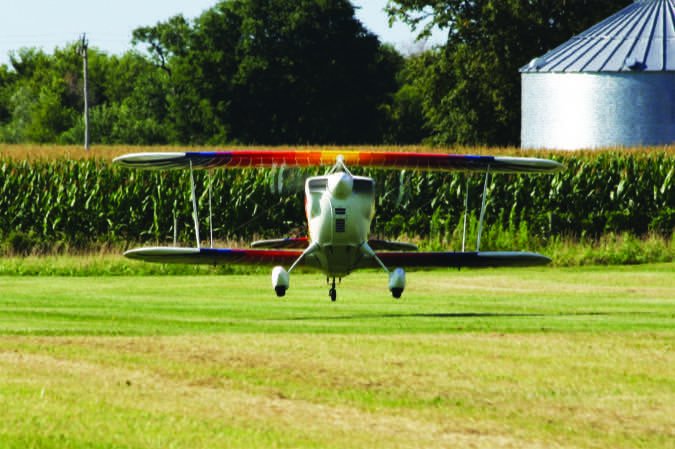
The approach and landing phase should be conducted in accordance with whatever specific procedure is being practiced: normal, engine-out, short/soft-field, high density altitude. Simply because youre not planning to slow down and exit the runway doesnt mean you should do anything different on the approach and landing. After all, the reason youre doing touch-and-goes is to practice, and you cant engage in valuable practice if you dont simulate realistic conditions and procedures.

Read More »

Maintaining Performance

Airplane performance and good maintenance are closely related. The figures published by the manufacturer are frequently viewed as optimistic once an airplane is put into service-and suffers prop nicks, bugs on the leading edge and a couple of bad landings-but book numbers can be achieved even years later. When actual performance differs from the published numbers, its often because the airplanes condition has diminished over the years and hours of use. The level of maintenance an airplane has received over the years will have a significant impact on its overall performance.

Read More »

Top Five IFR Mistakes

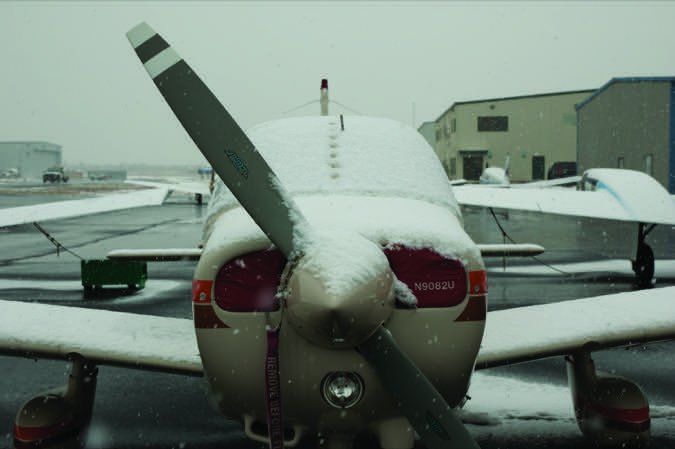
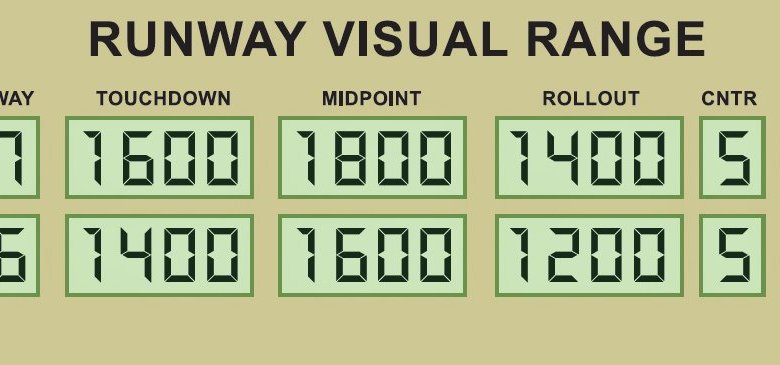
Whether we want to admit it or not, human flight by reference to instruments alone is an unnatural act. To determine up from down or left from right without a natural horizon, we need hours of training, and even more hours of regular practice. We also need a decently equipped airplane, stuffed with radios, colorful moving maps, some gyroscopes or their electronic equivalent, and more than a few charts, telling us where to go and how to get there.

Read More »

Humble Pie

Everything that can be invented has been invented is a popular quote attributed to Charles H. Duell, commissioner of the U.S. Patent and Trademark Office from 1898 to 1901. Today, the quote often is used to ridicule those who refuse to embrace the latest technology or believe nothing new will be forthcoming. The thing is, Duell never said that. He said quite the opposite instead: In my opinion, all previous advances in the various lines of invention will appear totally insignificant when compared with those which the present century will witness. Yet, hes not remembered for that statement, only the former, erroneous one.

Read More »

Download The Full September 2017 Issue PDF

Everything that can be invented has been invented is a popular quote attributed to Charles H. Duell, commissioner of the U.S. Patent and Trademark Office from 1898 to 1901. Today, the quote often is used to ridicule those who refuse to embrace the latest technology or believe nothing new will be forthcoming. The thing is, Duell never said that. He said quite the opposite instead: In my opinion, all previous advances in the various lines of invention will appear totally insignificant when compared with those which the present century will witness. Yet, hes not remembered for that statement, only the former, erroneous one.

Read More »
Pilot in aircraft
Sign-up for newsletters & special offers!

Get the latest stories & special offers delivered directly to your inbox.

SUBSCRIBE